
Nose shape & breathing
Rhinoplasty, septorhinoplasty, wide or crooked nose, bridge, hump, revision and recovery guides.
Explore nose surgery →
Nose shape, breathing, eyelid heaviness, facial ageing, profile balance, ear prominence, lip proportions, cheek fullness and scars are different concerns. This hub helps you reach the most relevant page before deciding whether a procedure is suitable.


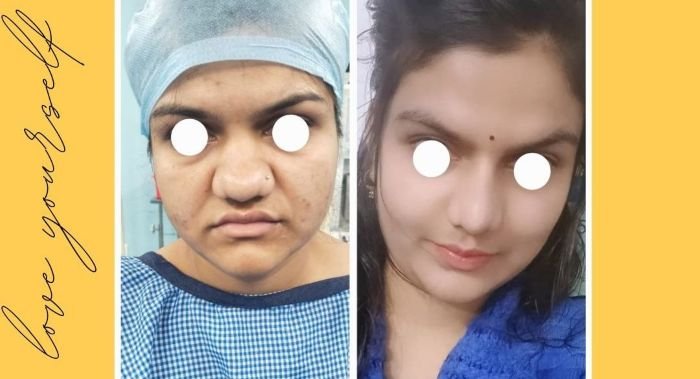
The most visible feature is not always the only feature influencing balance. A prominent nose may appear more dominant when the chin is retruded. Upper-eyelid heaviness may partly come from a low brow. A hollow under-eye and a true eye bag need different approaches.
This hub does not assume that every concern needs surgery. It separates structural surgery, soft-tissue lifting, volume adjustment, scar care and selected non-surgical options so you can read the correct page and understand the limitations.
Final suitability depends on examination, medical history, anatomy, expectations, recovery availability and procedure-specific risk discussion with Dr. Pawan Shahane.
Describe what troubles you in ordinary language before choosing a treatment name.
Skin, muscle, fat, cartilage, bone and scars require different solutions.
Understand what each option can improve, what it cannot, and its recovery.
The objective is proportion and function—not an identical template for every face.
Each pathway leads to detailed pages covering suitability, planning, technique, recovery, risks and realistic expectations.
Rhinoplasty, septorhinoplasty, wide or crooked nose, bridge, hump, revision and recovery guides.
Explore nose surgery →Upper or lower eyelids, eye bags, dark circles, brow position and forehead ageing.
Explore eyes and brow →Surgical facelift, thread lift, non-surgical lifting and combined facial rejuvenation planning.
Explore lifting options →Chin, jawline, double chin, cheek fullness and facial volume balance.
Explore contouring →Lip reduction or augmentation, gummy-smile correction and dimple creation.
Explore lips and smile →Prominent-ear correction, cosmetic ear surgery, face-scar revision and broader scar care.
Explore ears and scars →Use the main page for a broad overview, then move to a concern, planning or recovery page when you need more detail.
A low brow, excess eyelid skin, eye bags, hollowness and pigmentation may overlap—but they are not the same diagnosis.
Upper or lower eyelid surgery for selected excess skin, fat prominence or eyelid ageing.
Open page → Assessment-ledExplore surgical and non-surgical considerations for lower-eyelid bags and contour.
Open page → Multi-causeFor pigmentation, thin skin, shadowing, hollowness and mixed under-eye concerns.
Open page → SurgicalAssessment of brow position, forehead ageing and its effect on upper eyelids.
Open page → हिंदी मार्गदर्शिकाब्रो पोज़िशन, माथे की ढीलापन और उपचार विकल्पों की सरल जानकारी।
पेज खोलें →The correct starting page depends on the degree and location of tissue laxity, volume change, skin quality and desired recovery.
For selected lower-face and neck laxity requiring deeper tissue repositioning.
Open page → Non-surgicalUnderstand what non-surgical approaches may improve—and what they cannot lift.
Open page → Minimally invasiveSuitability, temporary lifting effect, limitations and recovery considerations.
Open page → Combination planningA broader pathway for skin quality, volume, lines and facial ageing concerns.
Open page →Profile and contour changes should be judged in relation to the nose, lips, cheeks, lower face and neck—not in isolation.
For selected chin projection, profile balance and lower-face proportion concerns.
Open page → Assessment-ledBone, fat, skin laxity and muscle can each influence jawline appearance.
Open page → ContourOptions depend on fat volume, skin quality, chin projection and neck anatomy.
Open page → Selective reductionFor carefully selected persistent lower-cheek fullness; over-removal is avoided.
Open page → Volume restorationUses a patient’s own fat for selected areas of facial volume loss or contour.
Open page → Combined profileFor patients whose profile balance may involve both nasal and chin proportions.
Open page →These pages separate lip size, lip volume, gingival show and dimple goals so that one concern is not treated as another.
For selected patients seeking reduction of lip bulk while preserving proportion and function.
Open page → VolumeAssessment-led options for lip volume, border definition, asymmetry and ageing changes.
Open page → Cause-specificTreatment depends on lip movement, gum display, tooth proportions and skeletal factors.
Open page → SurgicalPlanning of dimple position, smile relationship, healing and realistic variability.
Open page →Ear shape and facial scars are highly individual. Planning aims for improvement rather than erasure or a standardised appearance.
Prominent ears, asymmetry and selected shape concerns, including otoplasty planning.
Open page → Surgical / combinedFor selected scars where direction, width, contour or tissue distortion may be improved.
Open page → Broader scar careAssessment of scar type, maturity, symptoms and suitable non-surgical or surgical options.
Open page →Use this table when several page names seem relevant to the same concern.
| Your main concern | Best starting page | Why this page first |
|---|---|---|
| General nose shape or proportion | Rhinoplasty in Nagpur | Broad overview of goals, assessment, techniques, recovery and limitations. |
| Nose deviation plus breathing concern | Rhinoplasty & Septoplasty | Explains combined external shape and internal septal planning. |
| Heavy upper eyelids | Blepharoplasty | Starts with eyelid skin, fat and brow-position assessment. |
| Low brow or forehead ageing | Eyebrow Lift | Separates true brow descent from eyelid-only concerns. |
| Lower-face or neck laxity | Face Lift | Explains deeper tissue repositioning and surgical recovery. |
| Small chin or weak profile | Chin Augmentation | Assesses chin projection in relation to the nose and lower face. |
| Fullness below the chin | Double Chin Reduction | Compares fat, skin, chin and neck contributors. |
| Prominent ears | Cosmetic Ear Surgery | Canonical page for otoplasty and related ear-shape concerns. |
| Visible facial scar | Face Scar Revision | Focuses on facial position, scar orientation and tissue distortion. |
“The aim is not to chase a feature in isolation. We first identify whether the concern arises from bone, cartilage, fat, skin, muscle, scar or the relationship between features—then discuss the least excessive option that can realistically help.”Dr. Pawan Shahane, M.Ch. Plastic Surgery · Mayflower Clinic, Nagpur
The purpose is to convert a broad concern into a clear anatomical assessment and an informed decision—not to assume surgery in advance.
Discuss what you notice, what you hope to change, and what you want to preserve.
Examine proportions, symmetry, skin, soft tissues, scars, nose support and airway when relevant.
Compare suitable procedures, non-surgical alternatives, likely recovery, risks and limitations.
Choose a single, combined or staged plan after informed consent and pre-procedure evaluation.
These excerpts describe individual experiences. They do not predict another person’s result, recovery or suitability.
“From the initial consultation to the post-operative care, Dr. Shahane demonstrated exceptional skill, professionalism, and a genuine care for my well-being.”
“I wanted a sharp tip, and I was having a broad nose… His technique is very good.”
“He explains everything and how to take care. He support at every stage and do the surgery as planned.”
Review wording is shown as submitted, with short excerpts used for readability. Individual outcomes vary.
Open a question for a concise orientation, then use the linked procedure pages for detailed information.
Use these pages for non-surgical skin treatments, scar and laser care, reconstruction, wider cosmetic surgery and clinic information.
Book an in-person consultation at Mayflower Clinic, Dhantoli. Dr. Pawan Shahane can assess the relevant anatomy, explain suitable and unsuitable options, and discuss recovery and risk before any decision.

Case of the Month: Grade 3 Gynecomastia…

The Science of Facial Aging: Why Wrinkles,…