What is the difference between rhinoplasty and septoplasty?
Rhinoplasty reshapes the external nasal framework, while septoplasty straightens or stabilises the internal septum to improve structure and airflow. They can be performed separately or together.
When are rhinoplasty and septoplasty combined?
They may be combined when a patient has both an external shape concern and an internal structural problem such as septal deviation, valve narrowing or support loss. Combining them can allow one integrated structural plan and one recovery period.
Can septoplasty alone straighten a visibly crooked nose?
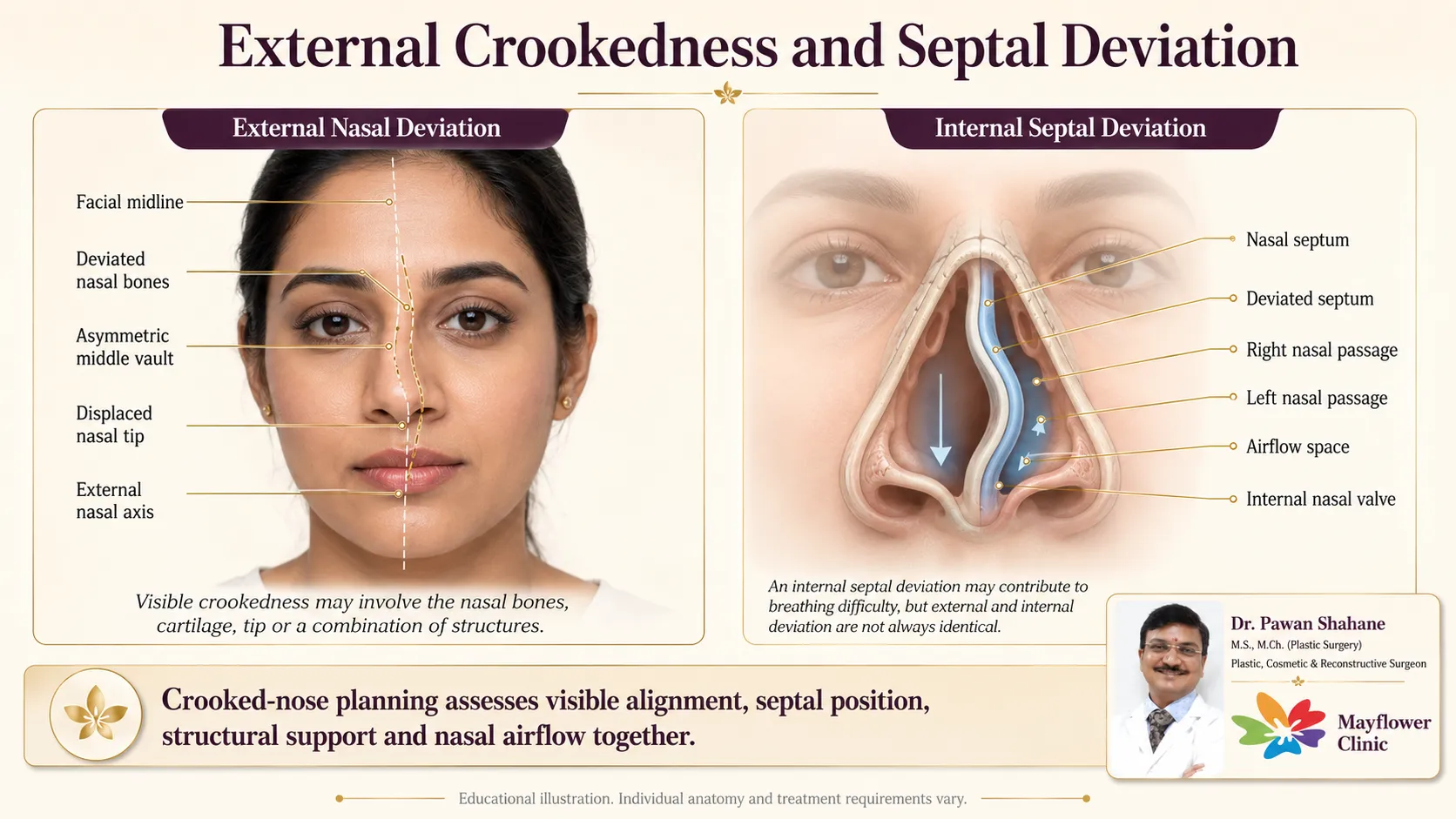
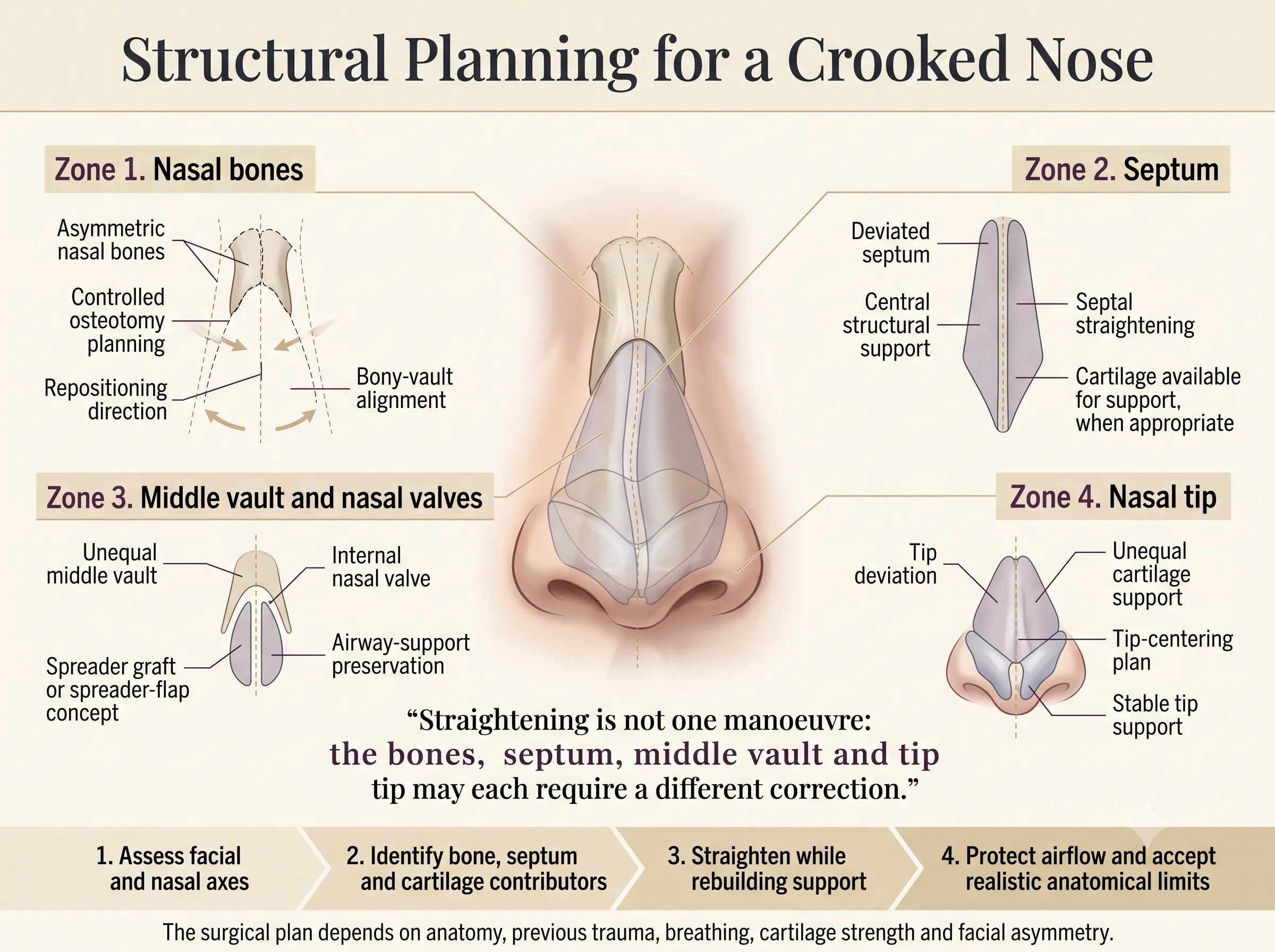
Not always. Septoplasty treats the internal septum, but visible crookedness may also involve nasal bones, the middle vault or the tip. External rhinoplasty may therefore be required to address the visible framework.
Will combined surgery improve nasal breathing?
It may improve breathing when obstruction is caused by correctable structural factors. Outcomes depend on the septum, nasal valves, turbinates, allergies, scar tissue and healing. No operation can guarantee completely unrestricted breathing.
Does septoplasty change the appearance of the nose?
A limited septoplasty is usually intended to improve internal structure rather than appearance. However, significant septal deviation can influence external alignment, and structural correction may subtly affect shape. Planned cosmetic change requires rhinoplasty.
How is a deviated septum assessed before surgery?
Assessment may include symptoms, external examination, intranasal inspection, airflow comparison, photographs and evaluation of the nasal valves, turbinates and previous trauma or surgery. Additional tests are selected only when clinically useful.
Is septorhinoplasty performed through an open or closed approach?
Either approach may be appropriate. The choice depends on the complexity of septal deviation, tip work, valve reconstruction, grafting needs and the surgeon's planned exposure. The approach is a means of access, not a guarantee of outcome.
Can septal cartilage be used during rhinoplasty?
Yes. Suitable septal cartilage may be used for spreader grafts, tip support or other structural needs, provided enough support is preserved for the septum itself. Ear or rib cartilage may be considered when septal cartilage is inadequate.
What is the recovery after rhinoplasty and septoplasty?
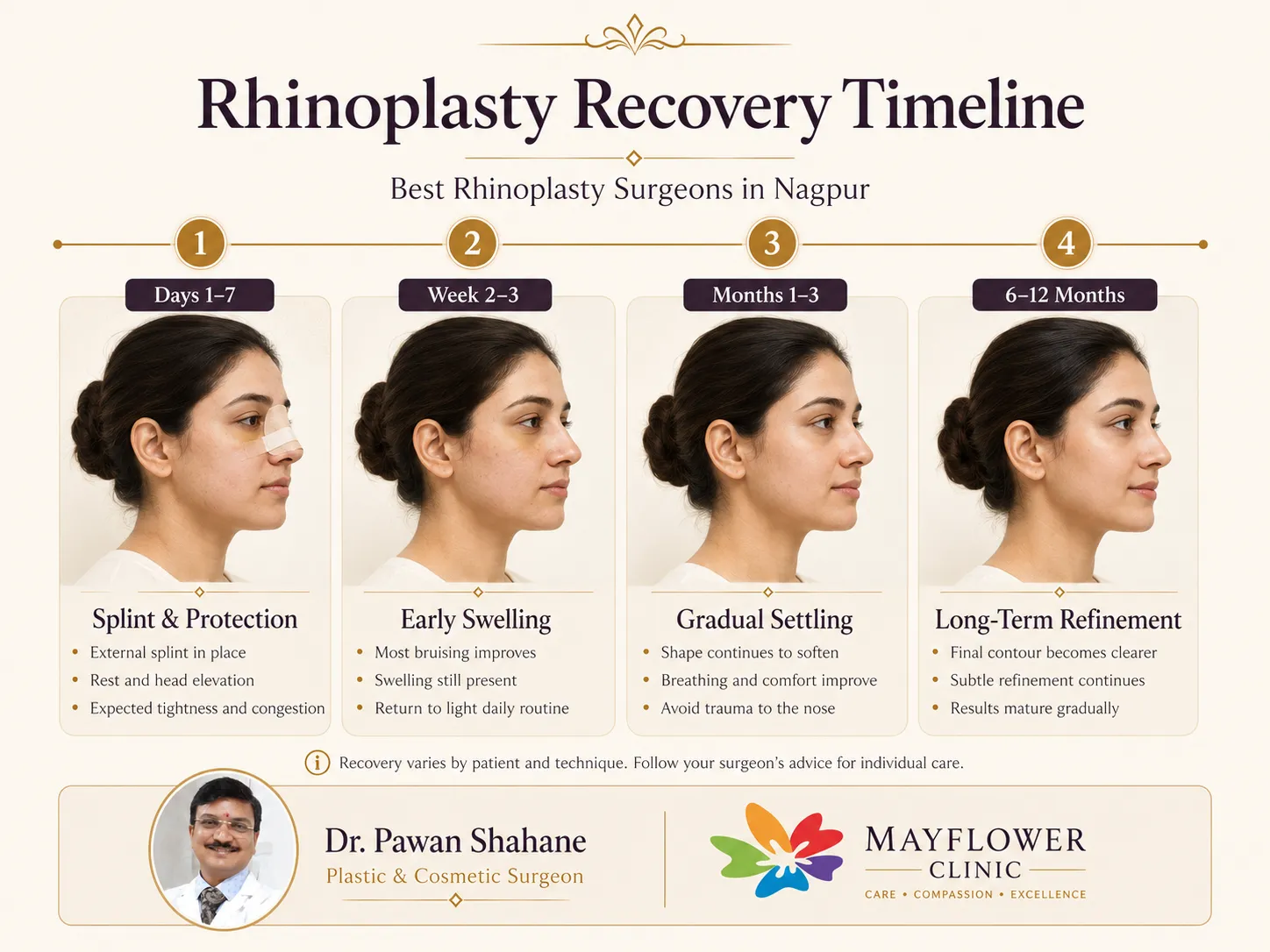
A splint is commonly used for about one week. Bruising and swelling improve gradually, while internal congestion and external refinement may continue to settle over weeks to months. Final tip refinement can take a year or longer in some patients.
What are the risks of combined rhinoplasty and septoplasty?
Risks can include bleeding, infection, asymmetry, persistent obstruction, septal perforation, altered sensation, scarring, contour irregularity, valve weakness and the possible need for revision surgery. Individual risk is discussed after examination.
Can allergy-related blockage be cured by septoplasty?
Septoplasty can address structural narrowing but does not cure allergic rhinitis. Medical treatment may still be required for swelling, sneezing, discharge or seasonal symptoms before and after surgery.
How much does rhinoplasty with septoplasty cost in Nagpur?
Cost varies with surgical complexity, anaesthesia, facility, grafting, previous surgery and the functional work required. A personalised estimate is provided after examination and planning rather than from photographs alone.