
Osteotomy planning
Controlled cuts may mobilize broad nasal bones so they can be repositioned. The pattern depends on bone width, height, asymmetry and the desired dorsal lines.

A nose may look broad because of the nasal bones, middle vault, tip, nostrils, alar flare—or several zones together. The plan must identify the true source of width, preserve support and breathing, and narrow only what is proportionate to the face.


“The safest aesthetic plan is to find where the width originates, refine each contributing zone conservatively, and preserve a stable airway and a nose that still belongs to the face.”— Dr. Pawan Shahane, M.Ch. Plastic Surgery
From the front, a broad appearance may begin high at the nasal bones, continue through the cartilaginous middle vault, appear mainly at the tip, or be concentrated at the nostril and alar base. The same outward concern can therefore require very different operations.
The assessment is not based on width alone. Dr. Shahane evaluates symmetry, skin thickness, tip support, septal position, nasal valve function, nostril shape, smiling-related flare and the relationship of the nose to the eyes, cheeks, lips and chin.
The objective is realistic narrowing with maintained structural strength. Over-narrowing can look pinched, expose asymmetry, distort the nostrils or compromise airflow. Some width may also be an important part of ethnic and personal identity and should not be erased by a standardised template.
Each zone is assessed independently and then as part of the whole face. Treating the wrong zone can produce little improvement—or excessive narrowing in the wrong place.
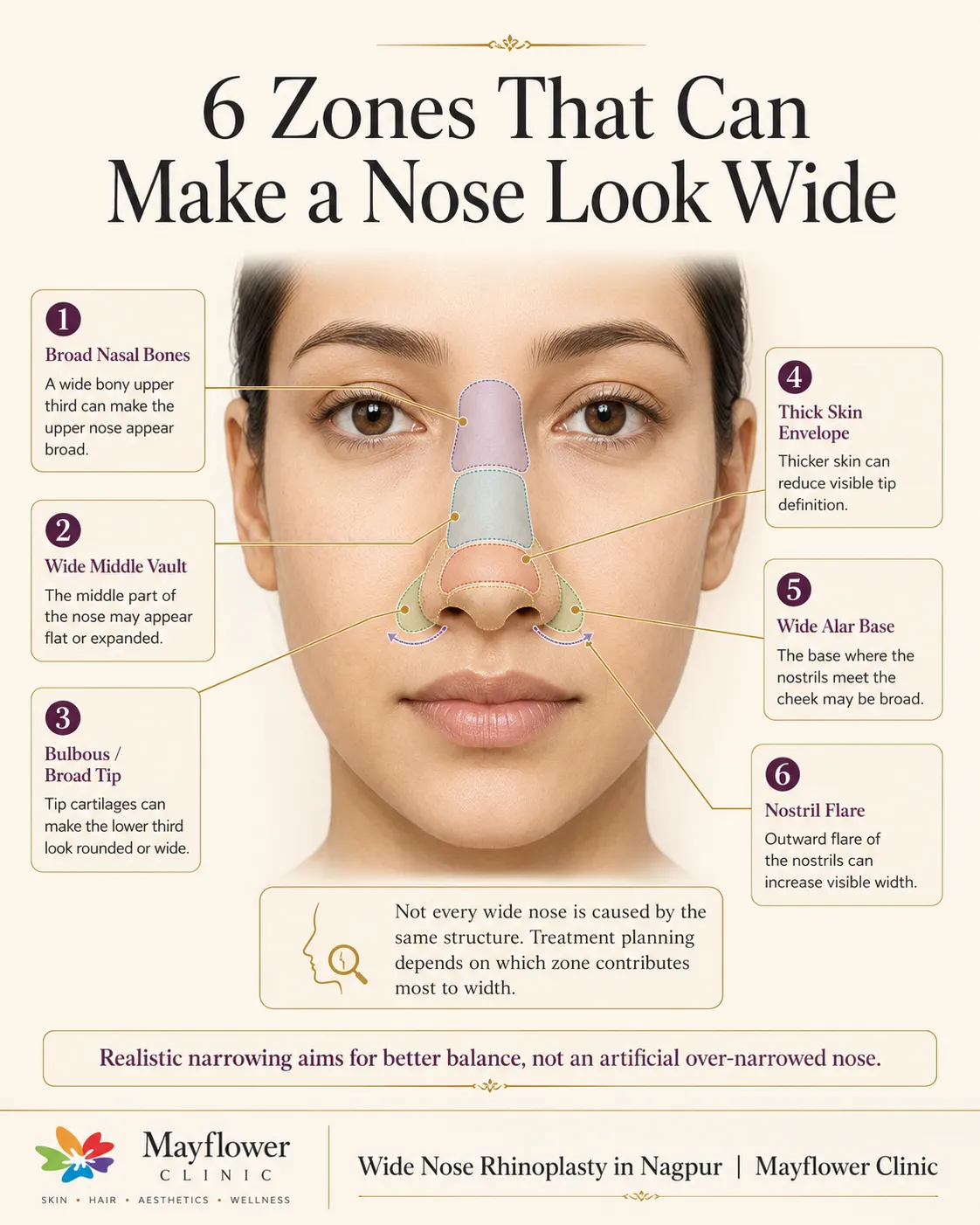
This educational visual separates upper-vault, middle-vault, tip, soft-tissue and nasal-base width so the surgical plan targets the true anatomical source rather than treating every broad nose in the same way.
Width in the upper third may require controlled bone repositioning rather than tip or nostril surgery.
The cartilaginous bridge must be assessed together with the internal nasal valve and dorsal support.
Tip width may reflect cartilage shape, divergence, weak support, projection or asymmetry.
Thick skin can mask fine cartilage definition and prolong swelling, limiting how sharp a tip can realistically appear.
The side walls may flare at rest, with smiling, or because tip projection and base relationships are unbalanced.
Nostril size, shape, axis and asymmetry are evaluated before considering any alar-base excision.
The operation is assembled from selected manoeuvres. Not every patient needs every step.
Controlled cuts may mobilize broad nasal bones so they can be repositioned. The pattern depends on bone width, height, asymmetry and the desired dorsal lines.
Narrowing must not collapse the internal valve or create an inverted-V contour. Support may be preserved or reconstructed according to anatomy.
Sutures, conservative cartilage reshaping and selected grafts can improve tip width, symmetry and support without an over-pinched appearance.
Small, carefully designed excisions may reduce true base width or flare. This is usually judged after bridge and tip changes are planned.
Septal deviation, valve narrowing or asymmetry may require functional correction or structural grafting during the same operation.
Changes are checked against facial width, eye spacing, cheek and chin projection—not against a single universal measurement or celebrity nose.
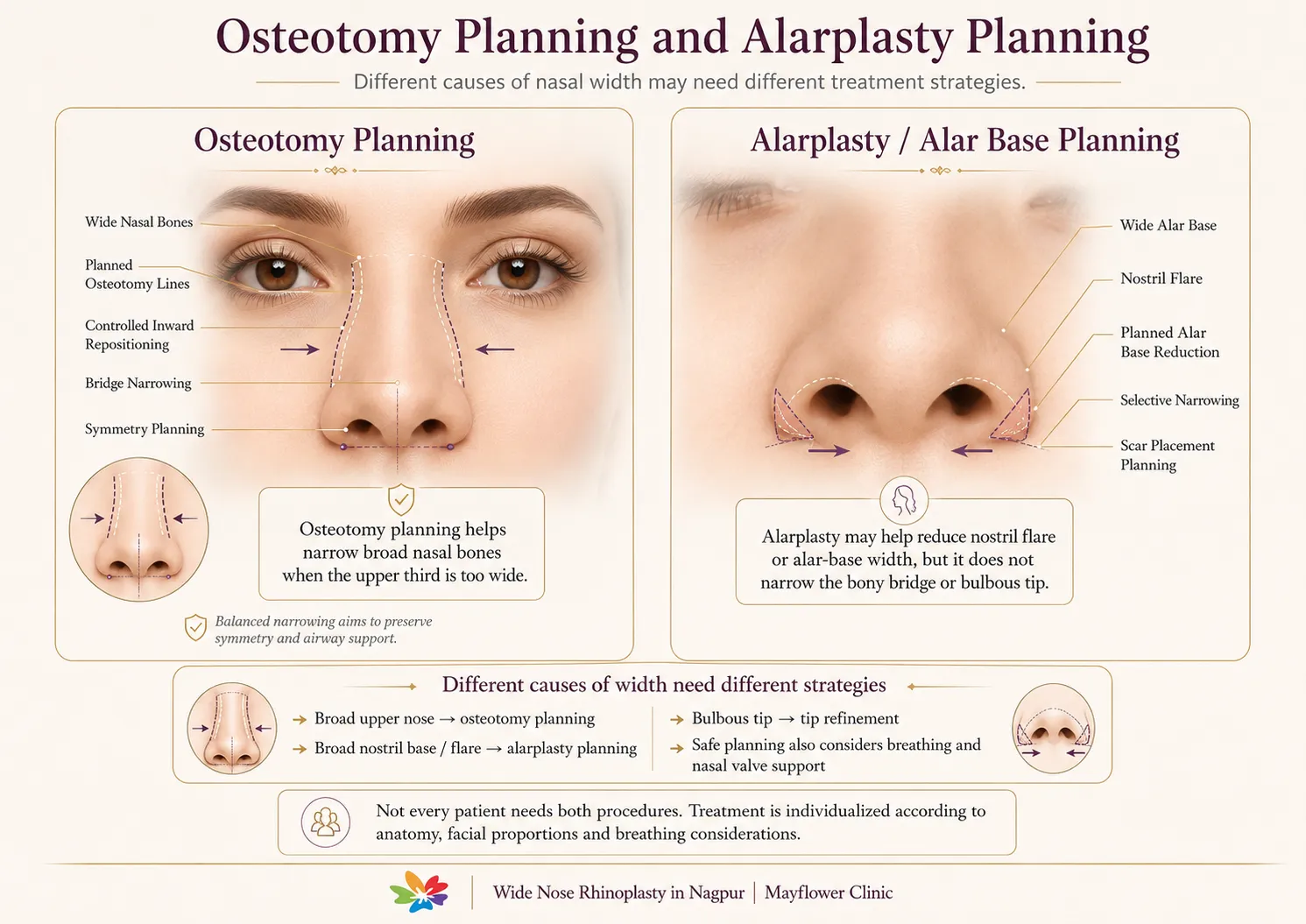
Osteotomies address width in the bony upper third, while alarplasty or alar-base reduction addresses selected nostril-base width or flare. They solve different problems and may be used separately or together only when the anatomy requires it.
The nasal base is a three-dimensional structure involved in appearance and external-valve function. “More removal” does not mean a better result. The final width should remain compatible with the tip, columella, upper lip and the patient's facial identity.
Practical rule: narrow the exact anatomical source of width—do not use nostril surgery as a substitute for bridge or tip surgery.
Blocked breathing, one-sided obstruction, previous trauma, allergies, mouth breathing and prior nasal surgery should be discussed—not treated as separate from cosmetic planning.
The septum, turbinates, internal valve, external valve and side-wall support are examined where clinically indicated.
Structural support may need preservation or reconstruction when bridge narrowing could reduce the internal valve angle or weaken dorsal lines.
Septoplasty or functional rhinoplasty manoeuvres may be combined when deviation or structural collapse contributes to obstruction.
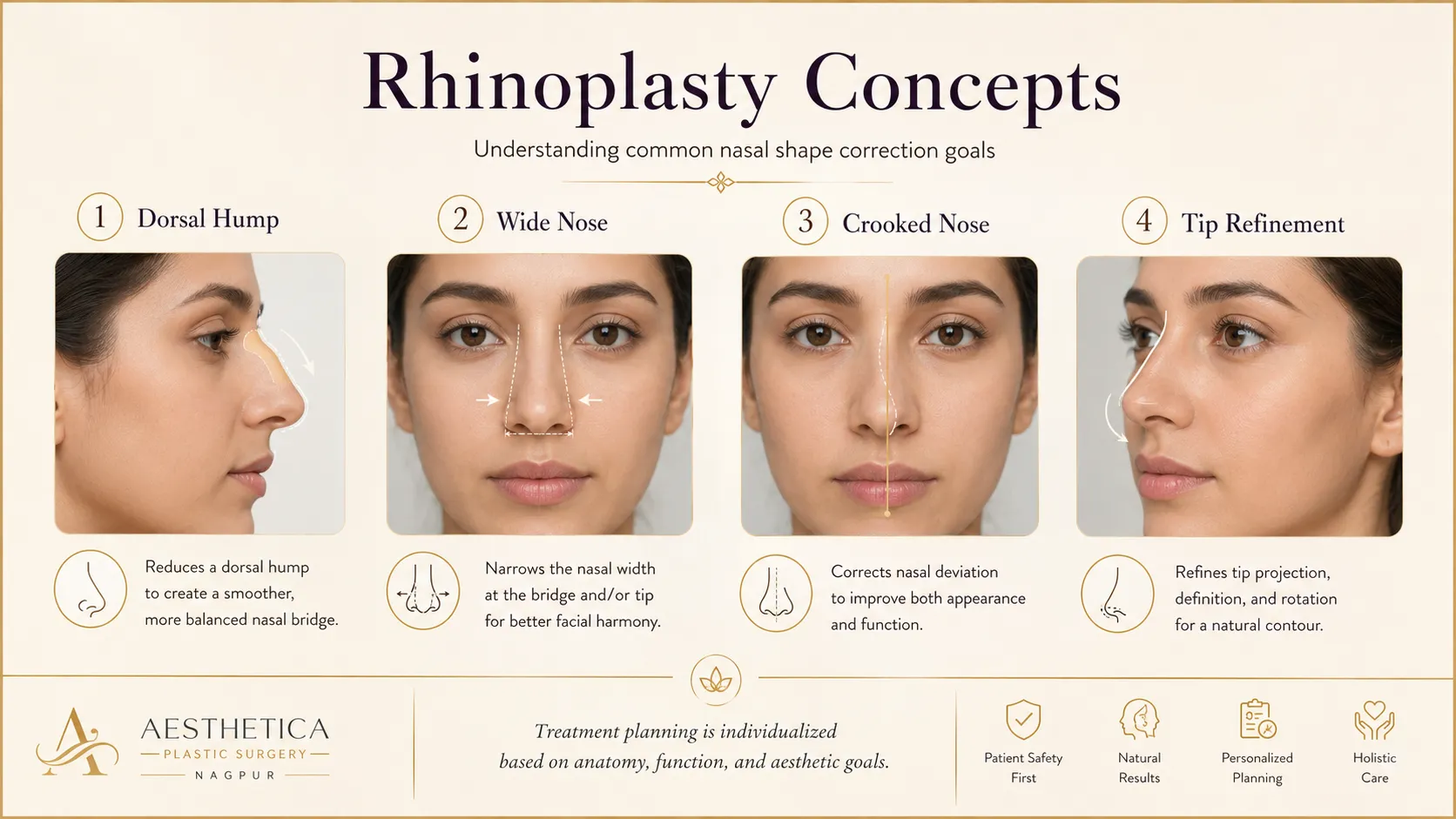
A broad bridge, tip or base must be identified separately. One technique cannot reliably correct every level.
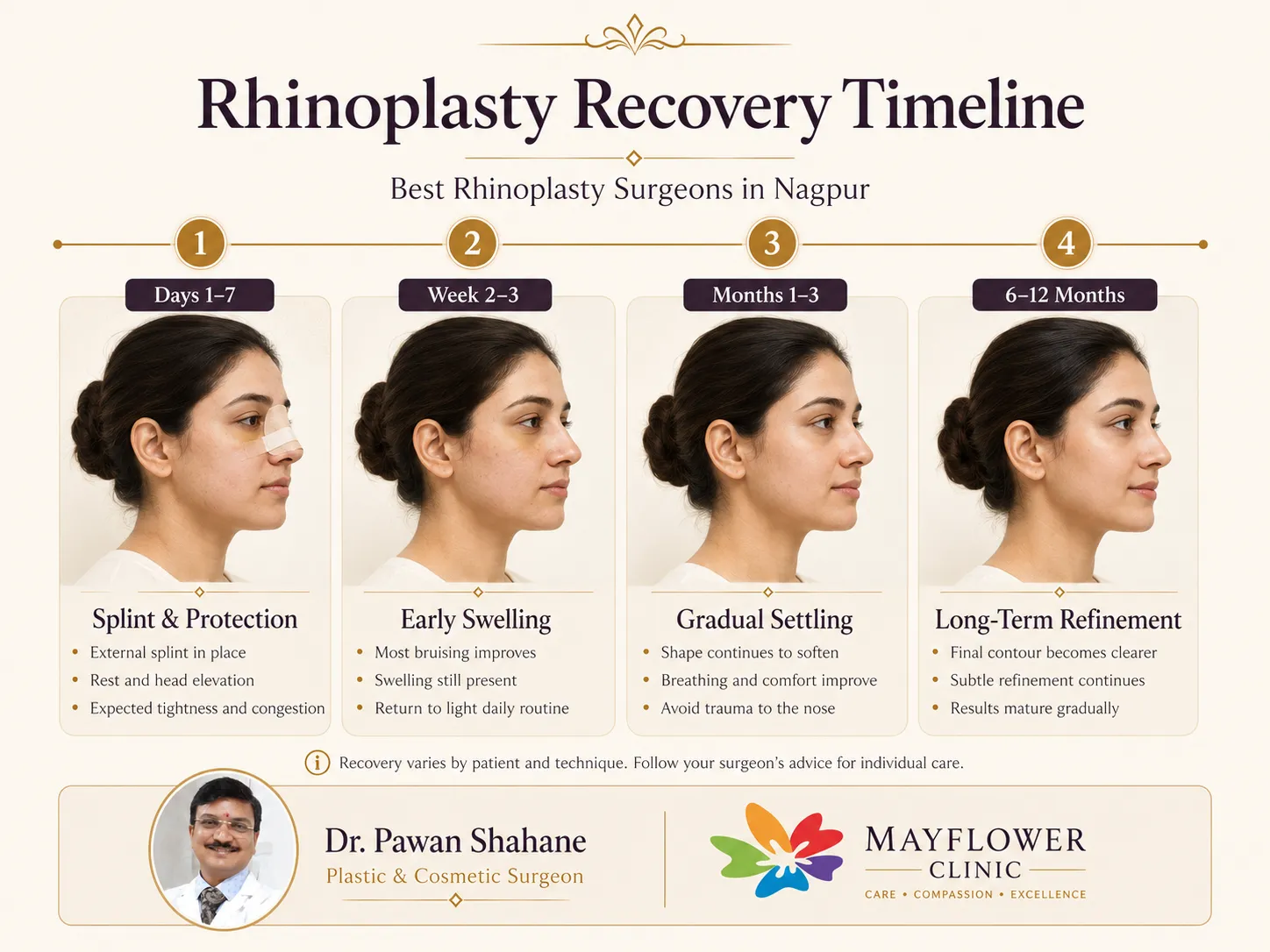
The bridge often looks acceptable earlier than the tip and alar region, which can remain swollen for months.
Discuss what appears broad, which views bother you, breathing symptoms, previous injury or surgery, and the degree of change you hope to see.
Standardized frontal, basal, oblique and profile views help distinguish bone, middle-vault, tip, flare and nostril-base contributions.
Skin thickness, cartilage support, facial proportions, airway safety, scar behaviour and asymmetry are included in the counselling.
The access route is chosen for the required osteotomies, tip exposure, grafting, asymmetry correction and surgeon control—not because one label is universally superior.
Bone, middle vault, tip, septum and alar base are addressed in a planned sequence, with repeated checks for symmetry, support and airway.
Bruising and swelling improve, but the nose will not yet show its final frontal definition. Avoid pressure, impact and unsanctioned manipulation.
Tip and base swelling settle slowly. Follow-up photographs help compare progress more reliably than daily mirror checking.
Use the advised head elevation and avoid sleeping with direct pressure on the nose during early healing.
Protect the splint, avoid crowded situations and follow instructions about spectacles resting on the bridge.
Return to exercise only according to the surgeon's schedule; contact or impact risk needs longer restriction.
Front-view swelling may make the bridge, tip or base look broader or uneven before it settles.
Clean alar-base or columellar incisions only as instructed and use sun protection after healing permits.
Contact the clinic for worsening one-sided pain, significant bleeding, fever, breathing deterioration or any urgent concern.
These four slots are intentionally left as placeholders so that only authentic, consented patient photographs are published. Replace each slot with the matching WordPress media URL after approval.
Individual experiences do not predict another patient's outcome. Excerpts below are from the clinic's verified Google review inventory.
“I am very happy with my nose surgery, rhinoplasty. It's been 3 weeks and results are awesome. I wanted a sharp tip, and I was having a broad nose.”
“Best experience of rhinoplasty, my sister was having depressed nose and broad nose. We met with Dr. Shahane and discussed the issue. We got best result.”
“He explains everything and how to take care. He support at every stage and do the surgery as planned.”
Frontal width may come from broad nasal bones, a wide middle vault, a broad or bulbous tip, thick skin, flared alae, a wide nostril sill, or a combination of these. The treatment plan depends on which zones are contributing.
Yes, but only when nostril or alar-base width is the main concern. Nostril narrowing does not correct broad nasal bones, a wide middle vault or a bulbous tip, so isolated alar-base reduction is not suitable for every wide nose.
Not always. Osteotomies are considered when the bony vault itself is broad or needs repositioning. The need, direction and extent are decided after examination, photographs and assessment of the bridge, septum and facial proportions.
Tip refinement may use cartilage sutures, conservative reshaping or structural grafting. The realistic degree of definition depends on cartilage strength, tip support, skin thickness and healing biology.
Incisions are usually planned in or near natural creases, but every incision can leave a scar. Careful design helps reduce visibility, while individual scar behaviour, skin type and aftercare also affect the final appearance.
It can if the nasal framework or valve area is narrowed without adequate support. Breathing history and the internal nose should therefore be assessed before surgery, and structural support or septal correction may be included when indicated.
Neither approach is automatically better. Closed rhinoplasty may suit selected changes, while an open approach may provide wider exposure for complex tip, asymmetry or structural work. The anatomy and planned manoeuvres determine the approach.
The goal is proportional narrowing rather than the smallest possible nose. Bone width, cartilage shape, skin thickness, nostril form, facial width and airway safety place practical limits on how much change is advisable.
Thicker skin can soften the visibility of fine cartilage detail and may retain swelling longer. Structural tip support and realistic counselling are especially important when the skin-soft tissue envelope is thick.
Early swelling improves over the first weeks, but the front view—especially the tip and alar region—continues to settle for many months. Final refinement may take around a year and sometimes longer in thick skin or revision cases.
Yes, when septal deviation or internal structural problems contribute to obstruction or asymmetry. A combined plan should balance cosmetic narrowing with preservation or improvement of nasal airflow.
The nose is assessed in relation to the eyes, cheeks, chin, facial width and overall identity. Measurements are guides rather than rigid beauty rules; the plan is individualized to the patient's anatomy and goals.
This spoke page connects the broad-nose concern to the main rhinoplasty pillar, surgical planning, technique comparison and related bridge or cosmetic pages.
Bring the frontal, oblique or smiling concerns you want to discuss. The consultation will identify whether the width comes from bone, middle vault, tip, alar flare or the nostril base—and what degree of narrowing is realistically safe.

Case of the Month: Grade 3 Gynecomastia…

The Science of Facial Aging: Why Wrinkles,…