

Why the Chin Can Change How the Nose Looks
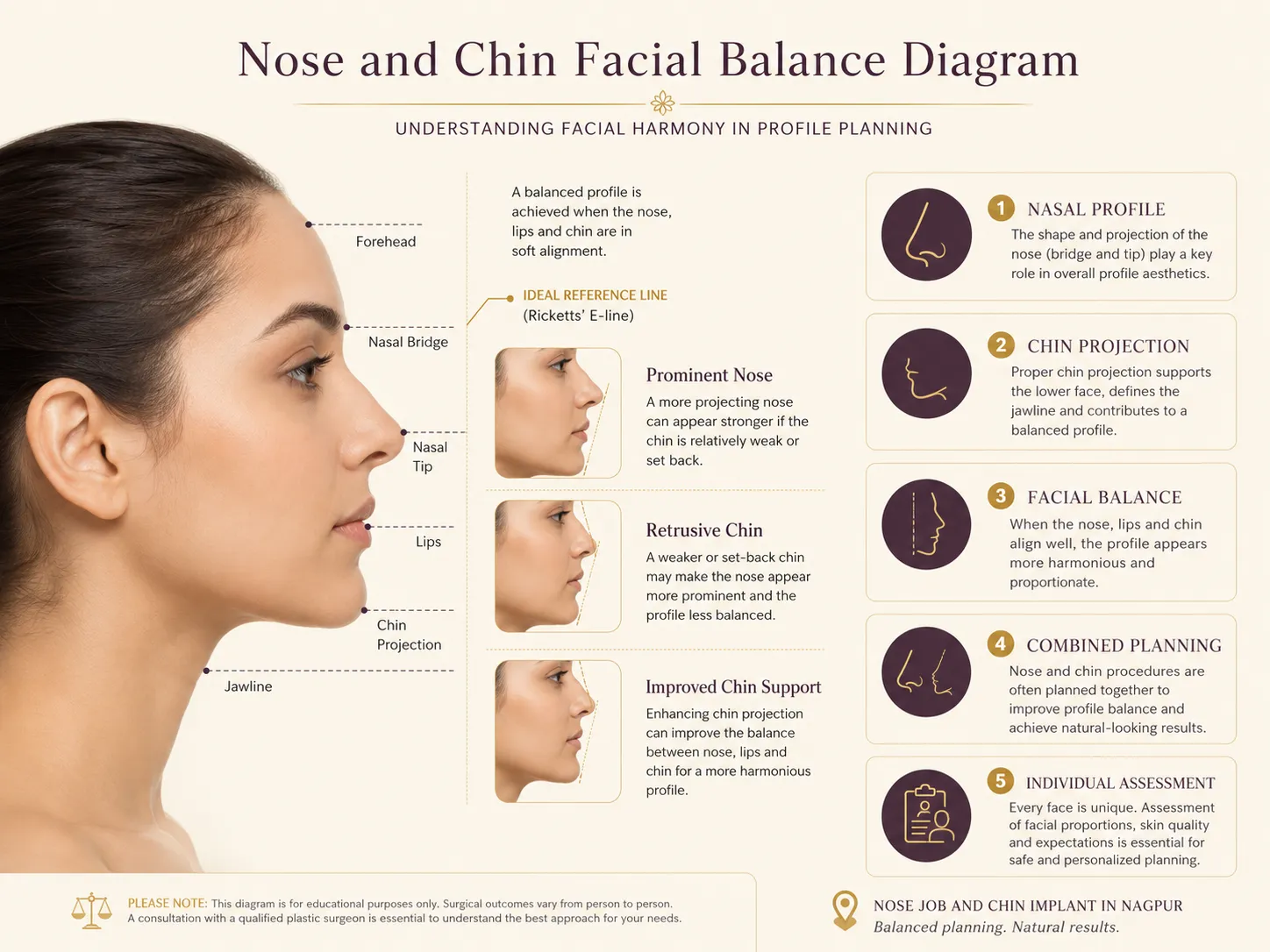
The side profile is read as a sequence: forehead, nasal bridge, nasal tip, lips, chin and neck. When the chin sits relatively far behind the lips, the nose may appear more projected even when its size is within a normal range. Conversely, a genuinely prominent hump, drooping tip or long nose may remain the main concern even when chin projection is adequate.
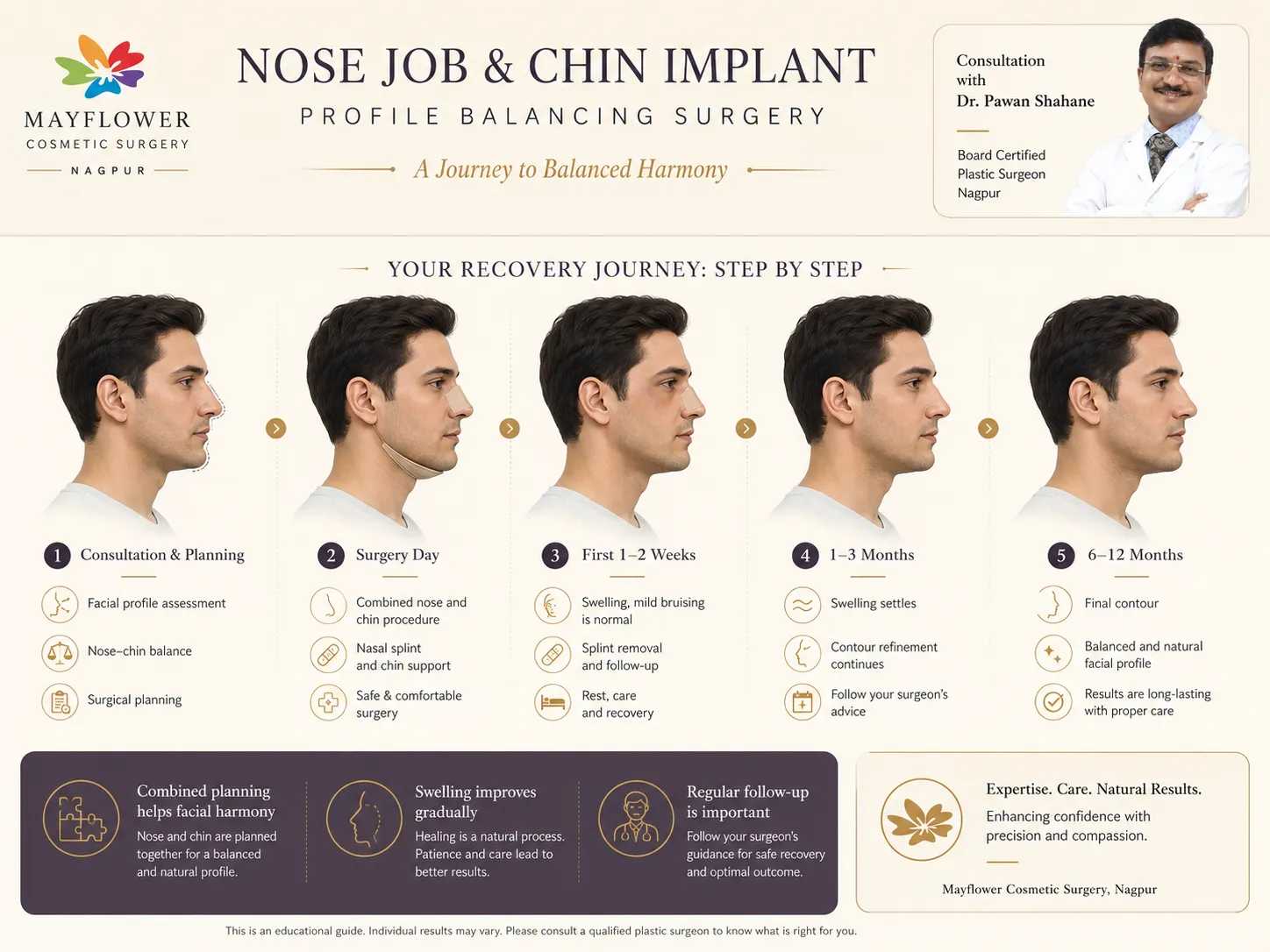
Combined planning therefore starts by separating true nasal prominence from relative prominence caused by a small or receding chin. It also considers facial height, lip position, jawline, neck contour, dental bite, sex-specific preferences, ethnicity and the patient’s own goals.
The aim is not a mathematical “ideal.” It is to identify which structural relationships are creating the concern and to choose the least extensive plan that can reasonably address them.
Concerns that may be assessed together
- Dorsal hump, long nose or excessive nasal projection
- Drooping, broad, bulbous or poorly supported nasal tip
- Flat bridge or insufficient nasal definition
- Underprojected, short, narrow or asymmetric chin
- Weak transition from chin to neck in side view
- Nasal obstruction from septal or structural problems
- Previous rhinoplasty or chin surgery requiring revision planning