0712 6692706 / 0712 3551170 / +91 8087471244   |   contact@mayflowerclinic.in
M.Ch. Plastic Surgery · Function-first care · Nagpur

Reconstructive Plastic Surgery in Nagpur — Restoring Function, Protection and Form

Reconstructive plastic surgery addresses tissue damage or structural problems caused by injury, wounds, burns, congenital differences, cancer treatment or previous surgery. The first goal is not a cosmetic promise—it is a clear, medically appropriate plan for healing, protection and useful function.

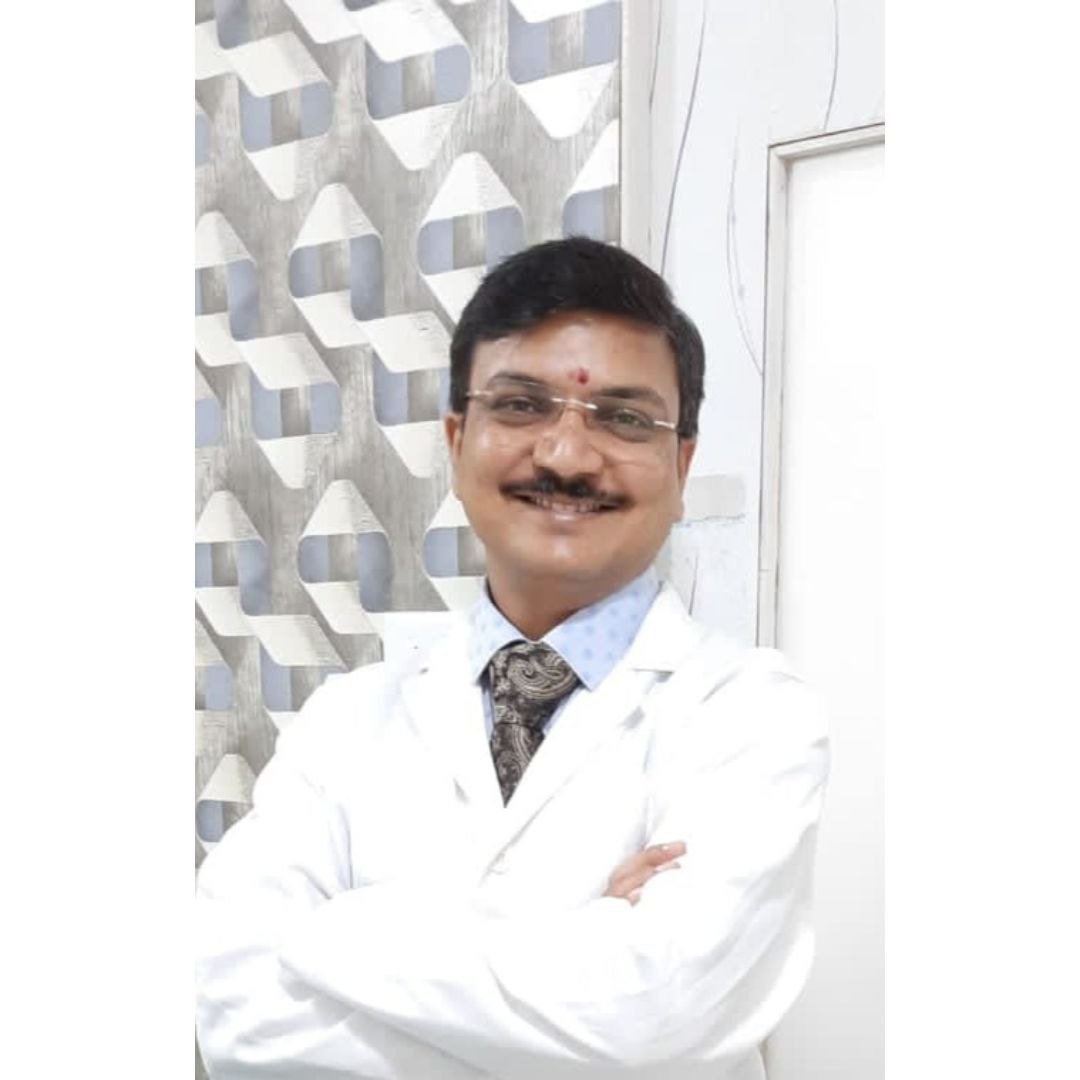
Dr. Pawan Shahane, M.Ch. Plastic Surgery
Reviewed by Dr. Pawan Shahane, M.Ch. Plastic Surgery 21+ years surgical practice · Ex-Asst. Prof. GMC Nagpur · IAAPS Member · 9 yrs ThreeBestRated Nagpur
Dr. Pawan Shahane discussing reconstructive plastic surgery treatment planning with a patient at Mayflower Clinic Nagpur
Mayflower Clinic · Dhantoli Specialist assessment for reconstructive problems involving the face, hand, nerves, tendons, wounds, burns and soft tissues.
21+Years of surgical practice
M.Ch.Plastic Surgery qualification
IAAPSProfessional membership
PersonalAssessment by Dr. Shahane
Quick guidance · Detailed explanations below

Quick Answer

Mayflower Clinic · Nagpur

Select the question closest to your concern.

Reconstructive plastic surgery may address tissue loss, wounds, facial or hand trauma, tendon or nerve damage, burn scar contractures, congenital differences and defects after tumour removal. Explore the service areas.

Reconstruction begins with a functional question: what must be protected, repaired or restored?

“A reconstructive plan should be built around the patient’s most important need—safe wound closure, useful movement, sensation, protection of vital structures or a staged return toward everyday function.”
Dr. Pawan Shahane, M.Ch. Plastic Surgery · Founder, Mayflower Clinic, Nagpur
Understanding reconstruction

What is reconstructive plastic surgery?

Reconstructive plastic surgery repairs damaged, missing or abnormally developed tissues. It may be required after an accident, infection, burn, tumour removal, a difficult wound, a congenital difference or an earlier operation. The specialty works across body regions because the reconstructive problem is defined by tissue and function—not by one organ alone.

A plastic surgeon may assess skin and soft-tissue coverage, scars, tendons, nerves, blood vessels, movement, sensation and the relationship between the wound and deeper structures. Imaging, laboratory tests or assessment by orthopaedic, maxillofacial, vascular, oncology, physiotherapy or other teams may be needed before a final plan is made.

Not every patient needs an operation. Dressing care, splinting, rehabilitation, monitoring or treatment by another specialty may be more appropriate in selected situations. When surgery is considered, the expected benefit must be weighed against the condition of the tissues, anaesthesia needs, recovery, scarring, rehabilitation and the possibility of staged procedures.

Reconstructive planning may focus on:

  • Stable wound closure and tissue coverage
  • Protection of bone, tendon, nerve or vessels
  • Restoration of movement or useful position
  • Improvement in sensation or nerve continuity
  • Release of limiting scars or contractures
  • Repair after trauma or tumour removal
  • Management of congenital differences
  • Appearance as part of balanced reconstruction
Reconstructive service navigation

Which reconstructive problem are you looking for?

Choose the page closest to the injury, tissue or functional problem. Serious new injuries and rapidly worsening wounds should be assessed urgently rather than managed through website advice.

Face Injury Treatment

Assessment of facial wounds, soft-tissue injury, scars, eyelid or lip involvement and associated functional concerns.

Open face injury page →

Maxillofacial Surgery

Planning for selected facial fractures and complex injuries involving facial bones, soft tissues and facial function.

Open maxillofacial page →

Hand Injury Treatment

Evaluation of wounds, fractures, joints, tendons, nerves, blood supply, fingertip injuries and hand function.

Open hand injury page →

Vascular Injury Surgery

Assessment of selected blood-vessel injuries affecting tissue circulation, bleeding control and limb viability.

Open vascular surgery page →

Nerve Surgery

Evaluation of nerve cuts, compression, traction injuries, weakness, altered sensation and selected painful nerve problems.

Open nerve surgery page →

Tendon Injury Treatment

Assessment of lost movement, tendon cuts or rupture, delayed injury, tendon adhesions and reconstruction options.

Open tendon injury page →

Brachial Plexus Surgery

Specialist planning for complex nerve injuries affecting the shoulder, arm, elbow, wrist or hand.

Open brachial plexus page →

Onco-plastic Reconstruction

Reconstruction of selected tissue defects after tumour removal, coordinated with the treating oncology team.

Open onco-plastic page →

Complex Leg Wounds

Planning for difficult lower-limb wounds, exposed deeper structures, infection risk and durable soft-tissue coverage.

Open complex leg wounds page →

Congenital Deformity Treatment

Age-appropriate, family-centred assessment of congenital differences, function, growth and staged correction.

Open congenital deformity page →

Burn Reconstruction Surgery

Assessment of burn scars, contractures, unstable scars and functional restriction after the burn wound has healed.

Open burn reconstruction page →
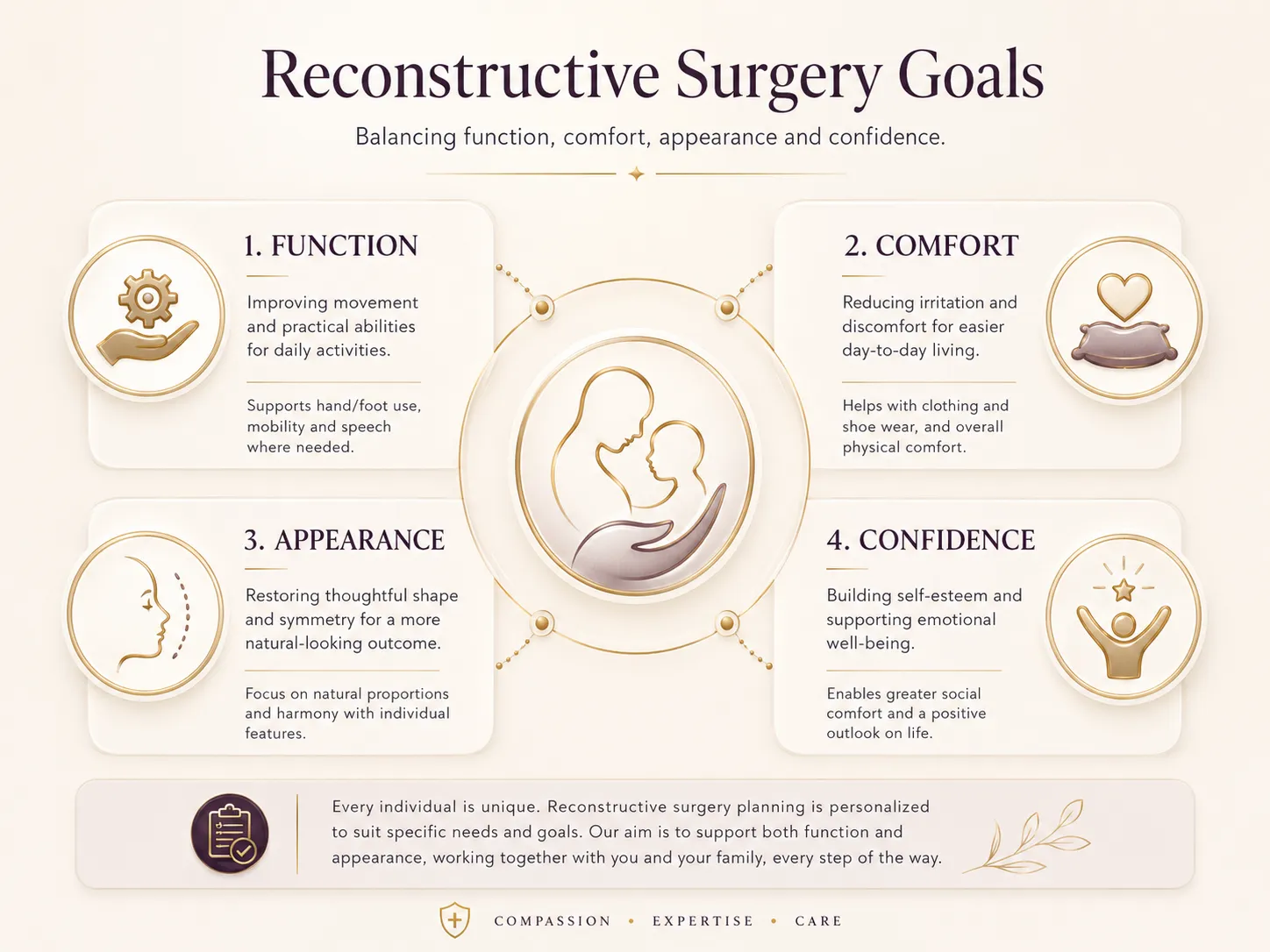
Patient education infographic showing balanced goals of reconstructive plastic surgery including function, comfort, protection and appearance
Reconstructive goals are selected for the individual problem; not every goal applies to every patient.
Balanced treatment goals

Function and appearance are considered together—but not equally in every case

In an open wound, the immediate priority may be infection control and coverage of exposed structures. In a hand injury, tendon glide, joint position, nerve recovery and rehabilitation may guide the plan. After a facial injury, eye protection, mouth opening, breathing, facial movement and symmetry may all require assessment.

Reconstructive surgery does not erase the original injury or guarantee normal anatomy. It aims for the most useful and durable improvement reasonably possible within the limits of tissue quality, time since injury, scarring, general health and rehabilitation.

  • Protect vital structures
  • Achieve stable wound healing
  • Preserve or improve movement
  • Support useful sensation
  • Reduce disabling contracture
  • Plan scars thoughtfully
Reconstructive methods

Techniques may be combined or performed in stages

The method is chosen only after examination. A simpler reliable repair is often preferable to a more complex operation when it can meet the functional goal.

01 · Wound preparation

Cleaning and tissue assessment

Removal of unhealthy tissue, infection control and repeated wound review may be required before definitive coverage.

02 · Direct repair

Primary closure or tissue repair

Selected wounds, tendons, nerves or other structures may be repaired directly when tissue condition and tension permit.

03 · Skin replacement

Skin grafting

A graft may cover a prepared wound when the wound bed can support it and thicker tissue is not required.

04 · Tissue coverage

Local or regional flaps

Nearby tissue with its blood supply may be moved to protect exposed bone, tendon, joint, nerve or a difficult wound.

05 · Functional reconstruction

Tendon or nerve reconstruction

Repair, grafting, transfer, decompression or staged reconstruction may be considered for selected functional deficits.

06 · Scar reconstruction

Contracture release and revision

Restricting scars may require release, rearrangement, grafting, flap coverage, splinting and rehabilitation.

How care is planned

A reconstructive treatment journey is often a sequence—not a single event

The order changes for emergencies, infected wounds, delayed injuries and planned reconstruction.

1
First assessment

Define the injury, wound and functional problem

History, examination and relevant imaging help identify tissue loss, circulation, movement, sensation, infection and associated injuries.

2
Immediate priorities

Protect the patient and the injured part

Bleeding control, wound care, splinting, antibiotics when indicated, pain management and urgent referral may come before reconstruction.

3
Planning

Set realistic and measurable goals

The plan identifies what must be covered, repaired, released or restored and what limitations may remain.

4
Procedure

Perform the selected repair or reconstruction

The operation may be a direct repair, graft, flap, scar release, tendon or nerve procedure, or part of a staged reconstruction.

5
Early healing

Protect the reconstruction and monitor the wound

Dressings, splints, elevation, activity limits and scheduled reviews are tailored to the tissues repaired.

6
Rehabilitation

Recover movement, strength and daily function

Physiotherapy, hand therapy, scar management or sensory rehabilitation may be introduced at a safe stage.

7
Long-term review

Assess maturation and whether another stage is useful

Scars, nerve recovery, tendon glide and functional adaptation evolve over time; further surgery is considered only when a clear benefit is expected.

Do not delay emergency care

When a reconstructive injury needs urgent hospital assessment

This webpage is not an emergency service. Go to an emergency department or contact local emergency services for a serious new injury, uncontrolled bleeding, threatened circulation, major burns, breathing or vision concerns, or rapidly worsening infection.

Circulation concernCold, pale, blue or increasingly painful fingers, toes or limb.
Severe bleedingBleeding that does not stop with appropriate direct pressure.
Exposed structuresVisible bone, tendon, joint or deep tissue in a wound.
New loss of functionSudden inability to move, new numbness or rapidly increasing weakness.
Infection concernRapidly spreading redness, fever, pus, foul odour or worsening pain and swelling.
Face or burn emergencyBreathing difficulty, vision change, severe facial trauma, electrical or extensive burns.
Patient education library

Explore the anatomy, assessment and recovery pathways

These non-graphic educational images support the detailed procedure pages.

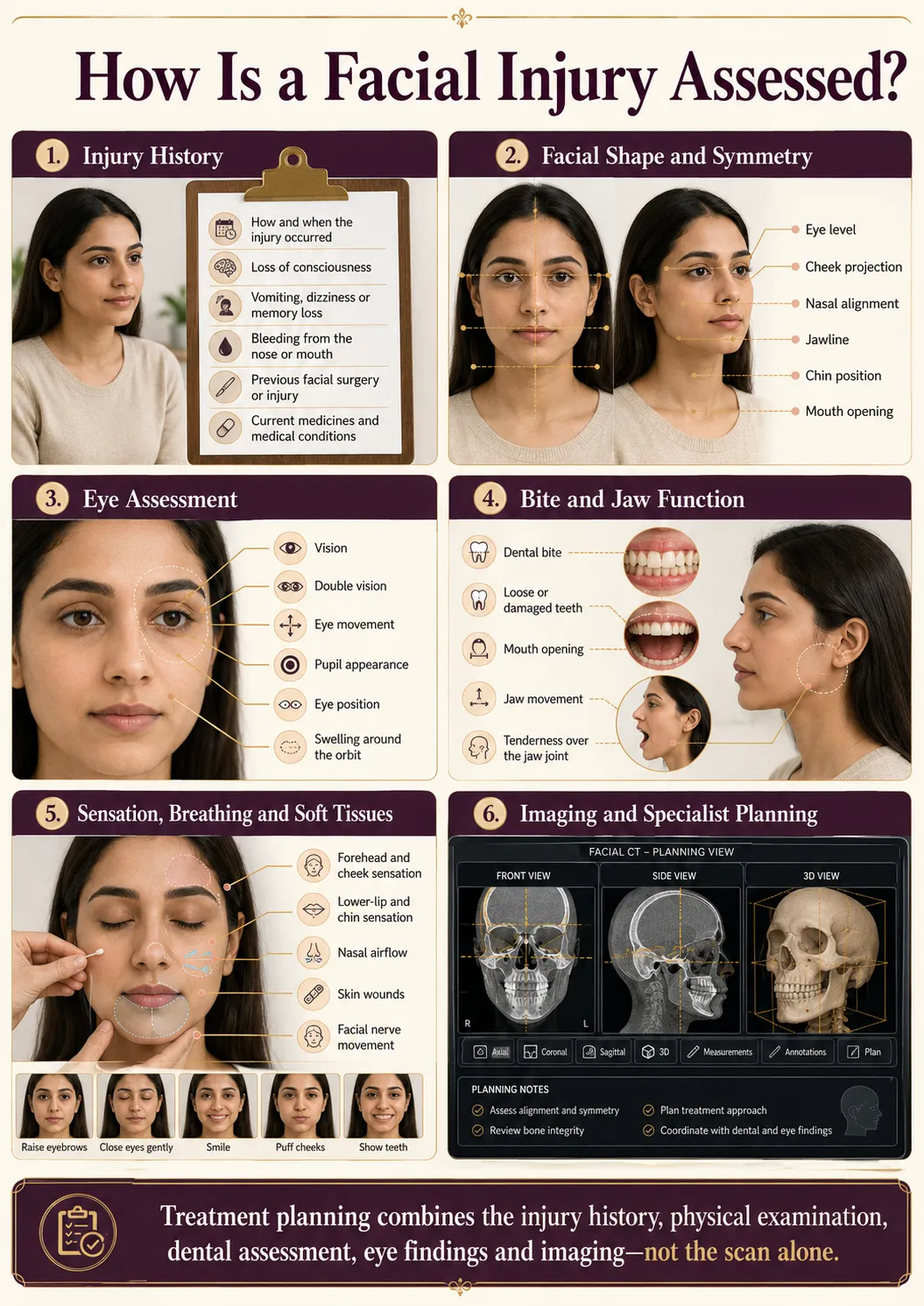
Clinical assessment steps for facial injury treatment
Facial injury assessmentWounds, bones, vision, bite, nerves and soft tissues.
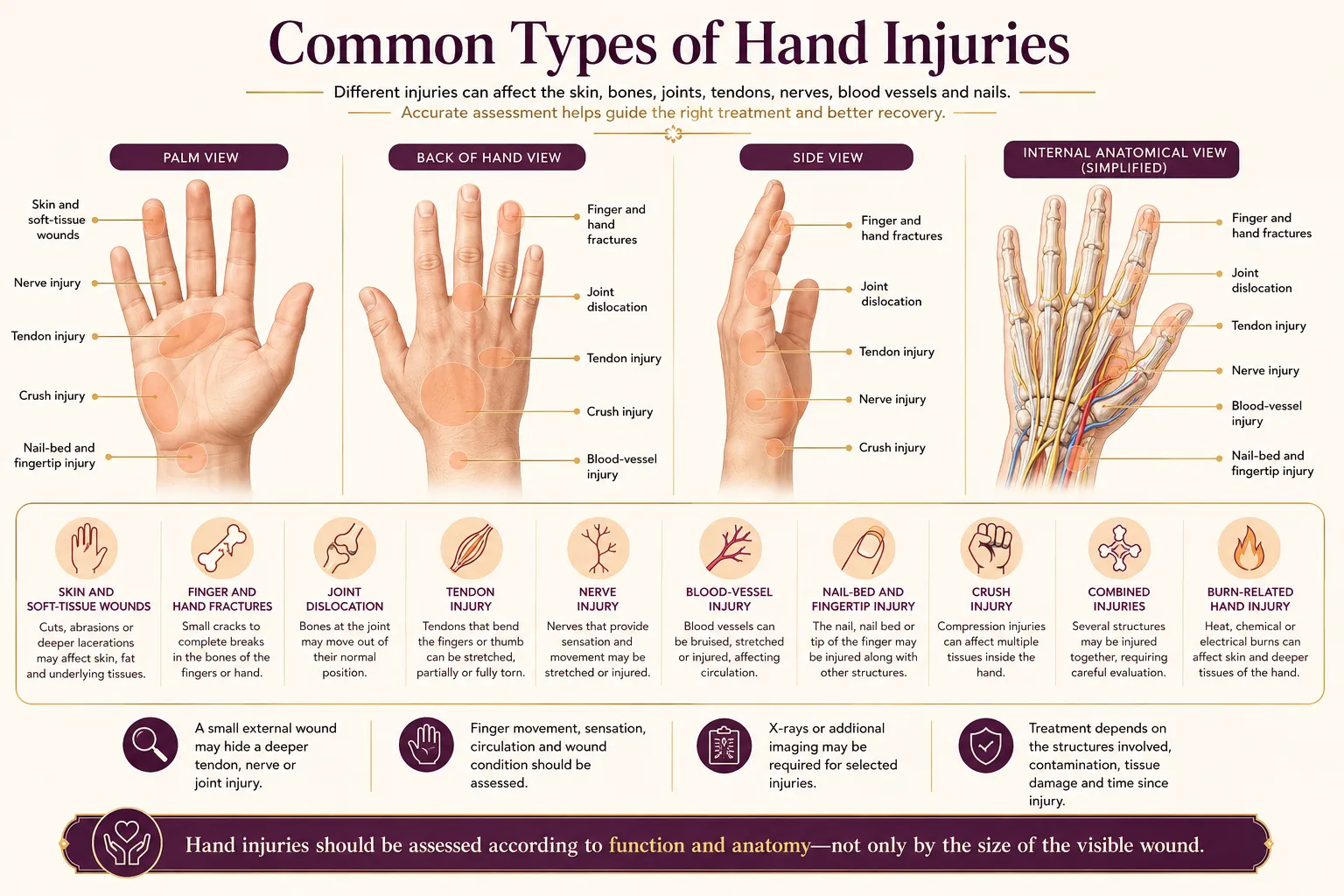
Anatomy map showing common types and locations of hand injuries
Hand injury anatomyBone, joint, tendon, nerve and fingertip injury zones.
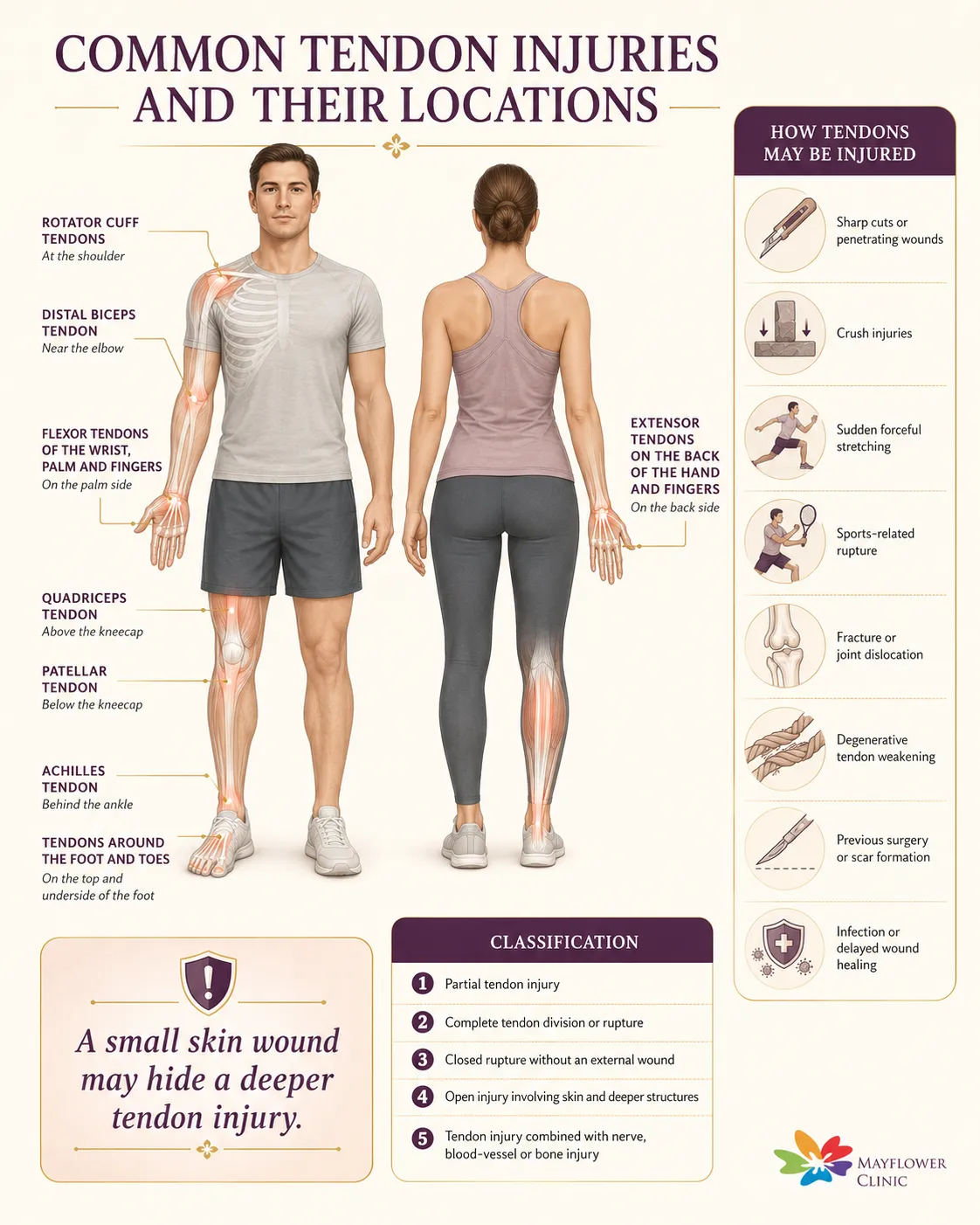
Anatomy map showing common tendon injury locations
Tendon injury locationsUpper- and lower-limb tendon pathways and injuries.
Staged assessment and correction plan for congenital deformity treatment
Staged congenital careEvaluation, timing, correction and follow-up planning.
Published patient experiences

What patients have said about their care

Individual experiences are not a promise of outcome. Quotes below are reproduced from published Mayflower Clinic testimonials and shortened only with an ellipsis.

Published patient experience
“I had accident and had trauma to face. Had scar on face and near my eye… Then i meet sir for plastic surgery. He explained me everything.”
RU
Rajendra UkeyPublished patient testimonial · Facial trauma/scar care
Published patient experience
“I had this lypoma in my right forearm… i came to see Dr. Pawan and he suggested me an amazing surgery… The surgery was really good and the doc is always there to help.”
DS
Dhanashree SadawartiPublished patient testimonial · Forearm surgery
Published patient experience
“Good experience. Highly skilled surgeon. Post op care and consultation was also done nicely… Thanks.”
MG
Mahika GoelPublished patient testimonial · Surgical care
Clear answers · Detailed assessment in person

Questions patients often ask about reconstructive plastic surgery

What is reconstructive plastic surgery?
Reconstructive plastic surgery aims to repair or replace tissue affected by injury, disease, a congenital difference or previous treatment. Planning usually prioritises protection, function and durable wound coverage while also considering appearance.
How is reconstructive surgery different from cosmetic surgery?
Reconstructive surgery is primarily directed at a functional, protective or medically important problem. Cosmetic surgery is usually chosen to change appearance in otherwise healthy anatomy, although the two fields can overlap.
Which problems may need reconstructive plastic surgery?
Examples include facial trauma, hand injuries, complex wounds, burns and scar contractures, nerve or tendon injuries, brachial plexus injuries, congenital differences and tissue defects after cancer treatment.
Does every reconstructive problem require surgery?
No. Some problems can be observed, dressed, splinted, rehabilitated or treated by another specialty. Surgery is advised only when assessment shows that it may improve protection, healing, movement, sensation or another defined goal.
Why is early assessment important after a serious injury?
Early assessment helps identify damage to skin, bone, joints, tendons, nerves and blood vessels, and helps coordinate wound care, imaging, antibiotics, splinting, surgery or referral without avoidable delay.
What techniques are used in reconstructive plastic surgery?
Depending on the problem, treatment may involve direct repair, scar release, skin grafting, local or regional flaps, tissue transfer, tendon repair or reconstruction, nerve repair or grafting and staged reconstruction.
Will I need more than one operation?
Some reconstructions can be completed in one procedure, while complex injuries, burn contractures, congenital differences and major tissue defects may require staged treatment and rehabilitation.
How long does recovery take after reconstructive surgery?
Recovery varies widely with the body area, wound condition, tissues repaired and rehabilitation required. Wound healing may take weeks, while nerve recovery, tendon rehabilitation, scar maturation or staged reconstruction may continue for months.
Is physiotherapy or hand therapy part of treatment?
It may be essential after selected hand, tendon, nerve, brachial plexus, burn and limb procedures. Therapy is timed to protect healing tissues while reducing stiffness and supporting useful movement.
Can reconstructive surgery completely restore normal function?
Complete restoration cannot be promised. Outcome depends on the original injury or condition, time since onset, tissue quality, infection, nerve and muscle status, general health, rehabilitation and healing biology.
When should a reconstructive injury be treated as urgent?
Urgent hospital assessment is appropriate for uncontrolled bleeding, a cold or pale limb, exposed bone or tendon, rapidly worsening swelling or infection, new loss of movement or sensation, severe facial injury, major burns or breathing or vision concerns.
How do I prepare for a reconstructive surgery consultation?
Bring previous reports, imaging, operation notes, a medicine list and a clear timeline of the injury or condition. Explain your main functional difficulty and any wound, pain, sensation or movement changes.


Arrange a Reconstructive Plastic Surgery Consultation in Nagpur

Bring previous operation notes, imaging, wound photographs taken for your medical records, current medicines and a timeline of the problem. For a new emergency injury, go directly to an appropriate emergency facility rather than waiting for a clinic appointment.

Medical Disclaimer: All surgical procedures carry inherent risks, and individual outcomes vary based on the original condition, anatomy, tissue quality, infection, general health, rehabilitation and healing biology. Surgical results are not guaranteed. Formal in-person consultation with Dr. Pawan Shahane is required before any surgical decision. This page is for general educational purposes only and does not constitute medical advice or a treatment recommendation. For emergencies, use an emergency department or local emergency services.