

What does “anti-ageing treatment” actually mean?
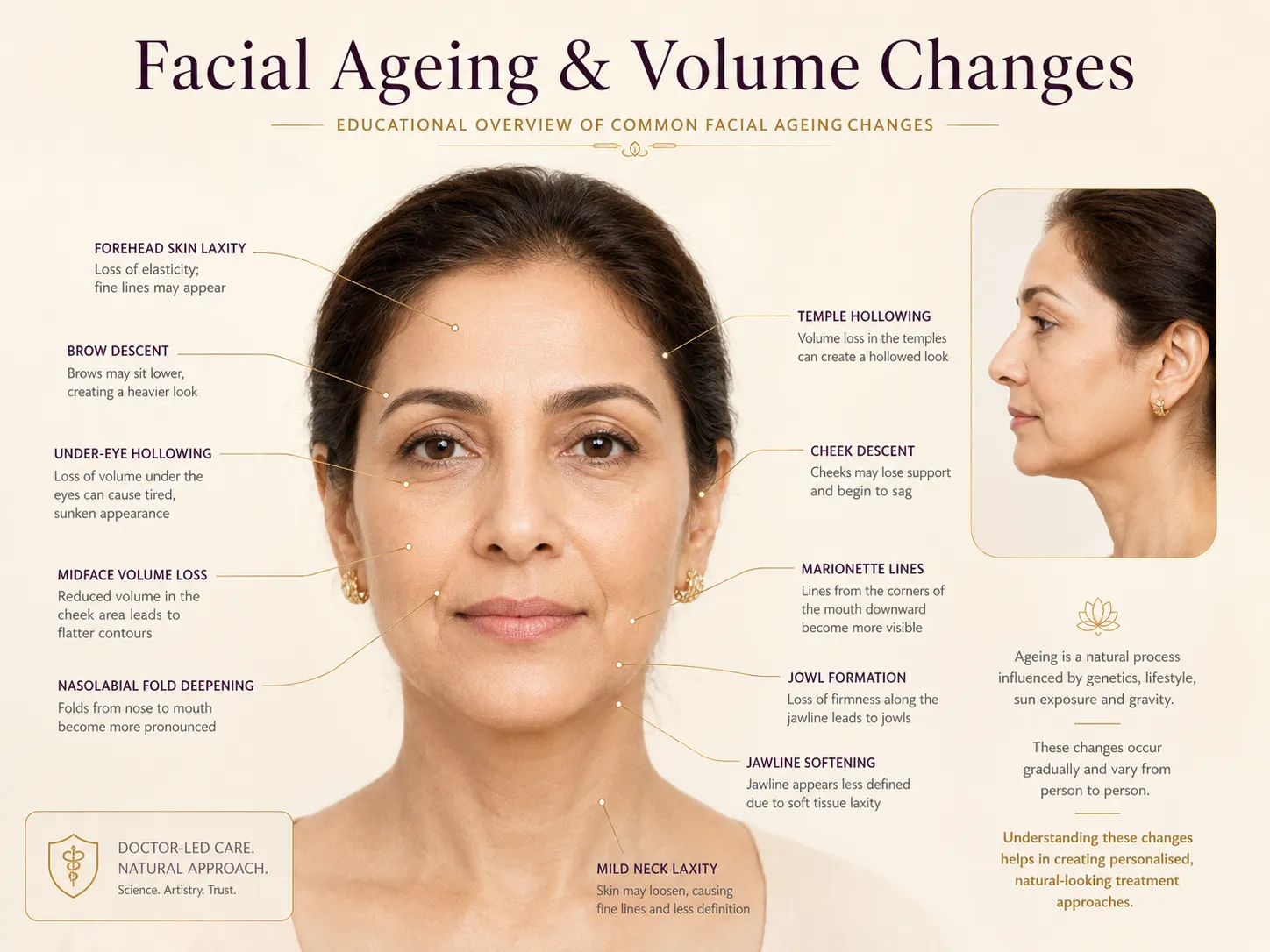
Ageing is not a defect and a face does not need to be made expressionless or unfamiliar. Clinically, facial ageing describes several overlapping changes: slower skin renewal, cumulative sun damage, repetitive muscle movement, reduction or redistribution of facial fat, changes in bone support, and gradual weakening or descent of soft tissues.
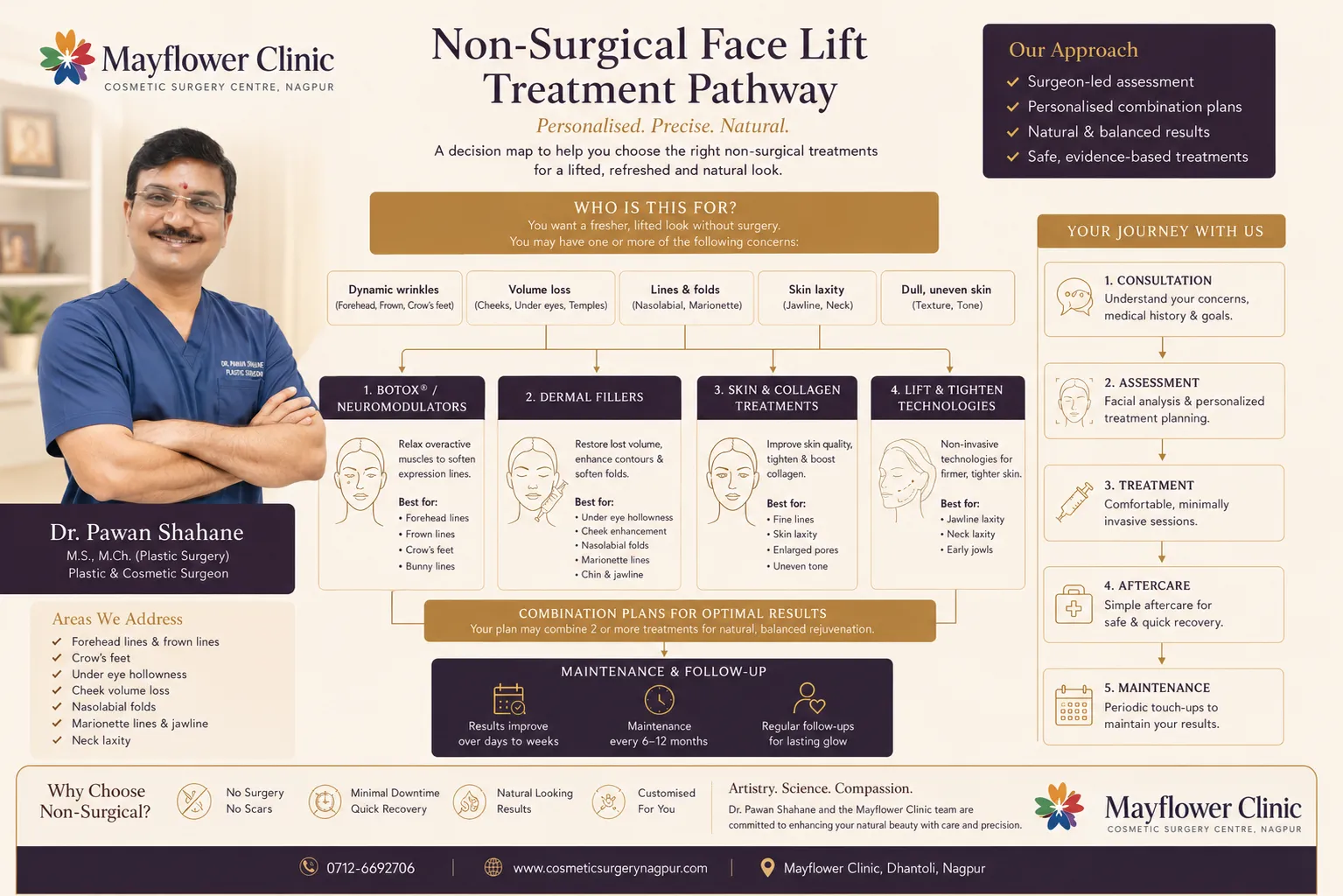
Because these changes occur at different depths, one treatment cannot address all of them. A peel may improve superficial dullness but cannot replace lost cheek volume. Filler may restore selected volume but cannot reliably remove major loose skin. Botulinum toxin can soften expression lines but does not treat pigmentation. A facelift may reposition descended tissues but does not replace daily sun protection or skin care.
The purpose of consultation is therefore to identify the dominant concern and choose the least invasive option that can reasonably address it—while explaining what it cannot do.
Common concerns assessed
- Forehead lines, frown lines and crow’s feet caused partly by muscle activity
- Dullness, rough texture, enlarged pores, sun damage or uneven pigmentation
- Under-eye hollowing, shadows, fine lines or eyelid skin laxity
- Flattening of cheeks, temple hollowing or changes around the mouth
- Early jowls, jawline blurring, neck laxity or tissue descent
- Old acne scars or surface irregularities that become more visible with age