
Correct diagnosis
Differentiate phimosis, scarring, inflammation, short frenulum, previous surgery and elective preference before choosing a procedure.

“New generation” should describe a thoughtful modern surgical pathway—not a promise that one device is automatically painless, bloodless, stitchless or superior for every patient. At Mayflower Clinic, technique is selected only after examining the foreskin, skin quality, scarring, inflammation, anatomy and your priorities.


The phrase New Generation Laser Circumcision is useful only when it explains a modern care pathway. It should not be presented as a proprietary invention, a guaranteed cosmetic upgrade, a “no pain” operation or a promise of zero bleeding.
Published research has evaluated CO₂ laser-assisted circumcision and suggests that laser use can offer peri-operative advantages in selected settings. However, study techniques differ, and those findings do not remove the normal risks of circumcision or prove that laser is the best choice for every anatomy.
This page therefore focuses on selection, planning, precision, haemostasis, closure, recovery and informed consent. For a simpler explanation of laser as the cutting/coagulation tool itself, see Laser Circumcision Surgery.
Circumcision removes the foreskin covering the glans. In a laser-assisted approach, surgical laser energy may be used during tissue division and haemostasis. The important part is not the word “laser” alone: the final contour depends on appropriate foreskin removal, symmetry, frenular assessment, protection of deeper structures, bleeding control and careful wound closure.
Before surgery, Dr. Pawan Shahane examines whether the problem is true phimosis, scarring, recurrent inflammation, a short frenulum, previous circumcision change, or an elective request. A patient with active infection, significant skin disease, unusual anatomy, complex scarring or previous surgery may require a different plan.
Laser energy does not replace surgical judgment. It can assist controlled cutting and coagulation, while the surgeon still determines how much tissue to remove, where to place the final line, how to protect the glans and frenulum, and how to close the wound.
A contemporary circumcision plan should improve decision quality—not simply replace a scalpel with a laser.
Differentiate phimosis, scarring, inflammation, short frenulum, previous surgery and elective preference before choosing a procedure.
Plan how much foreskin is to be removed and where the final circumferential line should sit rather than using one fixed template.
Laser energy may assist tissue cutting and coagulation, but depth and tissue protection remain surgeon-controlled.
The wound is checked for bleeding rather than assuming laser makes the operation bloodless.
Fine absorbable sutures are commonly used. “Laser” does not automatically mean stitchless circumcision.
Dressing, hygiene, activity, swelling, erections, medicines, follow-up and warning signs are explained before discharge.
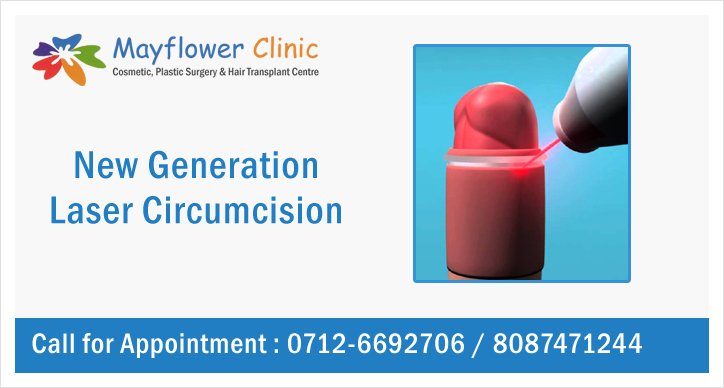
Clinical studies comparing CO₂ laser-assisted circumcision with conventional surgery have reported potential benefits such as shorter operating time, less early pain or wound irritation, and favourable wound appearance in some cohorts. Systematic-review evidence also supports laser-assisted circumcision as a valid technique.
Those findings do not mean every patient will have less pain, no bleeding, faster healing or a better-looking scar. Results depend on anatomy, indication, technique, haemostasis, closure, infection prevention, aftercare and individual healing.
The right comparison is not “old versus new.” It is which method fits the patient’s age, anatomy, reason for circumcision, scarring, healing needs and surgeon assessment.
| Option | Core method | Where it may fit | Important limitation |
|---|---|---|---|
| New Generation Laser | Modern laser-assisted circumcision pathway with tailored planning, haemostasis and closure. | Selected adults/adolescents after examination. | Not a standardized branded operation and not automatically stitchless or painless. |
| Laser Circumcision | Laser used as the cutting/coagulation tool during circumcision. | Patients suitable for laser-assisted surgery. | Technology alone does not determine the final result. |
| Traditional / Surgical | Scalpel/scissors with direct haemostasis and suture closure. | Broad range of anatomy; useful where direct surgical control is preferred. | Still requires careful technique and postoperative wound care. |
| ZSR / Stapler | Circular device removes foreskin and approximates wound edges mechanically. | Selected adult anatomy and device-appropriate cases. | Device sizing, residual staples and individual anatomy influence suitability. |
| Plastibell | Ring device with ligature causing distal foreskin separation over time. | Mainly newborn/infant pathways when age and anatomy are appropriate. | Not the default technique for adult circumcision. |
This table is educational and cannot choose a method for an individual patient.
Discuss tightness, pain, recurrent inflammation, hygiene difficulty, previous treatment, prior circumcision or an elective request without assuming surgery is necessary.
The foreskin, glans, frenulum, scarring, inflammation, skin quality and previous surgical changes are assessed. Active infection or a complex skin condition may alter timing or technique.
The discussion may include laser-assisted, traditional surgical, ZSR/stapler, revision or another pathway. The goal is informed choice rather than device promotion.
Medical history, medicines, allergies, bleeding risk, anaesthesia and the intended amount of foreskin removal are reviewed before proceeding.
When laser-assisted surgery is selected, laser energy may assist tissue division and coagulation. Bleeding is checked and the wound is closed using the method appropriate to the case.
Some swelling, bruising, sensitivity and minor spotting can occur. Follow the exact dressing, hygiene, medicine and activity instructions provided at discharge.
Comfort usually improves before the wound has fully matured. Sexual activity and masturbation should wait until complete healing and the surgeon’s advice.
Your discharge instructions may be individualized. The points below are general principles, not a substitute for your surgeon’s written advice.
Keep dressings clean and follow the timing given for removal or change. Do not improvise adhesive or wound products unless advised.
Wash only as instructed. Avoid vigorous rubbing, soaking and unprescribed antiseptics or creams while the wound is fresh.
Supportive or loose clothing may be advised according to comfort and swelling. Avoid repetitive friction against the wound.
Walking is generally encouraged, while gym work, cycling, running, heavy lifting and strenuous exercise are delayed until the wound is ready.
Take prescribed pain relief or other medicines exactly as directed. Do not start or stop blood thinners without the prescribing doctor’s advice.
Avoid intercourse and masturbation until the wound is completely healed and comfortable—commonly several weeks after adult circumcision.
For broader post-procedure guidance, read the Mayflower Patient Care Guide →
Laser can assist haemostasis, but bleeding can still occur and occasionally needs additional treatment.
Any surgical wound can become infected or heal more slowly than expected.
These are expected to some degree and vary between patients. Erections can be uncomfortable during early healing.
Scar thickness, pigmentation, asymmetry or dissatisfaction with the amount of skin removed can occur despite careful planning.
The glans becomes permanently exposed after circumcision, and temporary or lasting changes in sensitivity are possible.
Residual tightness, excessive or insufficient skin removal, wound problems or contour concerns can occasionally require further assessment or surgery.
It is a descriptive term rather than a universally standardized medical classification. On this page it refers to a modern laser-assisted circumcision pathway using careful assessment, tailored markings, controlled tissue removal, haemostasis, appropriate closure and structured aftercare.
The underlying operation is still circumcision. The distinction here is the overall modern planning and execution pathway, not a claim that it is a separate branded operation. Patients wanting a general explanation of laser technique should also read the Laser Circumcision Surgery page.
No. Laser energy can assist coagulation and haemostasis, but circumcision remains surgery and bleeding can still occur during or after the procedure.
No. Anaesthesia is used to control procedural pain, but postoperative soreness, sensitivity and swelling can still occur. Pain experience varies between patients.
Not necessarily. Fine absorbable sutures are commonly used for circumcision closure. The final closure method depends on anatomy, wound edges, bleeding control and the surgeon’s judgment.
Adults or selected adolescents may be considered after examination for concerns such as troublesome phimosis, recurrent inflammation, scarring or an informed elective preference. Suitability cannot be decided from a website alone.
Laser-assisted circumcision uses surgical energy during tissue removal and haemostasis, followed by wound closure as needed. ZSR or stapler circumcision uses a circular device to cut and mechanically approximate the tissue. Neither approach is automatically best for every patient.
Early comfort often improves over days to a couple of weeks, while complete wound healing commonly takes several weeks. Many adult patient-information sources use about four to six weeks as a general healing range, but individual recovery varies.
Sexual activity and masturbation should be avoided until the wound is fully healed and comfortable. A common adult guidance range is around four to six weeks, but the treating surgeon’s advice should take priority.
Persistent or heavy bleeding, rapidly increasing swelling, worsening redness or pain, fever, pus or foul discharge, difficulty urinating, concerning colour change, wound separation or any sudden deterioration should prompt contact with the surgical team or urgent medical assessment.
No. Some cases of phimosis may be suitable for conservative treatment or another operation, depending on age, scarring, inflammation and the underlying cause. Examination is needed before choosing treatment.
The choice depends on age, anatomy, scarring, inflammation, previous surgery, desired foreskin removal, wound-healing considerations and surgeon assessment. The consultation should compare realistic advantages, limitations and risks rather than promote one method for everyone.
If you are comparing laser, stapler, traditional or revision circumcision, bring the question to a private consultation. Dr. Pawan Shahane can examine the anatomy, explain realistic trade-offs and recommend whether laser-assisted circumcision is actually appropriate.

Case of the Month: Grade 3 Gynecomastia…

The Science of Facial Aging: Why Wrinkles,…