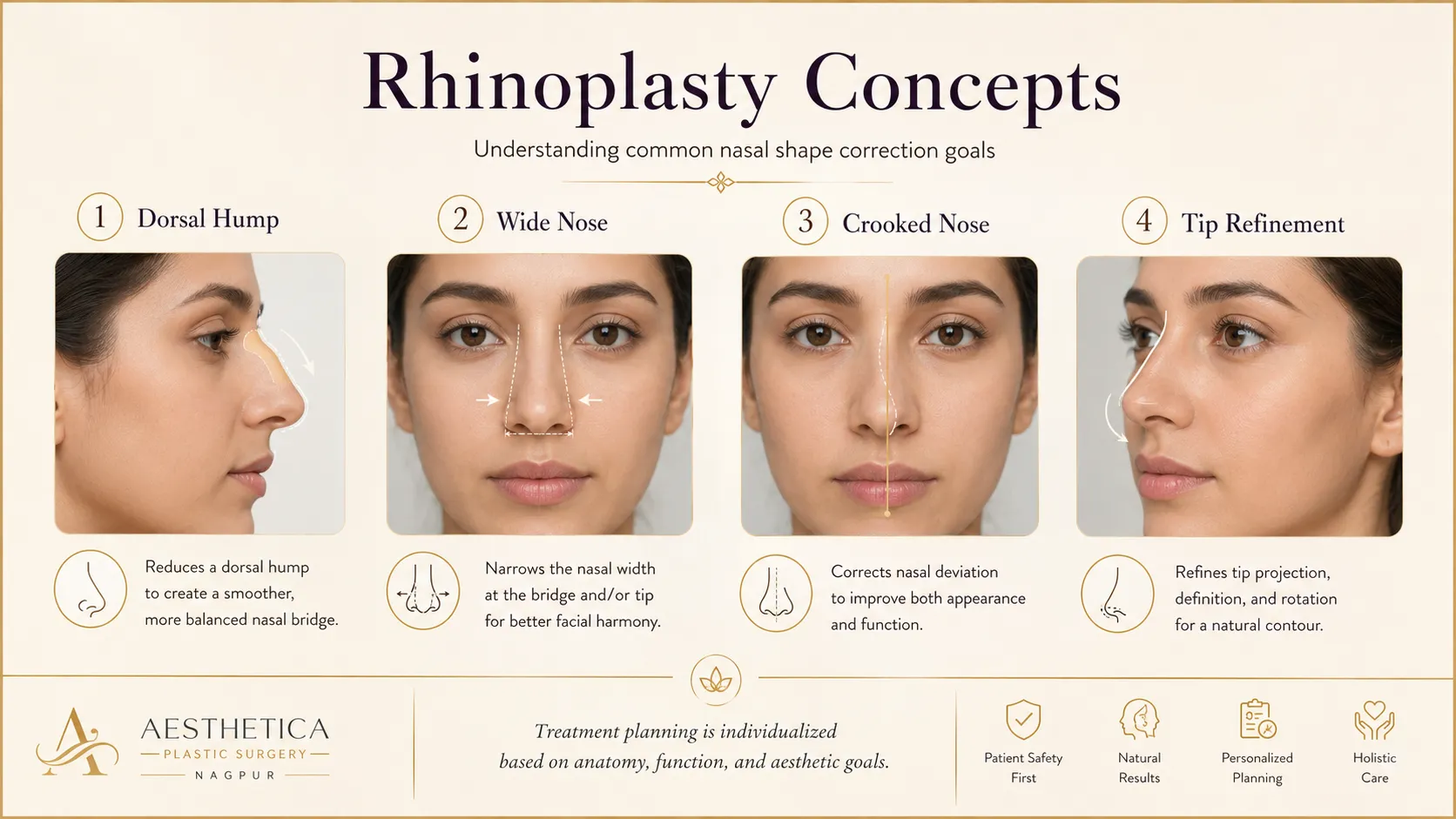
Appearance map
- Frontal width and symmetry
- Bridge height, hump or depression
- Tip shape, rotation and projection
- Nostril and alar-base proportion
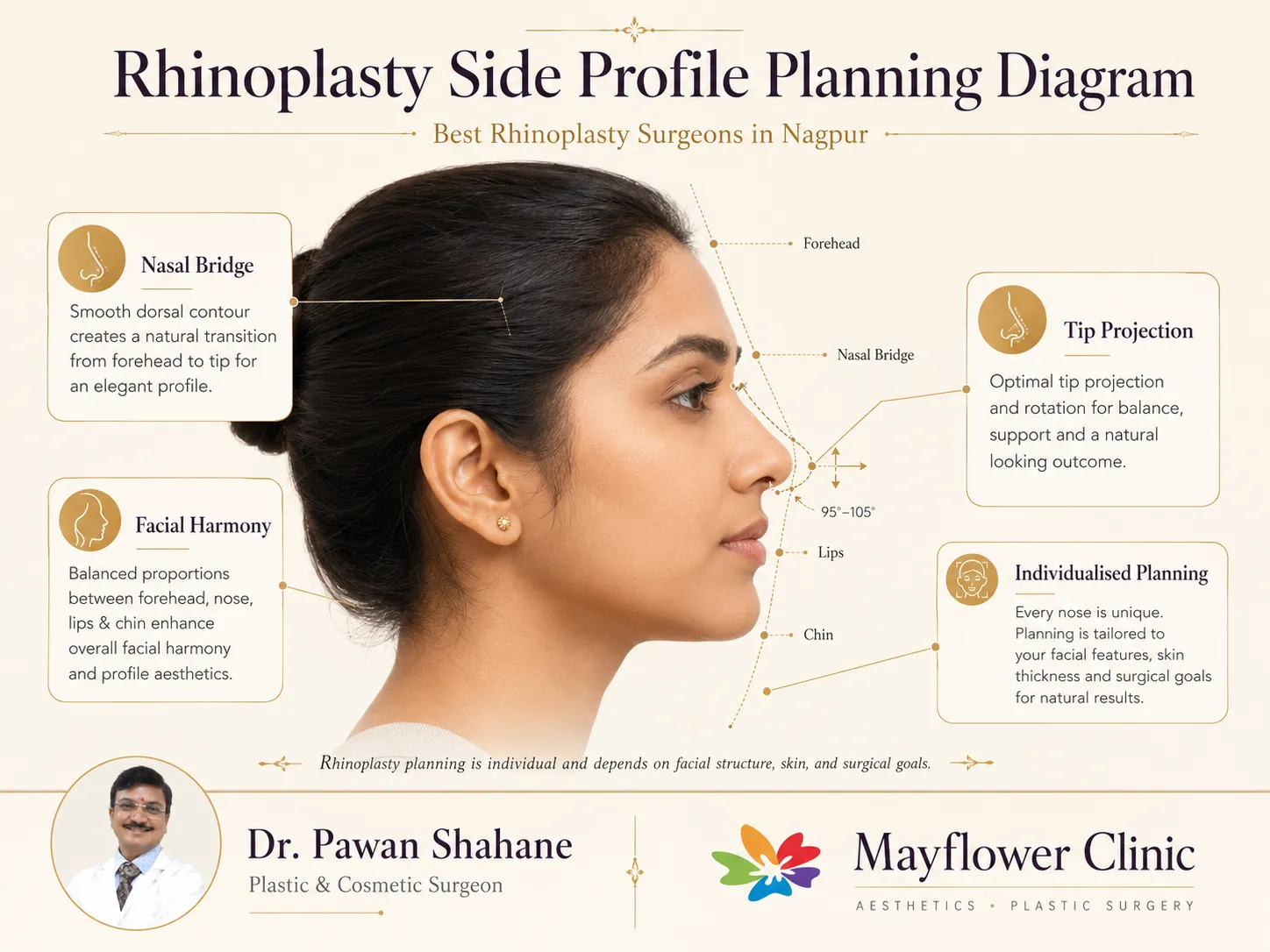
- Profile balance with lips and chin
- Identity, ethnicity and realistic limits

A nose can look balanced yet breathe poorly, or look crooked while the main airway remains adequate. This page explains how cosmetic nasal surgery can be planned with a deliberate review of the septum, nasal valves, middle vault, tip support and airflow—without assuming that every aesthetic patient needs functional surgery.
Quick answer: combined planning means creating two maps before surgery: an appearance map for bridge, width, tip, nostrils and facial balance, and a function map for symptoms, septum, valves, turbinates and structural support. The final plan may be cosmetic-only, septorhinoplasty, functional rhinoplasty, staged treatment or no surgery.


Ask about cosmetic shape, breathing, septoplasty or structural support.
What visible change are you seeking, and is there a genuine functional problem that needs assessment? Keeping these questions separate prevents both over-treatment and under-treatment.
Open the two-plan assessment ↓This local page guide uses prewritten, medically reviewed answers. It cannot examine your nose, diagnose obstruction, recommend surgery, calculate candidacy or replace an in-person consultation.
“The goal is not to add functional surgery to every cosmetic rhinoplasty. The goal is to recognise when external reshaping and internal airflow share the same structure—and to plan both honestly.”— Dr. Pawan Shahane, M.Ch. Plastic Surgery · Founder, Mayflower Clinic, Nagpur
Cosmetic planning asks how the bridge, width, tip, nostrils and nasal position relate to the forehead, lips, chin and overall face. Functional planning asks whether symptoms, septal deviation, valve narrowing, sidewall weakness, turbinate enlargement, previous trauma or previous surgery may affect airflow.
The maps overlap because the nasal bones, upper lateral cartilages, septum and tip-support structures contribute to both shape and breathing. Narrowing a bridge, reducing a hump or changing tip support can alter this relationship. The answer is not to perform more surgery automatically; it is to identify what actually needs treatment.
The same structure may contribute to profile, frontal shape and breathing. These relationships are why an airway-aware plan is different from simply choosing a smaller or sharper nose.
Reducing a hump changes the roof and sidewalls of the bridge. The plan may need controlled closure, preservation or reconstruction to maintain smooth lines and internal-valve support.
Osteotomies can narrow a broad bony vault. Excessive narrowing or poorly coordinated movement may affect symmetry, contour and available airway space.
The septum separates the nasal passages and contributes central support. Correction is based on symptoms, alignment and structural requirements—not on the presence of cosmetic concerns alone.
The narrow valve region depends on septal position, upper lateral cartilage, sidewall strength and tip geometry. It may need preservation or support in selected patients.
Tip sutures, cartilage reshaping, grafts or controlled lifting can change projection and rotation. Support must be sufficient for the intended shape and long-term stability.
Alar-base reduction changes nostril width but is not a treatment for every breathing complaint. Over-reduction may create visible tightness or functional concern.
Frontal width, profile contour and the transition between bridge, supratip and tip must be planned together. These diagrams explain the visual side of the combined assessment.


Nasal blockage is a symptom, not a diagnosis. The pattern, timing and trigger matter. Some causes are structural and may be addressed surgically; others may need medical treatment, ENT review or a staged approach.
Aesthetic surgery should not be presented as a universal cure for congestion, snoring, headache or sinus symptoms. Additional evaluation may be appropriate when the symptom pattern is complex.
The value of combined assessment is not that it produces a larger operation. It is that it directs the patient to the most appropriate pathway.
For visible shape concerns without a meaningful functional indication. The plan still preserves airway-supporting anatomy while focusing on proportion and contour.
For patients with both external reshaping goals and a relevant septal problem. The cosmetic and septal steps are coordinated in one structural plan.
For obstruction related to the external framework, valves or support, with cosmetic change discussed as a consequence or secondary goal rather than the main indication.
For symptoms better explained by allergy, sinus disease, unrealistic expectations, unstable health, insufficient indication or a need for specialist assessment first.
Technique names do not determine quality. The important question is what change is required, what structure may be weakened or narrowed, and how support will be preserved or rebuilt.
| Planned visible change | Structures involved | Functional question | Possible planning response |
|---|---|---|---|
| Smooth a dorsal hump | Bone, cartilage, middle vault | Will reduction create an open roof or narrow the valve region? | Component reduction, dorsal preservation, controlled osteotomies, spreader support or another patient-specific method. |
| Narrow a broad bridge | Nasal bones and upper sidewalls | Can narrowing be achieved without instability, asymmetry or excessive constriction? | Planned osteotomies with controlled movement and protection of the middle vault. |
| Refine or lift the tip | Lower lateral cartilage, septal support, skin envelope | Will the new tip position remain supported and keep the nostril/valve relationship stable? | Sutures, conservative cartilage reshaping, grafts or support-based lifting where indicated. |
| Correct crookedness | Bones, dorsal/caudal septum, middle vault, tip | Is the visible deviation linked to internal deviation or valve compromise? | Stepwise bony, septal and cartilaginous correction with realistic limits for asymmetry and recurrence. |
| Reduce nostril width | Alar base and sill | Is alar-base width the real cause, and could reduction create tightness? | Conservative alar-base planning only after bridge and tip proportions are established. |
| Augment a low bridge | Dorsum, septum, skin-soft-tissue envelope | Which material and support plan suit the anatomy and risk profile? | Autologous cartilage or another carefully selected method after discussing limitations and graft-site considerations. |


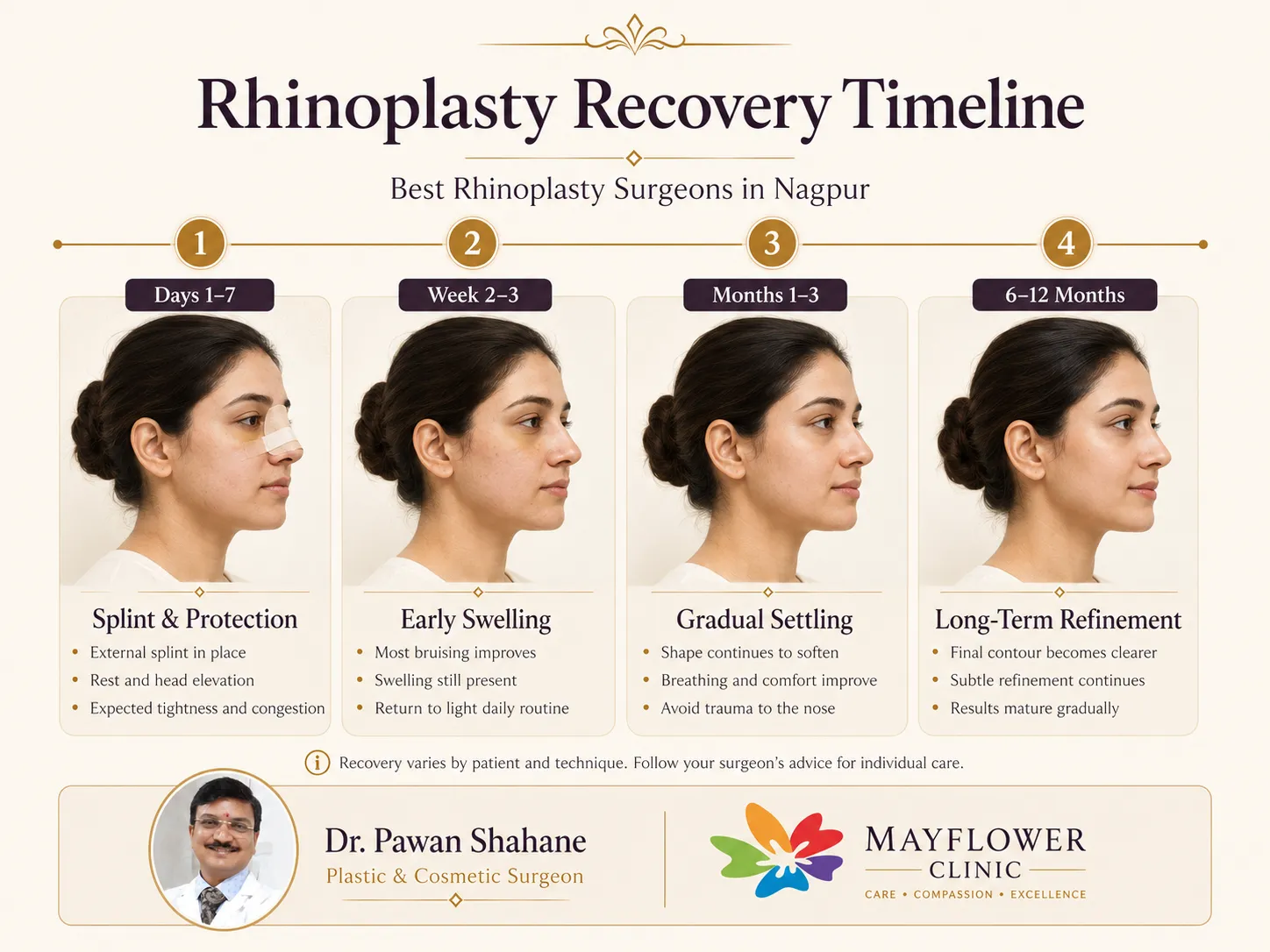
The sequence below shows how the cosmetic and functional questions are kept visible throughout the decision process.
Write what you dislike in front, profile and three-quarter views. Separately record which side feels blocked, when it changes and whether allergy, trauma or previous surgery is relevant.
Medical conditions, medicines, smoking, previous procedures, photographs, breathing pattern, motivations and realistic limitations are discussed.
The bridge, bones, middle vault, tip, nostrils, septum, valves and other relevant structures are examined. Additional evaluation is advised when needed.
Cosmetic-only, combined, functional, staged or non-surgical management is selected. Open versus closed access and any graft/support needs are explained.
Surgery is personally performed by Dr. Pawan Shahane with an anaesthesia and facility plan appropriate to the case. The structural sequence follows the agreed priorities.
Congestion is common initially. Wounds, splint, internal swelling, discomfort, discharge instructions and urgent warning signs are reviewed.
Bruising may clear quickly, while swelling and tip definition evolve over months. Appearance and breathing are reviewed over time rather than judged from the first few weeks.
Mayflower MX Lift Rhinoplasty is Dr. Pawan Shahane's clinic-specific, patient-tailored planning concept for selected noses where controlled lifting, projection, support and contour refinement are useful. It is not a fixed package and does not mean every patient receives the same tip manoeuvre or graft.
On a combined cosmetic-and-functional page, its relevance is the support principle: a lifted or refined tip must be stable, proportionate and considered alongside the septum, sidewalls and valve relationship. The exact operation may use sutures, cartilage reshaping, grafting, septal work, osteotomies or other techniques according to anatomy.

Faces and noses are naturally asymmetric. Previous trauma, cartilage memory, skin thickness and healing can limit straightening or refinement.
Even when structural obstruction is treated, symptoms may persist or recur, and non-structural contributors may remain.
Tip and middle-vault swelling can make the nose look wider, uneven or firmer initially. Final judgement requires time.
Cartilage grafting may improve support or contour but adds complexity, possible donor-site considerations and its own risks.
Persistent asymmetry, scar behaviour, contour change, support problems or breathing concerns can require further treatment after adequate healing.
Increasing pain, heavy bleeding, fever, rapidly worsening swelling, skin colour change, visual symptoms or breathing distress should be reported promptly.
Internal swelling can make breathing feel blocked in the early phase even when the airway has been structurally improved. External swelling—especially at the tip—can remain after bruising has resolved.
Splint, congestion, bruising and swelling are expected. Keep the head elevated, follow wound care and do not judge shape or breathing.
Many patients return to desk work when comfortable. Nasal breathing may fluctuate as internal swelling and crusting settle.
Major swelling usually reduces, but exercise, spectacles, travel and contact-risk activities follow the surgeon's specific advice.
Tip softness, definition, scar behaviour and subtle asymmetry continue to evolve. Long-term review considers both contour and function.
These are individual Google review excerpts recorded in the clinic's verified review inventory. They do not predict another person's result.
“Rhinoplasty, nose surgery done for my sister. We are very happy with results and strongly recommend Dr. Pawan Shahane sir for anyone seeking rhinoplasty. He explains everything and how to take care. He support at every stage and do the surgery as planned.”
Kunal ThakurGoogle review · 6 months ago“I am very happy with my nose surgery, rhinoplasty. It's been 3 weeks and results are awesome. I wanted a sharp tip, and I was having a broad nose. So went to many doctors but no one is as intelligent and artist as Dr. Pawan Shahane…”
Kajal MeshramGoogle review · 6 months ago“Hi I am from Pune and recently had nose surgery performed by Dr. Pawan Shahane… From the initial consultation to the post-operative care, Dr. Shahane demonstrated exceptional skill, professionalism, and a genuine care for my well-being.”
Nishant MenghareGoogle review · a year agoReview excerpts are shown as patient opinions, not clinic-authored efficacy claims. Outcomes vary.
These answers are educational and cannot replace examination.
Cosmetic nasal surgery is rhinoplasty performed to change visible nasal shape or proportion. Good planning also considers whether the proposed changes could affect structural support or nasal airflow.
The Cosmetic Nose Surgery page focuses on aesthetic goals, facial balance, identity preservation and view-by-view appearance. This page focuses on patients whose cosmetic plan also requires explicit assessment of the septum, nasal valves, middle vault, tip support or breathing symptoms.
No. Septoplasty is considered only when septal anatomy and symptoms make it relevant. A visibly crooked or broad nose does not automatically mean the septum needs surgery, and a deviated septum does not always require cosmetic reshaping.
Any operation that changes nasal width, support or valve geometry can potentially affect airflow. Careful planning aims to avoid over-narrowing and to preserve or reconstruct support when the anatomy requires it, but no operation is risk-free.
It may improve breathing when a correctable structural problem is identified and treated as part of the plan. Breathing symptoms can also come from allergy, turbinate enlargement, sinus disease or other causes that may need separate assessment or treatment.
The nasal valve is a narrow part of the nasal airway that contributes significantly to airflow resistance. Its shape can be influenced by the septum, sidewall and tip-support structures, so it should be considered when narrowing or reshaping the nose.
The middle vault is the central cartilaginous part of the nasal bridge. Hump reduction or narrowing can affect its width and support; some patients need preservation, spreader flaps, spreader grafts or another stabilising method.
Septorhinoplasty combines external nasal reshaping with septal correction when both are indicated. The exact sequence and techniques depend on the visible concern, obstruction pattern, cartilage strength, previous trauma and available graft material.
Assessment may include symptom history, examination of the septum, turbinates, nasal valves and external framework, and review of previous trauma or surgery. Selected patients may need additional ENT evaluation or investigations.
Mayflower MX Lift Rhinoplasty is the clinic's patient-specific planning concept for controlled lifting, support and contour refinement where appropriate. It is not one fixed manoeuvre, is not suitable for every nose and does not replace a full structural and airway assessment.
Neither approach is universally better. Closed access may suit selected changes, while open access can provide wider exposure for complex tip, grafting, asymmetry or revision work. The required correction should determine the approach.
No. Simulation can help discuss direction and proportion, but it cannot predict healing, scar behaviour, swelling, skin contraction or every three-dimensional change. It should not be treated as a guarantee.
Many patients have a splint for about a week and return to desk work in roughly 7–10 days, depending on surgery and bruising. Major swelling settles gradually over weeks, while tip refinement and the final contour can continue for 6–12 months or longer.
Discussion should include bleeding, infection, anaesthetic risks, scarring, asymmetry, contour irregularity, numbness, persistent or new breathing difficulty, septal problems, altered smell, delayed healing and the possible need for revision.
A redirect should be considered only after reviewing Search Console query overlap, backlinks, indexation and user value. If both pages attract the same intent and page 921 cannot maintain materially distinct combined form-and-function content, a tested 301 to page 911 would be appropriate.
Clinical references provide general principles. Dr. Shahane's clinic-specific methods and MX Lift terminology are clearly identified as his practice perspective.
Aesthetic facial balance, identity preservation, front/profile planning and natural-looking refinement.
Open aesthetic guide →Deeper guide to combined septal correction, breathing and visible reshaping.
Open combined-surgery guide →Comprehensive pillar overview of goals, techniques, recovery, risks and realistic results.
Open pillar guide →Umbrella guide routing cosmetic, functional, traumatic and reconstructive concerns.
Open nasal-surgery guide →External deviation, septum, middle vault, tip, valves and realistic straightening limits.
Open crooked-nose guide →Bony versus cartilaginous hump, dorsal preservation, open-roof prevention and middle-vault support.
Open hump guide →Broad bones, middle vault, tip and alar-base planning with breathing considerations.
Open wide-nose guide →Procedure-day journey from preparation and markings to recovery room and first review.
Open procedure guide →Scar tissue, graft sources, structural rebuilding, airway concerns and longer healing.
Open revision guide →Bring your appearance priorities and describe breathing symptoms separately. Consultation can then determine whether the most appropriate pathway is cosmetic-only rhinoplasty, combined septorhinoplasty, functional treatment, referral or no surgery.
Medical Disclaimer: All surgical procedures carry inherent risks, and individual outcomes vary based on anatomy, skin type, health, previous surgery and healing biology. Surgical and breathing outcomes are not guaranteed. Formal in-person consultation with Dr. Pawan Shahane is required before any surgical decision. This page is for general educational purposes only and does not constitute medical advice or a treatment recommendation.
Surdham Complex, Dhantoli, Nagpur — 440012, Maharashtra, India
Monday–Saturday
11 AM–6 PM
Sunday closed
Mayflower Clinic is Central India's premier multi-specialty hub for advanced aesthetic and reconstructive plastic surgery. Every procedure is planned and executed exclusively by board-certified M.Ch. Plastic Surgeon Dr. Pawan Shahane, ensuring an absolute commitment to zero-delegation surgery, patient safety, and transparent pricing.

What Is Acne Scar Correction? A Complete…

Who Is a Good Candidate for Lip…
Clinic Address: Surdham Complex, Behind Silver Palace Building, 2nd Lane from Panchsheel Square, Opp. Yashwant Stadium, Dhantoli, Nagpur, Maharashtra - 440012
Landline Connect: 0712-6692706 / 0712-3551170
Secure WhatsApp Line: +91 8087471244