1Open rhinoplasty
What it means: access through internal incisions and a small columellar incision, allowing the skin-soft tissue envelope to be elevated for direct visualization.
It may be selected when the surgeon needs broad exposure for precise assessment of asymmetry, tip structures, graft placement or complex reconstruction. The external incision is only one part of the operation; the final scar and swelling vary by healing biology and technique.
Often considered for: major tip reshaping, complex deviation, structural grafting and selected revision cases.
See surgical planning and approach selection →
2Closed rhinoplasty
What it means: the main incisions are placed within the nostrils, and the surgeon works through endonasal access.
Closed surgery can be effective for selected changes and can avoid a routine columellar incision. However, the term does not reveal how extensive the internal work will be. Osteotomies, cartilage modification or grafting may still be involved.
Often considered for: selected primary rhinoplasty plans where adequate access can be achieved internally.
Return to the comprehensive rhinoplasty guide →
3Cosmetic rhinoplasty
What it means: the visible shape or proportion of the nose is the primary reason for surgery.
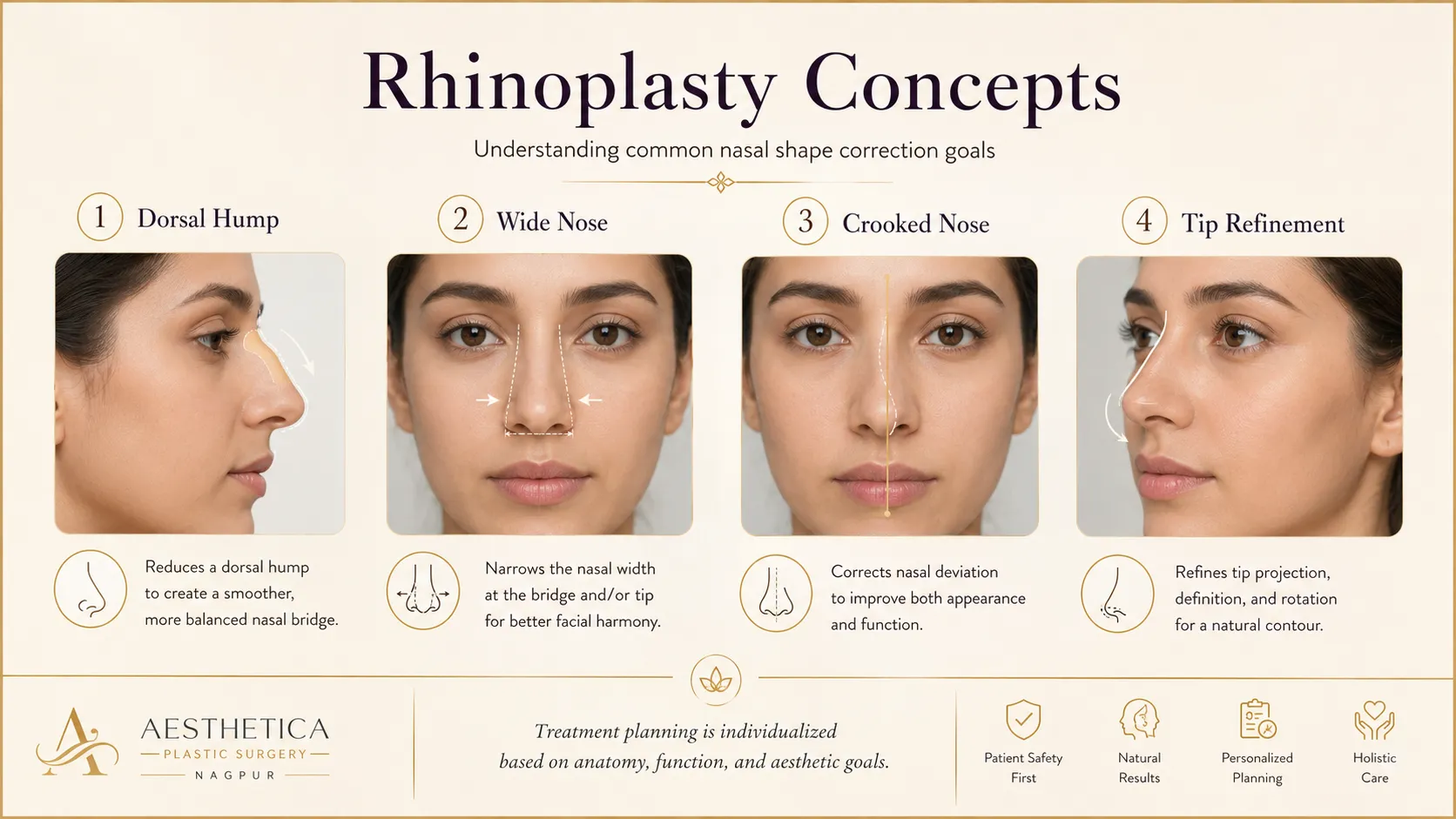
Planning may address the bridge, tip, nostril width, projection, rotation or symmetry. The aim is not to copy another person's nose; it is to evaluate how proposed changes relate to the patient's own facial structure while protecting support and airflow.
Often considered for: hump reduction, wide-nose narrowing, tip refinement and proportion concerns.
Read about cosmetic nose surgery →
4Functional rhinoplasty
What it means: surgery focuses on structural factors that contribute to impaired nasal airflow.
Examples include external deviation, narrowing or weakness of the nasal valves and loss of framework support. A functional operation may still alter appearance because the internal and external nose are connected. Equally, a cosmetic plan must consider function.
Often considered for: structural obstruction, valve compromise, post-traumatic deformity or combined breathing and shape concerns.
Explore functional and reconstructive nasal surgery →
5Septorhinoplasty
What it means: septoplasty and rhinoplasty are planned together.
This is relevant when a deviated septum and the external nasal framework influence each other. The operation may straighten the septum, improve structural support and reshape the visible nose. It is different from septoplasty alone, which primarily addresses the internal septum.
Often considered for: a crooked nose with septal deviation, trauma-related deformity or combined breathing and appearance goals.
Compare rhinoplasty with septoplasty →
6Augmentation rhinoplasty
What it means: tissue or structural material is added to improve height, projection, contour or support.
Autologous cartilage from the septum, ear or rib may be considered in selected cases; other materials have their own indications and risks. The choice depends on the defect, required strength, available donor tissue, skin envelope, prior surgery and long-term plan.
Often considered for: a low bridge, under-projected tip, weak support, saddle deformity or reconstructive needs.
Understand bridge planning and facial balance →
7Reduction rhinoplasty
What it means: selected nasal dimensions are decreased while preserving or rebuilding adequate support.
Reduction may involve a dorsal hump, width, projection or tip volume, but modern planning is not simply “remove more.” Excessive reduction can destabilize the framework, create contour irregularities or compromise breathing, so reshaping and support often occur together.
Often considered for: dorsal prominence, excessive projection, broad bony vault or bulky tip concerns.
Read the nasal hump removal guide →
8Revision rhinoplasty
What it means: additional nasal surgery after a previous rhinoplasty.
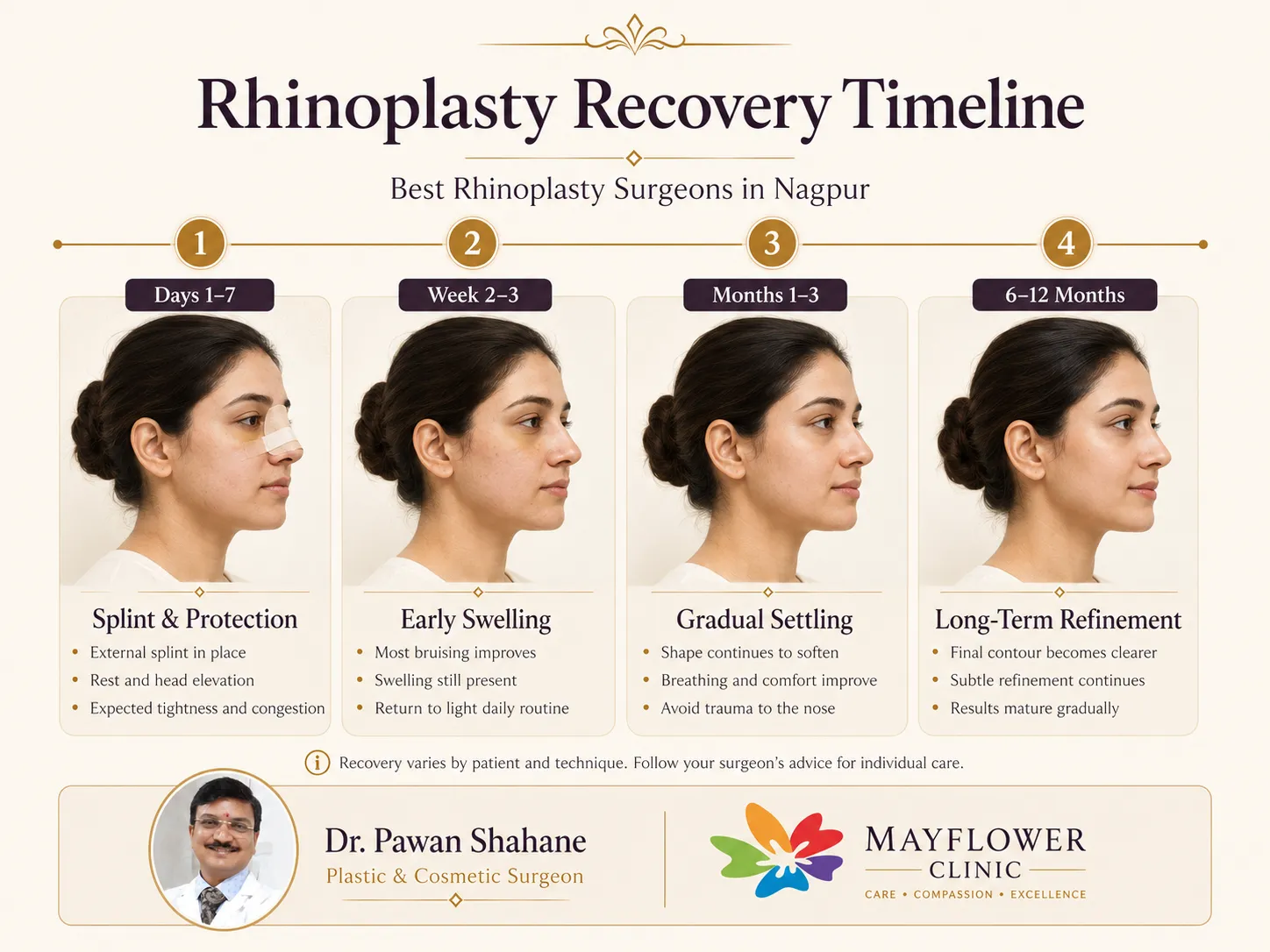
Revision may address unresolved goals, recurrent deviation, contour irregularity, support loss, scarring or breathing difficulty. It usually demands careful review of prior surgery and available tissue. A surgeon may advise waiting for healing and swelling to stabilize before deciding on further surgery.
Often considered for: persistent or new aesthetic and functional concerns after previous nasal surgery.
Open the revision rhinoplasty guide →