0712 6692706 / 0712 3551170 / +91 8087471244   |   contact@mayflowerclinic.in
P-Shot in Nagpur | Penile PRP Consultation | Dr. Pawan Shahane
Confidential consultation · Evidence-led counselling

P-Shot Treatment in Nagpur — Penile PRP Consultation With Clear Evidence Limits

The P-Shot is a name used for penile platelet-rich plasma injections. It is being studied for erectile dysfunction and related concerns, but current evidence does not support presenting it as a proven or routine treatment. At Mayflower Clinic, the first priority is a private medical assessment, honest discussion of uncertainty and comparison with established options.

Dr. Pawan Shahane
Reviewed by Dr. Pawan Shahane, M.Ch. Plastic Surgery 21+ years surgical practice · Ex-Asst. Prof. GMC Nagpur · IAAPS Member · 9 yrs ThreeBestRated Nagpur
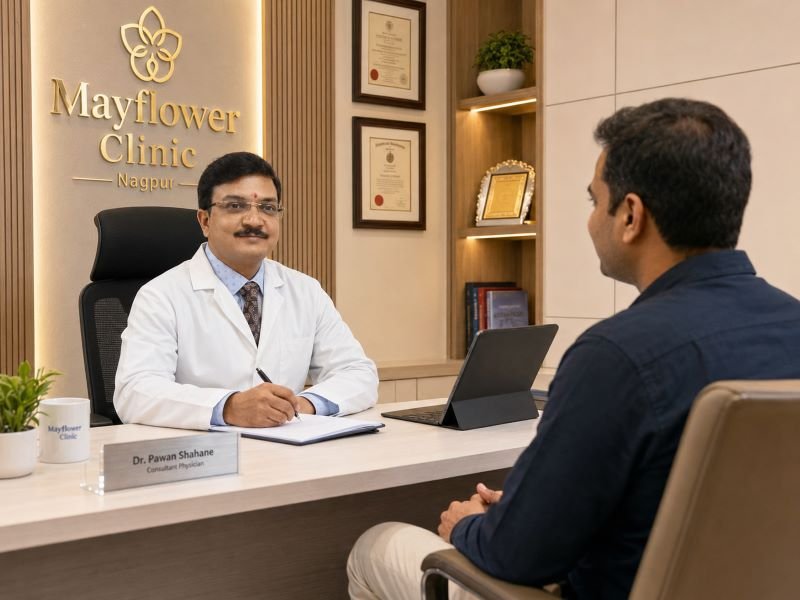
Confidential male patient consultation with Dr. Pawan Shahane at Mayflower Clinic Nagpur
Private, one-to-one clinical discussionNo online diagnosis · no guaranteed outcome claims · no pressure to proceed

Your privacy is treated as a clinical responsibility

Male sexual-health concerns are discussed in a discreet consultation setting. Messages and records are handled as confidential medical information. WhatsApp can be used to arrange an appointment, but avoid sending intimate photographs or detailed medical records through an ordinary message unless the clinic has specifically provided a secure, consent-based process.

21+Years of surgical practice
M.Ch.Plastic Surgery qualification
PrivateMale intimate consultation pathway
Doctor-ledAssessment and procedure planning

Common questions about the P-Shot

Select a question for a quick answer.

Quick answer: The P-Shot is a name used for penile platelet-rich plasma injection. PRP is prepared from a person's own blood and then injected using a sterile clinical technique.

Important evidence status: penile PRP remains investigational for ED

Clinical studies have reported mixed findings, and recent reviews continue to identify small sample sizes, variable PRP preparation, inconsistent injection schedules and uncertain durability. Current European guidance states that evidence remains insufficient to recommend PRP for routine erectile-dysfunction treatment. The page therefore avoids promising faster erections, increased sensation, penile enlargement, a fixed success rate or a 12–18 month duration.

Understanding the procedure

What is penile platelet-rich plasma?

Platelet-rich plasma is prepared by collecting a blood sample and using centrifugation to separate a plasma fraction with a higher platelet concentration than ordinary blood. Platelets contain signalling proteins involved in clotting and tissue-repair pathways. This biological rationale has led researchers to study PRP in many fields, including sexual medicine.

For the P-Shot, the prepared PRP is injected into penile tissue. However, a plausible biological mechanism is not the same as proven clinical benefit. Studies differ in platelet concentration, activation method, injection sites, number of sessions and outcome measurement. This makes it difficult to define the best protocol or reliably predict who will benefit.

At Mayflower Clinic, consultation focuses first on the actual concern and its possible cause. If penile PRP is discussed, it is framed as an investigational option with informed consent—not as a replacement for cardiovascular evaluation, established ED treatment or specialist referral where indicated.

  • Uses autologous PRP prepared from the patient's own blood.
  • Involves an injection procedure rather than surgery.
  • Has no universally accepted ED protocol or maintenance schedule.
  • Cannot guarantee improved erections, sensation, length or girth.
  • Requires discussion of established alternatives and underlying causes.
Realistic counselling

What the P-Shot discussion can—and cannot—promise

A medically responsible webpage should separate the procedure concept from marketing claims.

What can be stated responsibly

  • PRP is prepared from the patient's own blood.
  • The procedure is non-surgical and uses injections.
  • Early clinical studies have explored PRP for vasculogenic ED.
  • Short-term injection-site reactions are possible.
  • Further high-quality trials are needed to define effectiveness.
  • A private consultation can clarify whether a research-based discussion is appropriate.

What should not be promised

  • A guaranteed cure for erectile dysfunction.
  • A predictable increase in penile length or girth.
  • A fixed improvement within 2–4 weeks.
  • A guaranteed 12–18 month result.
  • A standard package suitable for every patient.
  • Replacement of diabetes, hormone, vascular or heart-risk evaluation.
Evaluation before injection

Why erectile-dysfunction assessment comes first

Erection difficulty is a symptom, not a single diagnosis. Treatment choice depends on the cause, severity, health risks and previous response.

01

Symptom pattern

Onset, consistency, morning erections, sexual desire, ejaculation, pain, curvature and previous treatment response help define the problem.

02

Medical and medicine review

Diabetes, blood pressure, cholesterol, heart disease, neurological conditions, pelvic surgery and medicines can affect erectile function.

03

Cardiovascular risk

Persistent ED can be associated with vascular disease. The consultation may identify a need for broader medical or cardiac evaluation.

04

Hormonal assessment

Selected patients may need early-morning testosterone or additional tests based on symptoms and examination—not automatic hormone treatment.

05

Psychological factors

Stress, performance anxiety, depression and relationship strain may contribute alone or together with physical causes.

06

Established treatment ladder

Evidence-based options are reviewed before an investigational restorative therapy is considered.

Individual suitability

Who may need extra caution or a different pathway?

Medical factors requiring review

  • Active infection or skin inflammation near a proposed injection site
  • Known bleeding, platelet or clotting disorder
  • Medicines that affect clotting or platelet function
  • Significant anaemia or uncontrolled medical illness
  • Unexplained penile pain, injury, lump, ulcer or sudden curvature
  • Unassessed persistent erectile dysfunction

Expectation factors requiring counselling

  • Expectation of a guaranteed erection response
  • Expectation of permanent enlargement
  • Preference to avoid all standard ED investigations
  • Pressure from a partner or another person to undergo treatment
  • Expectation that one injection will replace lifestyle or medical care
  • Difficulty accepting uncertain benefit or need for follow-up

This is not a self-selection checklist. Final suitability requires individual medical assessment.

Patient journey

How a responsible P-Shot pathway is planned

The process begins with diagnosis and consent—not with an automatic injection package.

1
Before any decision

Private consultation

Discuss the concern, duration, medical history, medicines, previous treatment and expectations in a confidential setting.

2
Assessment stage

Identify causes and health risks

Examination, blood pressure and selected tests may be advised. Referral may be recommended when cardiovascular, endocrine, neurological or urological assessment is needed.

3
Shared decision-making

Compare established options

Benefits, limitations, contraindications and costs of medicines, devices, specialist injections, counselling or surgery are discussed alongside the investigational status of PRP.

4
Only if considered suitable

Consent for penile PRP

Consent should state that benefit is uncertain, protocols are not standardized, results are not guaranteed and additional treatment may still be required.

5
Procedure visit

Blood collection and PRP preparation

A blood sample is processed to prepare PRP. Sterility, identification and clinical documentation are maintained throughout the procedure.

6
Same visit

Local anaesthesia and injection

If proceeding, local or topical anaesthesia is used as appropriate, followed by sterile injection by the treating doctor according to the selected protocol.

7
After treatment

Recovery review and reassessment

Follow-up checks injection-site recovery, adverse effects and symptom change. Lack of benefit should lead to reassessment rather than repeated procedures without a clear rationale.

Aftercare and safety

What may be expected after penile PRP injections?

Exact advice depends on the protocol and individual health. Follow the written instructions provided after treatment.

Short-term reactions

Temporary tenderness, bruising, swelling or minor spotting at an injection point may occur. These should gradually settle rather than worsen.

🧼

Hygiene and activity

Keep the area clean and follow the clinic's instructions about bathing, strenuous exercise, sexual activity and medicines after the procedure.

Contact the clinic

Report increasing pain, spreading redness, fever, discharge, significant bleeding, rapidly increasing swelling or any symptom that feels unusual.

Treatment comparison

How P-Shot discussion fits within ED care

The most appropriate option depends on cause, medical safety, response to previous treatment and patient preference.

OptionEvidence statusTypical roleImportant considerations
Lifestyle and risk-factor careEstablishedAddresses smoking, inactivity, obesity, diabetes, blood pressure, cholesterol and sleep where relevant.Benefits general and vascular health; improvement may take time and may need other ED treatment.
Psychosexual supportEstablished when indicatedUseful for anxiety, relationship factors, depression or mixed physical and psychological ED.May be combined with medical treatment.
Prescription PDE5 inhibitorEstablishedCommon first-line medicine when medically suitable.Requires medication and cardiovascular review; must not be combined with nitrate medicines.
Vacuum erection deviceEstablishedNon-surgical mechanical option when medicines are unsuitable, ineffective or not preferred.Needs correct sizing, instruction and realistic expectations.
Specialist injection therapyEstablishedMay be considered when tablets are ineffective or unsuitable.Requires supervised teaching and counselling about priapism and other risks.
Penile implant surgeryEstablished for selected patientsConsidered after failure, unsuitability or rejection of less-invasive options.Irreversible surgery with infection, device and recovery considerations.
Penile PRP / P-ShotInvestigationalRestorative therapy under study; not recommended as routine ED treatment by current EAU guidance.No standardized preparation, dose, session number or proven duration of benefit.

For a complete overview, read the Erectile Dysfunction Treatment in Nagpur guide.

Clinical perspective

Uncertainty should be explained before consent—not after treatment

“A regenerative procedure should never distract from diagnosing why erectile difficulty is occurring. My responsibility is to explain what is established, what remains investigational, what the realistic alternatives are and whether doing nothing invasive is the better decision.”
Dr. Pawan Shahane, M.Ch. Plastic Surgery · Founder, Mayflower Clinic, Nagpur
Transparent planning

What affects the cost of a P-Shot consultation or procedure?

A public fixed price can be misleading when evaluation, investigations and protocol may differ.

Consultation and assessment

Clinical review may identify tests or another treatment pathway before PRP is considered.

PRP preparation protocol

Collection system, processing method and disposables influence procedure cost.

Number of visits

No standard evidence-based session package exists; follow-up should be clinically justified.

Additional treatment

Management of diabetes, hormones, psychological factors or established ED therapy may be more important than PRP itself.

A transparent quote is provided after consultation, with the included services explained. Payment does not guarantee a clinical result.

Questions patients often ask

P-Shot and penile PRP FAQs

These visible questions match the FAQ structured data on this page.

What is the P-Shot?
P-Shot is a marketing name for penile platelet-rich plasma injection. A sample of the patient's blood is processed to concentrate platelets, and the prepared PRP is injected using a sterile technique. It is being studied as a restorative therapy, but it is not an established routine treatment for erectile dysfunction.
Is the P-Shot an established treatment for erectile dysfunction?
No. Current guideline evidence remains insufficient to recommend penile PRP for routine clinical treatment of erectile dysfunction. Any discussion should clearly describe its investigational status and should not replace established evaluation and treatment options.
Can the P-Shot replace an erectile dysfunction evaluation?
No. Persistent erection difficulty may be associated with vascular disease, diabetes, high blood pressure, abnormal cholesterol, hormonal problems, medication effects, neurological disease or psychological factors. These possible causes should be assessed before any regenerative procedure is considered.
What happens during a P-Shot consultation?
The consultation reviews the pattern and duration of symptoms, medical conditions, medicines, previous treatment response, cardiovascular risk and expectations. Examination and selected laboratory or specialist tests may be advised when appropriate.
How is penile PRP prepared and administered?
A blood sample is collected and processed in a centrifuge to separate platelet-rich plasma. If treatment is considered after informed consent, local anaesthesia and a sterile injection technique are used according to the clinician's protocol.
Is PRP made from my own blood?
Yes. PRP is autologous, meaning it is prepared from the patient's own blood. This does not make the procedure risk-free, and sterility, medical suitability and realistic counselling remain important.
What benefits can be guaranteed after a P-Shot?
No improvement can be guaranteed. Studies use different preparation methods, platelet concentrations, doses, session schedules and outcome measures, so the size and duration of any benefit remain uncertain.
How many P-Shot sessions are needed?
There is no universally accepted evidence-based number of sessions for erectile dysfunction. Fixed packages or automatic maintenance schedules should not be presented as medically established.
How long do P-Shot results last?
The duration of benefit has not been reliably established. Published studies have limited follow-up and use different protocols, so a fixed result duration cannot be promised.
Can a P-Shot permanently enlarge the penis?
Permanent enlargement is not an established or predictable result of penile PRP. The procedure should not be promoted as a guaranteed lengthening or girth-enhancement treatment.
What are the possible risks of penile PRP injections?
Possible risks include pain, tenderness, bruising, swelling, bleeding, infection, temporary discomfort and an unsatisfactory or absent response. Long-term effectiveness and uncommon complications are not fully defined because evidence is still developing.
Who may need extra caution before considering penile PRP?
Extra review is important for people with active infection, a bleeding or platelet disorder, significant anaemia, medicines that affect clotting, uncontrolled medical illness or unexplained penile symptoms. Suitability must be decided individually rather than through an online checklist.
What established options should be discussed before a P-Shot?
Depending on the cause, established options may include lifestyle and cardiovascular risk management, psychosexual support, prescription PDE5 inhibitor medicines when safe, a vacuum erection device, specialist-supervised injection therapy or a penile implant for selected patients.
Is the consultation confidential at Mayflower Clinic?
Yes. Male intimate concerns are discussed in a private clinical setting. Information is handled as confidential medical data and is shared only as required for care, safety or law, or with the patient's consent.


Medical references

  1. European Association of Urology. Sexual and Reproductive Health Guidelines: Management of Erectile Dysfunction. https://uroweb.org/guidelines/sexual-and-reproductive-health/chapter/management-of-erectile-dysfunction
  2. Sexual Medicine Society of North America. What Is the P-Shot? Does It Actually Work? https://www.smsna.org/patients/did-you-know/what-is-the-p-shot-does-it-actually-work
  3. Sexual Medicine Society of North America. Review of SMSNA Position Statement on Restorative Therapies. https://www.smsna.org/news/smsna/review-of-smsna-position-statement-on-restorative-therapies
  4. de Amorim LGCR, et al. Efficacy of platelet-rich therapies versus placebo in erectile dysfunction: systematic review and meta-analysis of randomized trials. PubMed PMID: 41655082.
  5. Jacob D, et al. Current advances in platelet-rich plasma therapy for erectile dysfunction: systematic review and meta-analysis of randomized controlled trials. PubMed PMID: 41288551.
  6. National Institute of Diabetes and Digestive and Kidney Diseases. Erectile Dysfunction. https://www.niddk.nih.gov/health-information/urologic-diseases/erectile-dysfunction
Medical reviewer: Dr. Pawan Shahane, M.Ch. Plastic SurgeryLast medically reviewed: 6 August 2026Page type: Patient education and consultation guide
Private male sexual-health consultation · Nagpur

Discuss P-Shot evidence, alternatives and suitability without pressure

Bring a list of current medicines and any recent diabetes, cholesterol, hormone or heart-related reports. A consultation does not commit you to a procedure.

Medical Disclaimer: This page is for general education and does not diagnose erectile dysfunction or recommend a procedure for an individual. Penile platelet-rich plasma injection, commonly marketed as the P-Shot, remains investigational for routine erectile-dysfunction treatment under current evidence. Benefits are uncertain, protocols are not standardized and results are not guaranteed. Injection procedures can cause pain, bruising, swelling, bleeding, infection and an absent or unsatisfactory response. Persistent erectile dysfunction may be associated with cardiovascular, metabolic, hormonal, neurological, medication-related or psychological conditions and requires proper assessment. Formal in-person consultation and informed consent are required before any treatment decision.