
ED not adequately helped by less-invasive care
Men with persistent erectile dysfunction despite appropriate use of established therapies may discuss a prosthesis after reassessment.

A penile prosthesis is an internal device used to create penile rigidity when erectile dysfunction has not responded adequately to other treatment, other options are unsuitable, or a fully informed patient chooses a surgical pathway. The decision requires careful counselling because implantation changes the erectile mechanism and future revision may be needed.
Penile implant surgery is primarily an erectile-dysfunction treatment, not a cosmetic enlargement operation. The main choices are inflatable and malleable implants. Suitability depends on the cause of ED, previous treatment, infection and medical risk, hand function, previous pelvic/abdominal surgery, anatomy and personal priorities.


Male intimate consultations are handled discreetly. Examination is performed only when clinically necessary and with consent. Do not send intimate photographs through an ordinary website form or casual messaging unless the clinical team has specifically advised a secure pathway.
A penile implant, also called a penile prosthesis, is placed surgically within the penis to provide mechanical rigidity. It is usually discussed after a proper erectile-dysfunction evaluation and after the patient has understood less-invasive options such as prescribed medication, a vacuum erection device or specialist-supervised local therapy where appropriate.
The implant addresses the mechanical erection problem. It does not directly treat low sexual desire, relationship difficulty, infertility, premature ejaculation or every orgasm-related concern. These issues may coexist with ED and need separate assessment.
Implant surgery should also not be presented as a penis-enlargement procedure. A patient may perceive a change in length compared with previous remembered erections, especially when ED has been long-standing or after prostate/pelvic surgery. The goal is usable rigidity within the patient's available anatomy, not a promised increase in size.
The decision starts with the cause of ED, what has already been tried, medical safety and what the patient expects the implant to achieve.
Men with persistent erectile dysfunction despite appropriate use of established therapies may discuss a prosthesis after reassessment.
Medical conditions, medication interactions, side effects, poor manual fit with some devices or other factors may make non-surgical options unsuitable.
Some patients may prefer a device after counselling about alternatives, irreversibility, infection, mechanical reliability and future revision.
When significant curvature or scarring coexists with erectile dysfunction, prosthesis-based reconstruction may be considered within specialist planning.
Selected men with persistent ED after pelvic surgery, prostate treatment or injury may enter a prosthesis pathway after appropriate evaluation.
Manual dexterity, understanding of device operation, partner considerations if the patient wishes, and acceptance of possible revision are part of planning.
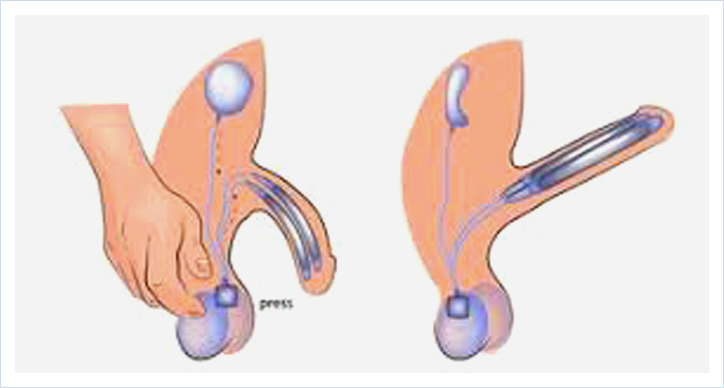
The prosthetic cylinders sit inside the paired erectile bodies of the penis. A malleable implant remains firm enough to be positioned manually. An inflatable implant is activated through a pump placed in the scrotum; a three-piece system also uses a separate fluid reservoir.
The implant does not depend on blood entering the erectile tissue in the same way as a natural erection. This is why it can provide rigidity in men whose vascular or erectile mechanism no longer responds adequately to other treatment.
There is no single device that suits every patient. The trade-off is usually between concealability, mechanical complexity, ease of use and anatomical/medical considerations.
Trade-off: the penis remains partly rigid and concealment can be less natural.
Trade-off: less component separation than a three-piece system but still mechanically more complex than malleable rods.
Trade-off: more components mean more potential mechanical points and a reservoir must be safely positioned.
Review the pattern of ED, medical and sexual history, previous treatment, cardiovascular risk, relevant laboratory work and whether additional specialist evaluation is needed.
Active infection must be addressed. Diabetes control, smoking, skin condition, urinary symptoms, previous implant infection and other medical risks may affect timing.
Discuss hand strength/dexterity, previous abdominal or pelvic surgery, concealability, comfort with a pump, device availability and the possibility of later revision.
Implant surgery does not create extra penile tissue. Patients should understand that the postoperative erect appearance may differ from remembered earlier erections.
The prosthesis is designed for rigidity. These other functions depend on underlying anatomy, nerves, medicines, previous procedures and health conditions.
Mechanical devices can fail or become infected. A younger patient should especially understand that revision or replacement may be required in the future.
The exact sequence varies, but safe implant care is staged rather than rushed.
Discuss the ED history, previous treatment, goals, medical conditions, medicines, previous pelvic/penile surgery and what the patient expects an implant to change.
A focused examination and relevant investigations help assess anatomy, infection risk, diabetes control, urinary concerns and anaesthetic fitness.
Inflatable and malleable options are compared, including handling, concealment, mechanical reliability, possible shortening, infection, erosion and future revision.
The cylinders are positioned within the erectile bodies. Inflatable systems also require a pump in the scrotum and, for a three-piece device, a separate reservoir. A urinary catheter may be used temporarily.
Bruising, swelling and soreness are expected early. The priorities are wound care, prescribed medicines, support, safe mobility and recognising infection or urinary warning signs.
The surgical team reviews the wound, implant position, discomfort and function. Activity restrictions are adjusted according to healing rather than a fixed online calendar.
Inflatable device use is taught after the tissues have healed sufficiently. Sexual activity is resumed only after the treating surgeon confirms that it is safe.
Your own discharge instructions take priority because implant type, incision, medical history and intraoperative findings differ.
Keep the area clean and dry as instructed. Do not apply unapproved powders, creams or antiseptics to the incision.
Take pain relief and any prescribed antibiotic regimen according to the treating team. Do not start or stop blood-thinning medicine without medical advice.
Wear supportive clothing if advised and walk gently to maintain circulation, while avoiding pressure, cycling, heavy lifting or strenuous activity until cleared.
Do not repeatedly activate an inflatable prosthesis or manipulate the implant before the surgeon has given specific timing and technique instructions.
Intercourse and vigorous sexual activity should wait until healing is adequate and the surgeon confirms that use is safe.
Device teaching, wound assessment and early detection of infection or positioning problems depend on scheduled postoperative review.
A device can work well and still carry surgical and mechanical risk. A consent discussion should include both early and long-term complications.
Implant infection may cause pain, redness, swelling, drainage or systemic illness and can require device removal or revision rather than antibiotics alone.
Bleeding, bruising and collection of blood can increase pain or wound tension and occasionally need additional treatment.
Pumps, tubing, cylinders or other components can wear or fail over time. Repair or replacement requires another operation.
A component can press through tissue or become exposed, especially with infection, poor tissue quality or complex revision history.
Temporary discomfort is expected. Persistent pain, scar-related symptoms, numbness or altered sensation may need evaluation.
The implant does not create extra penile tissue. Some men perceive shortening or are dissatisfied with firmness, concealment, shape or device feel.
Urethral or other tissue injury is uncommon but possible, particularly in scarred, fibrotic or revision cases.
Component migration, pump discomfort, cylinder positioning issues or reservoir-related problems can require reassessment.
No implant should be considered maintenance-free for life. Infection, malfunction, erosion, pain or changing anatomy can lead to further surgery.
Increasing redness, heat, swelling, chills or feeling systemically unwell can indicate infection.
Pus, foul-smelling fluid, persistent bleeding, wound separation or visible device material needs urgent assessment.
Pain that is increasing rather than gradually settling, especially with swelling or redness, should not be ignored.
Marked difficulty urinating, inability to urinate or significant new urinary symptoms after surgery require prompt clinical review.
Not every man with erectile difficulty needs an implant. Treatment should match the cause, medical safety, previous response and personal preference.
Diabetes, cardiovascular risk, medicines, hormones, sleep, neurological factors, stress and relationship context can influence erectile function.
Start with the ED guide →Prescription PDE5-inhibitor treatment may be considered when medically suitable. Correct dosing, timing and contraindication review matter.
A medical vacuum device can create penile engorgement without implant surgery and may suit selected men who cannot or prefer not to use tablets.
Specialist-supervised intracavernosal or intraurethral medicines can be considered for selected non-responders, with teaching and priapism precautions.
Performance anxiety, depression, relationship strain and other psychological factors can coexist with physical ED and may need parallel treatment.
Implantation becomes relevant when non-surgical options are unsuccessful, unsuitable or not preferred after full counselling.
A responsible estimate cannot be reduced to one website number because the implant itself can be a major part of the total cost and device choice is individual.
Malleable, two-piece and three-piece systems differ in component complexity, availability and device cost.
Operating theatre, anaesthesia, admission duration, medicines and hospital consumables influence the surgical package.
Previous implants, scar tissue, infection history or complex anatomy can substantially change planning and resource requirements.
Required investigations, diabetes control, infection treatment, cardiac clearance or other specialist input may add to preoperative care.
Postoperative reviews, wound care, device activation teaching and additional visits are part of safe implant management.
After examination and implant selection, ask for a written estimate that states what is included and what could generate additional charges.
A penile prosthesis is not simply a device purchase. The patient must understand the cause of ED, alternatives, the irreversible nature of implantation, infection risk, mechanical lifespan, possible size perception changes and the chance of revision.
Dr. Pawan Shahane personally evaluates the surgical concern and the planned care pathway. Where surgery is undertaken by Dr. Shahane, it is personally performed by him rather than delegated. If the case requires additional urology, cardiology, endocrinology or other specialist input, coordinated care or referral is advised.
Privacy is more important than filling a review grid. We should not attach a patient’s name, intimate diagnosis or implant outcome to a public testimonial unless that exact attribution is genuinely supported and consented.
Use the clinic’s Google Business Profile to read verified patient feedback in the reviewer’s own words without changing or re-labelling their medical concern.
Read Google ReviewsThe Patient Testimonials page brings together clinic feedback while keeping procedure attribution within the scope of what is actually documented.
Patient TestimonialsThe visible questions below match the FAQ schema exactly.
A penile implant, or penile prosthesis, is a surgically placed internal device used to create penile rigidity for selected men with erectile dysfunction. It does not increase sexual desire or treat every cause of sexual difficulty.
It may be considered when erectile dysfunction has not responded adequately to less-invasive treatment, when those treatments are unsuitable, or when an informed patient prefers a definitive surgical option after counselling.
The main categories are inflatable implants and semi-rigid or malleable implants. Inflatable devices may be two-piece or three-piece. The choice depends on anatomy, health history, manual dexterity, previous surgery, priorities and surgeon assessment.
No. A penile prosthesis is primarily a treatment for selected erectile dysfunction. It is not a cosmetic lengthening procedure and should not be expected to make the penis larger than its available anatomy at surgery.
No. The implant provides mechanical rigidity. It does not directly increase libido, sexual attraction or arousal, and it does not treat relationship, hormonal or psychological causes of reduced desire.
The implant itself is designed to address rigidity rather than orgasm or ejaculation. These functions depend on the patient’s underlying nerves, prostate and reproductive anatomy, previous surgery, medicines and health conditions, so they require individual counselling rather than a guarantee.
The decision should be treated as irreversible in practical terms. Implantation changes the erectile tissues and future erections are expected to depend on the prosthesis; removal may require further surgery and does not simply restore the preoperative state.
Many primary procedures are completed within roughly one to two hours, but operating time varies with implant type, previous surgery, scarring, anatomy and whether the case is primary or revision surgery.
Light routine often resumes before full recovery, but work timing depends on discomfort and job demands. Strenuous exercise and sexual activity are usually delayed until healing is adequate; many patients are reviewed around the four-to-six-week period before device use is advanced.
Risks include infection, bleeding or haematoma, wound problems, pain, scarring, device malfunction, erosion, injury to nearby structures, dissatisfaction or perceived shortening, and the possibility of future revision, replacement or removal.
Contact the surgical team promptly for fever, worsening redness, increasing swelling, new or foul discharge, wound opening, severe or escalating pain, difficulty urinating, device exposure or any rapid deterioration. Severe acute symptoms may require urgent in-person care.
Consultation is handled privately and examination is consent-led. Share only the information needed to arrange care, and do not send intimate photographs through ordinary website or messaging channels unless the clinical team has specifically advised a secure pathway.
If erectile dysfunction is persistent and you are considering a surgical option, begin with a private assessment rather than choosing a device online. The consultation should clarify cause, alternatives, medical safety, implant type, limitations and the recovery plan.
Medical Disclaimer: All surgical procedures carry inherent risks, and individual outcomes vary based on anatomy, health conditions, tissue quality, previous surgery and healing biology. Penile implant surgery may involve infection, device malfunction, erosion, pain, perceived shortening and future revision or removal. Surgical results are not guaranteed. Formal in-person consultation with Dr. Pawan Shahane and any additional specialist evaluation considered necessary are required before a surgical decision. This page is for general educational purposes only and does not constitute medical advice or a treatment recommendation.

Case of the Month: Grade 3 Gynecomastia…

The Science of Facial Aging: Why Wrinkles,…