
★★★★★
“Amazing experience with Dr Pawan Shahane. I recommend him for all cosmetic surgery. He is good in knowledge… and he is very kind in nature… I am happy with results and now feeling full of confidence.”
Liposuction can refine a localized bulge, waist transition or disproportion that remains despite a stable lifestyle. The important decision is not simply where fat exists, but whether the concern is fat, loose skin, muscle laxity, gland tissue, cellulite—or a combination needing a different plan.
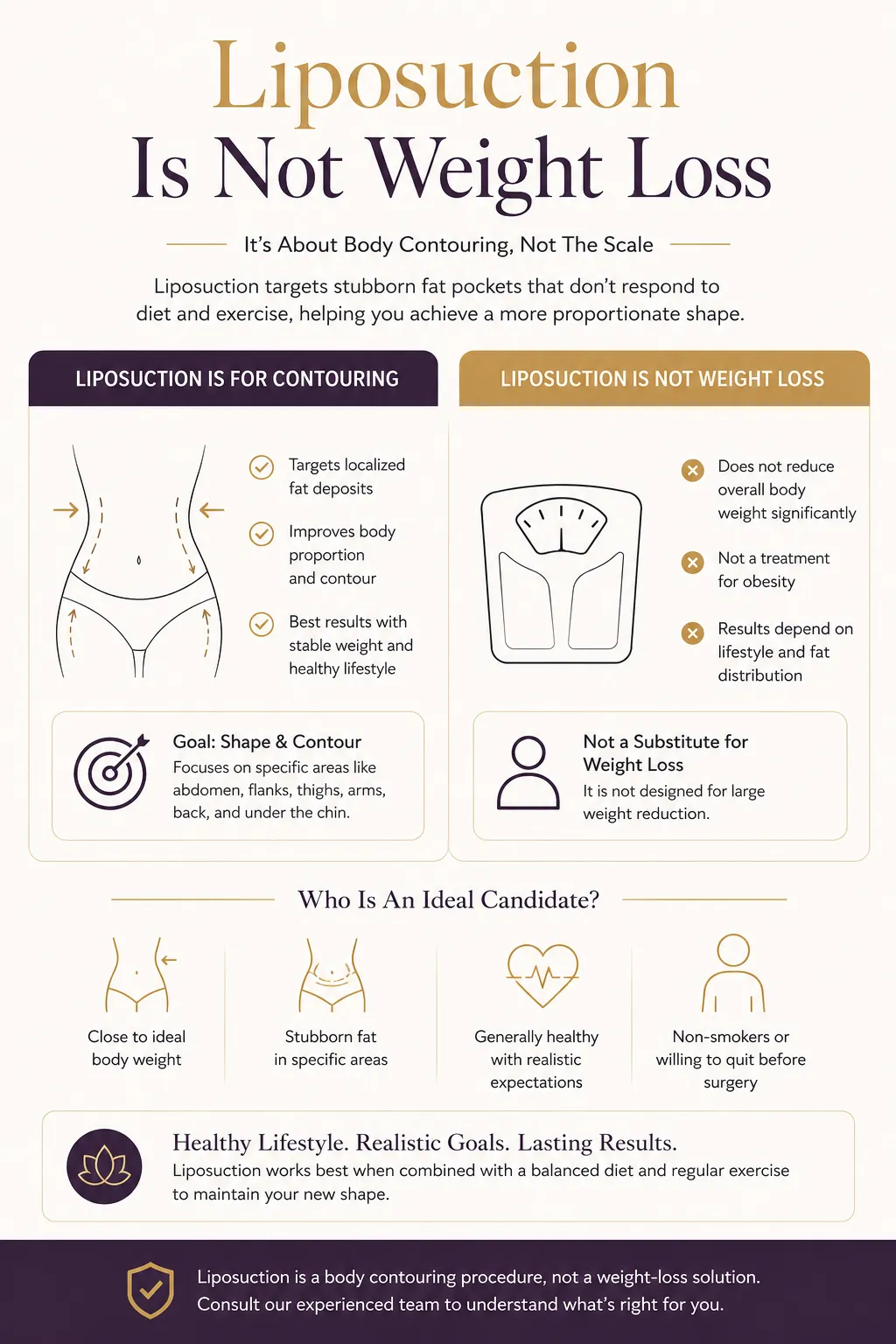
Quick answer: liposuction removes selected subcutaneous fat through small access points to improve contour. It is not a treatment for obesity, does not reliably tighten substantial loose skin, and cannot be planned safely from body weight or photographs alone. Examination of fat thickness, skin elasticity, anatomy and medical risk decides whether liposuction, tummy tuck, another treatment or no surgery is appropriate.


Ask a simple question about this page. The matcher runs only in your browser and points you to the relevant section.
Start here: liposuction is for localized contouring, not total weight loss. Use a suggested question or type your own.
This tool cannot examine you, diagnose a condition, recommend surgery, calculate candidacy or replace an in-person consultation.
“The aim is not to remove the largest possible volume. It is to leave a smoother relationship between treated and untreated areas while respecting skin quality, circulation, fluid balance and the patient’s overall safety.”Dr. Pawan Shahane, M.Ch. Plastic Surgery · Founder, Mayflower Clinic, Nagpur
Body contour is created by several layers: skin, superficial and deep fat, fibrous attachments, muscle, bone and posture. Liposuction works mainly within the subcutaneous fat layer. A narrow cannula removes selected fat while the surgeon checks remaining thickness, symmetry and smooth transitions.
That makes it useful for a localized abdominal pouch, flank fullness, thigh disproportion, arm fullness, back rolls, selected chest fat or a submental pocket. It is less predictable when the visible problem is mainly loose skin, abdominal-muscle separation, visceral fat inside the abdomen, gland tissue, swelling, hernia or cellulite.
Scale weight alone does not show where fat lies or how skin will respond. A person can be near a stable weight yet have a disproportionate localized pocket; another can have abdominal fullness dominated by visceral fat or loose skin that liposuction cannot correct.
Selective reduction of subcutaneous fat to improve contour and proportion in a medically suitable patient.
Obesity treatment, major weight reduction, metabolic-disease treatment, cellulite removal or a substitute for nutrition and activity.
Patients seeking substantial weight reduction or treatment of obesity-related health problems should first discuss appropriate medical, nutritional or bariatric pathways. Body contouring may be reconsidered after weight is stable and the remaining concern is clearly defined.
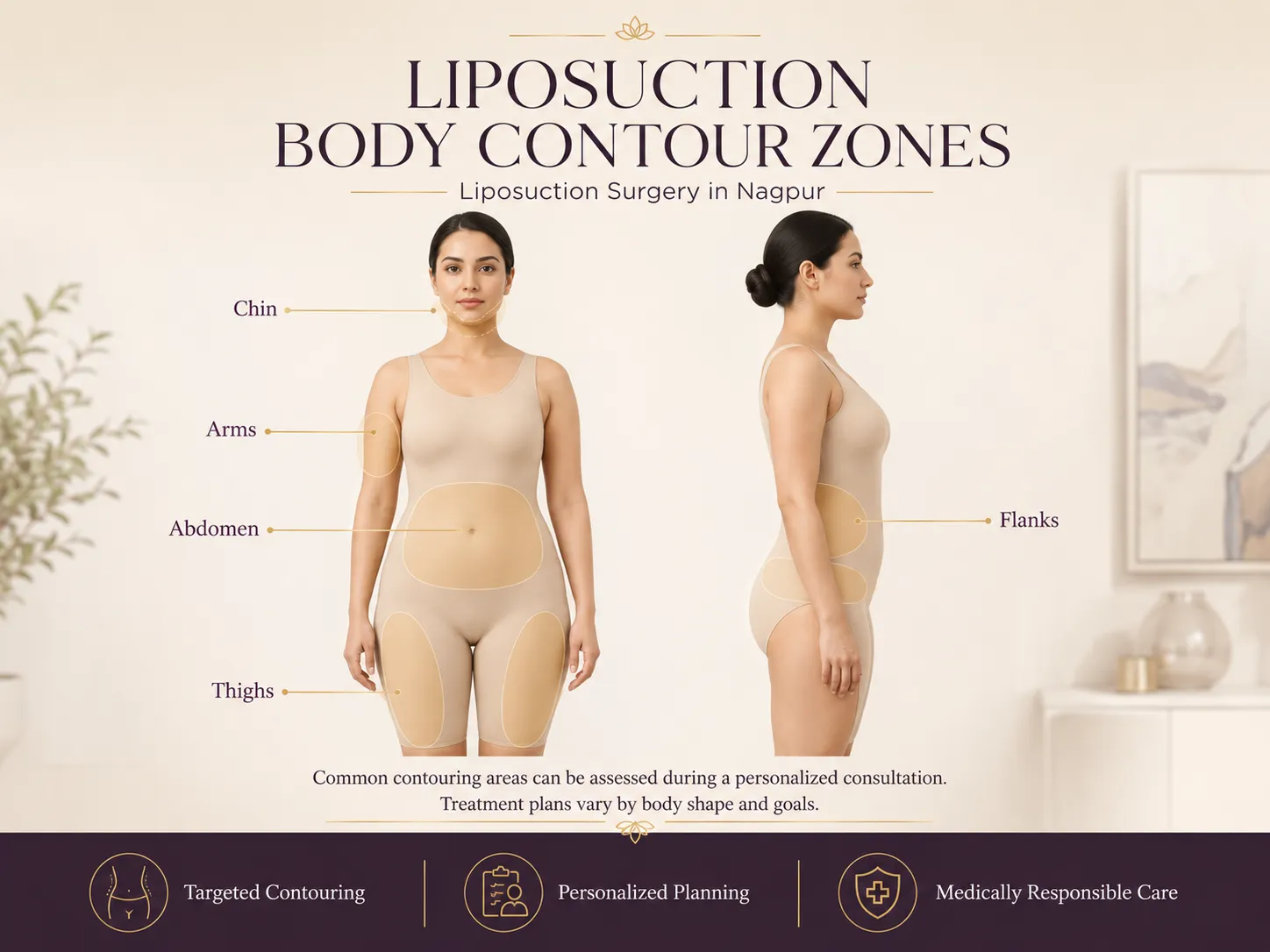
How much is subcutaneous fat versus loose skin, muscle laxity or visceral fullness?
How should the waist blend into the back, hip and ribcage without a step-off?
Will reduction improve proportion without producing waviness or over-narrowing?
Is skin elasticity sufficient, or is skin-excision surgery the more honest option?
Are folds driven by fat alone, or also by skin, posture and garment compression?
Is fullness from fat, skin laxity, neck anatomy, gland position or chin projection?
Is the enlargement fat, gland tissue or both? True gynecomastia may need gland excision.
Can they be treated safely together, or would a staged plan reduce duration and risk?
The same word—“fat”—can hide different anatomical problems. A useful consultation compares options before choosing a technique.
| Option | Main target | Skin / muscle effect | Downtime | Important limitation |
|---|---|---|---|---|
| Liposuction | Localized subcutaneous fat | Relies on existing skin elasticity; does not repair muscle separation | Surgical; varies with extent | Not obesity treatment; can reveal lax skin |
| Abdominoplasty / tummy tuck | Excess abdominal skin, selected fat and possible muscle laxity | Removes skin; may repair rectus separation | Longer recovery and scar | Not a substitute for weight stabilization |
| Laser lipolysis | Selected localized contour concerns using laser-assisted technique | Variable tissue effect; not a guarantee of skin tightening | Depends on exact technique | A device does not replace patient selection or surgical judgement |
| Non-surgical fat reduction | Modest reduction in selected small areas | No skin excision or muscle repair | Usually lower, but repeated sessions may be needed | Less dramatic and less predictable than surgical removal |
| Fat transfer | Harvest plus carefully planned volume addition elsewhere | Adds volume; does not treat all laxity | Two-site recovery | Some transferred fat may not survive; suitability is site-specific |
This is educational screening, not a candidacy decision. Only examination and medical assessment can determine suitability.
The same area can look different standing, sitting, bending or with muscle contraction. Your priority should be described in practical terms rather than a celebrity image or target kilograms.
Pinch thickness, skin recoil, stretch marks, scars, muscle separation, hernia signs and surrounding transitions are assessed.
Medical conditions, previous operations, medicines, supplements, allergies, smoking, pregnancy history and previous thrombosis matter.
The plan should be driven by tissue and safety—not by marketing around one machine.
Total surface area, expected aspirate, procedure time, fluid shifts, positioning and combination surgery may make staging more responsible.
Garment use, mobility, transport, job demands and distance from Nagpur are built into the plan.
Residual asymmetry, skin laxity, cellulite, scars, swelling and the possibility of revision should be discussed before consent.
A fluid solution is placed in the fat layer to assist anaesthesia, reduce bleeding and facilitate controlled removal. Formula and volume require careful management.
A cannula connected to suction removes selected fat using deliberate passes and repeated thickness checks.
A mechanically assisted cannula may help the surgeon work through selected tissue planes. It is a tool, not a guarantee of better contour.
Ultrasound- or laser-assisted methods may be considered in selected cases. They introduce device-specific benefits, limits and risks that must be explained.
The plan, consent, target areas and exclusions are reconfirmed. Markings are often made standing because gravity and folds change after lying down.
The chosen anaesthesia and monitoring are established. Positioning may change during surgery to reach transitions safely.
Access points are placed strategically. Tumescent fluid may be introduced and given time to act.
Fat is reduced through intersecting passes while preserving a smooth layer under the skin and blending into untreated regions.
The surgeon repeatedly palpates, compares sides and changes position. Perfect symmetry cannot be promised because bodies are not perfectly symmetrical before surgery.
Small sites are closed or managed according to the technique. Dressings and a correctly fitted garment are applied when indicated.
Pain, nausea, bleeding, fluid status, walking and garment fit are checked. Some patients go home the same day; others require observation.
Medical fitness, BMI context, smoking, sleep apnoea, diabetes, medicines, anaemia, previous thrombosis and mobility.
Number of areas, expected volume, duration, position changes and whether another operation is being combined.
Who administers anaesthesia, monitoring standards, sterile operating arrangements, recovery care and emergency pathways.
Responsible adult support, early walking, hydration, medicine plan, urgent contact, follow-up and safe travel timing.
The exact operating facility and anaesthesia plan for an individual case should be confirmed during consultation. Extensive treatment, longer procedures, combined operations or higher-risk patients may require staging, hospital-based care or overnight monitoring.
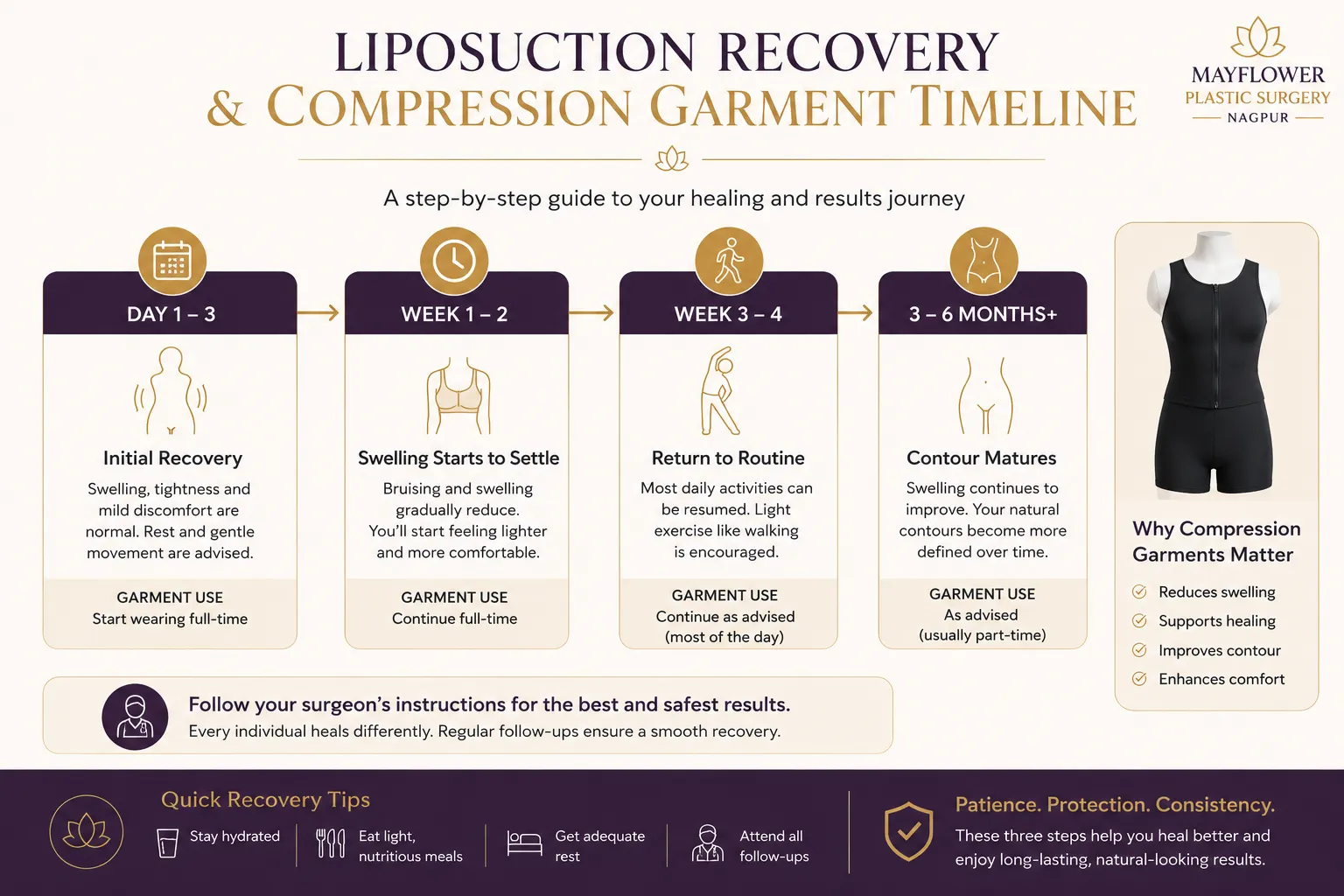
Rest is balanced with early mobilization. Garment fit, hydration, pain control and warning signs are reviewed.
Many patients can manage light daily activity. Desk-work timing depends on the treated areas, job, commute and medication use.
Bruising fades and movement improves. Temporary lumpiness or firmness can occur as swelling and internal healing evolve.
The timeline varies by area and extent. High-impact activity, heavy lifting and travel should follow individual advice.
Residual swelling and tissue firmness continue to soften. Small asymmetries should not be judged too early.
The visible result is not only the amount removed. It depends on starting asymmetry, skin recoil, residual fat thickness, fibrous attachments, muscle and bone shape, scars, postoperative swelling, garment fit, weight stability and healing biology.
Elastic skin, stable weight, localized fat, conservative layer preservation and adherence to aftercare.
Marked stretch marks, thin or damaged skin, major weight loss, ageing, repeated pregnancy, large-volume reduction and previous scarring.
Fat cells removed from the treated area do not return in the same pattern, but remaining cells can enlarge if weight increases. Pregnancy, ageing and hormonal change can also alter contour later.
A small chin area and circumferential trunk plan are not comparable.
Fibrous tissue, old scars, asymmetry, positioning and revision work affect time and tools.
Local, sedation or general anaesthesia; day care versus overnight care; and facility needs differ.
Investigations, garment, medicines, follow-up and any combined procedure should be stated clearly.
Mayflower Clinic provides a patient-specific quote after consultation. Ask for a written explanation of what is included and which unexpected costs, if any, could arise. A low advertised headline price should not replace qualification, safety, anaesthesia and follow-up checks.
Patients visit Nagpur from Vidarbha, Madhya Pradesh and Chhattisgarh. A remote record review may help organize the visit, but final suitability and markings require in-person assessment.
These are authentic clinic testimonials about broader plastic-surgery care. They are not presented as liposuction-specific outcome evidence, and individual experiences do not predict another patient’s result.
“Amazing experience with Dr Pawan Shahane. I recommend him for all cosmetic surgery. He is good in knowledge… and he is very kind in nature… I am happy with results and now feeling full of confidence.”
“Good experience. Highly skilled surgeon. Post op care and consultation was also done nicely… Thanks.”
“I am happy with results. I recommend him for cosmetic surgery. His staff are also good… honest and explains everything well.”
Liposuction is a body-contouring operation that removes selected deposits of subcutaneous fat through small access points using a thin cannula and controlled suction. Its purpose is to refine proportion and contour, not to treat obesity or replace healthy weight management.
No. Liposuction is not an obesity treatment and should not be presented as a shortcut to weight loss. It is usually considered for localized fat that remains despite a stable lifestyle, when the person is medically suitable and has realistic contouring goals.
Common areas include the abdomen, waist and flanks, hips, outer or inner thighs, knees, upper arms, back, male chest, and selected chin or neck concerns. The safest and most useful plan depends on fat distribution, skin quality, anatomy, total treatment extent and medical risk.
Potential candidates are generally adults in reasonable health with stable weight, localized fat, adequate skin elasticity, specific goals and realistic expectations. Smoking, uncontrolled illness, unstable weight, poor skin quality or elevated anaesthetic and clotting risk may alter, delay or rule out surgery.
Liposuction mainly reduces localized fat. A tummy tuck removes excess abdominal skin and may repair separated or lax abdominal muscles. When loose skin or muscle laxity is the dominant problem, liposuction alone may not create the desired contour and can sometimes make looseness more apparent.
Liposuction may allow some skin redraping when elasticity is good, but it does not reliably remove substantial loose skin. Age, stretch marks, previous pregnancy, major weight change and tissue quality influence contraction. Skin-excision surgery may be more appropriate for significant laxity.
No. Liposuction is not a dependable treatment for cellulite or stretch marks. Cellulite involves skin, connective tissue and fat architecture, while stretch marks are dermal scars. Both can remain after fat reduction and should be discussed separately.
Local anaesthesia with tumescence, sedation, regional techniques or general anaesthesia may be used depending on the area, volume, procedure length, combined surgery, medical history and facility plan. The anaesthesia choice should be individualized with appropriate monitoring and recovery arrangements.
There is no single safe amount for every person. Safety depends on body size, medical risk, aspirate composition, number of areas, fluid management, anaesthesia, procedure duration, combined operations and the postoperative setting. A cautious plan may stage treatment rather than chase a volume target.
A limited area may take around one to two hours, while several areas or combined contouring can take longer. The duration cannot be finalized from a photograph or online message because markings, anaesthesia, positioning and careful symmetry checks affect the operative plan.
Bruising, swelling, soreness and temporary numbness are common early. Many people resume desk-based work in roughly five to ten days, depending on the extent and job, while exercise is reintroduced gradually. Swelling can continue to settle for weeks and contour refinement may take three to six months or longer.
Compression is commonly advised for a period of weeks, but the exact garment, pressure and schedule vary with the treated area, swelling, skin quality and surgeon preference. It should fit correctly and must not cause severe pain, numbness, breathing difficulty or skin injury.
The fat cells removed from a treated area do not regenerate in the same way, but remaining fat cells can enlarge with weight gain and body shape can change with ageing, pregnancy and hormones. Long-term contour is best supported by stable weight and regular activity.
Risks include bruising, swelling, seroma, infection, delayed healing, numbness, contour irregularity, asymmetry, pigmentation change, loose skin and revision surgery. Less common but serious risks include anaesthetic complications, bleeding, deep-vein thrombosis, pulmonary embolism, fat embolism, fluid imbalance and injury to deeper structures.
Cost depends on the number and size of areas, surgical complexity, anaesthesia, operating facility, garment, investigations, day-care or overnight needs and whether another procedure is combined. A responsible quote follows examination and should state what is included rather than using a one-price-fits-all offer.
References support general education. The exact operative and aftercare protocol must be individualized by the treating surgical and anaesthesia team.
Bring your health history, medicine list, previous surgery details and a clear description of the area that concerns you. The goal of consultation is to decide whether liposuction is appropriate, what it cannot correct, and how to plan recovery safely.

Case of the Month: Grade 3 Gynecomastia…

The Science of Facial Aging: Why Wrinkles,…