
01
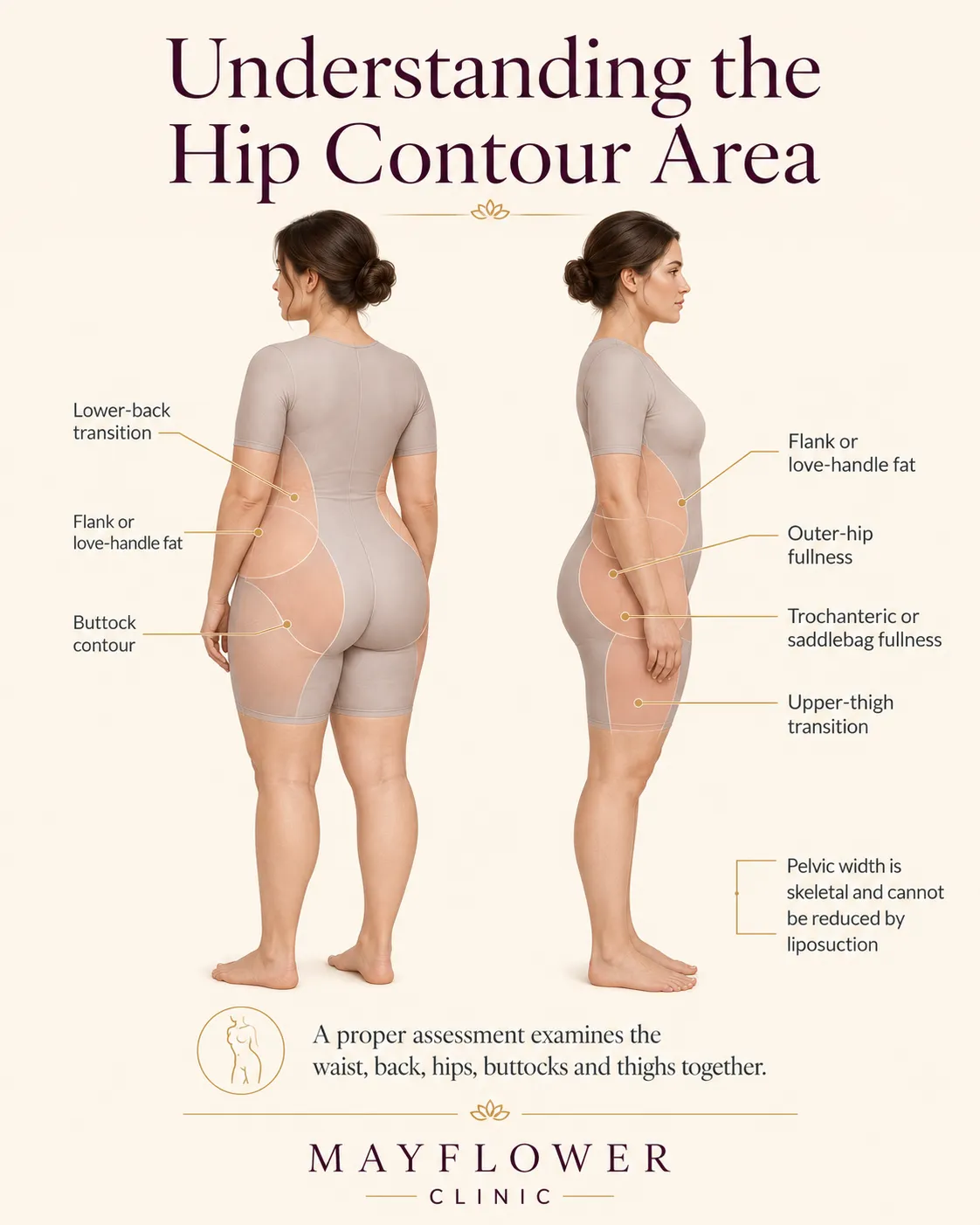
Flank or love-handle fat
Usually sits above or behind the pelvic rim and affects the waistline from the front, side and back.
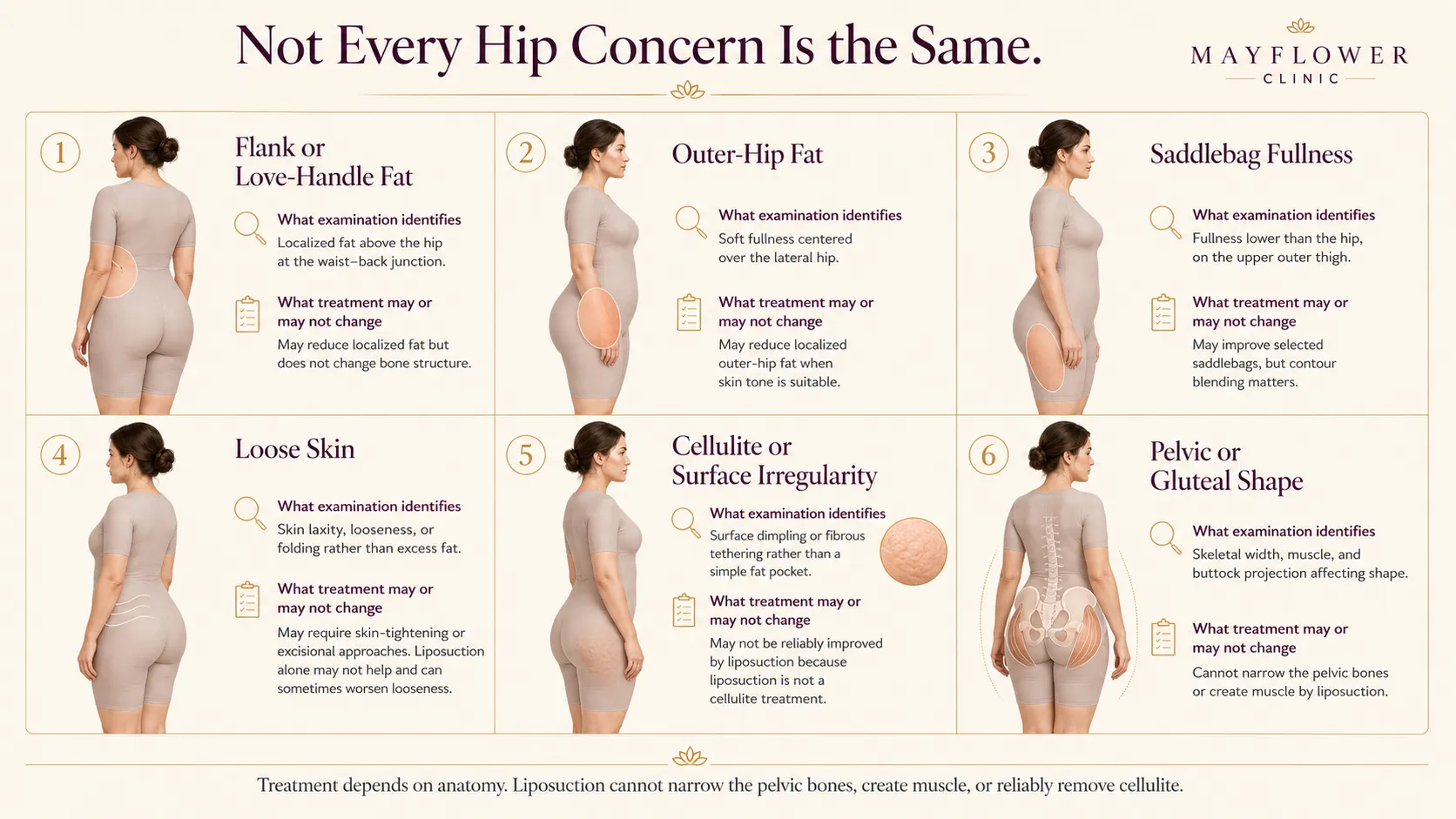
“Hip fat” can describe love handles above the pelvic rim, outer-hip fullness that blends into the thighs, a lower-back roll, loose skin, cellulite—or simply natural pelvic width. A useful consultation first identifies which layer is creating the contour before deciding whether liposuction, an energy-assisted technique, a non-surgical option, skin removal or no procedure is appropriate.

Ask a simple question about this page. The matcher runs only in your browser and points you to the relevant section.
This guide cannot examine you, diagnose a condition, recommend surgery or calculate candidacy. Use it to navigate the educational content below.
No. Skin laxity, cellulite, gluteal shape and pelvic width can create similar concerns.
Only selected fat can be reduced. Bone width and muscle shape remain unchanged.
No. It is contouring for a localized concern after weight is reasonably stable.
Sometimes, but outer-hip and thigh transitions need conservative three-dimensional planning.
No. Liposuction does not release the fibrous bands responsible for cellulite dimples.
By zones, extent, technique, anaesthesia, facility, garment and aftercare—not a single online price.
“The flank, waist, outer hip, buttock and upper thigh form one continuous curve. I plan how one area blends into the next, how much support the skin needs, and where fat must deliberately be left to avoid a hollow or shelf.”Dr. Pawan Shahane, M.Ch. Plastic Surgery · Founder, Mayflower Clinic, Nagpur
Hip fat reduction is a body-contouring decision, not a diagnosis based on a photograph. The treatable layer is usually subcutaneous fat: the soft, pinchable tissue between the skin and deeper muscle. This may collect above the pelvic rim as flanks or “love handles,” over the outer hip, around the posterior waist, or along the upper outer thigh.
The visible width of the hips is also influenced by the pelvis, gluteal muscles, posture, skin elasticity, cellulite bands and the relationship between the waist and buttocks. Liposuction can reduce selected fat and refine proportion, but it cannot narrow bone, create a different gluteal skeleton, repair major skin laxity or guarantee a perfectly smooth surface.
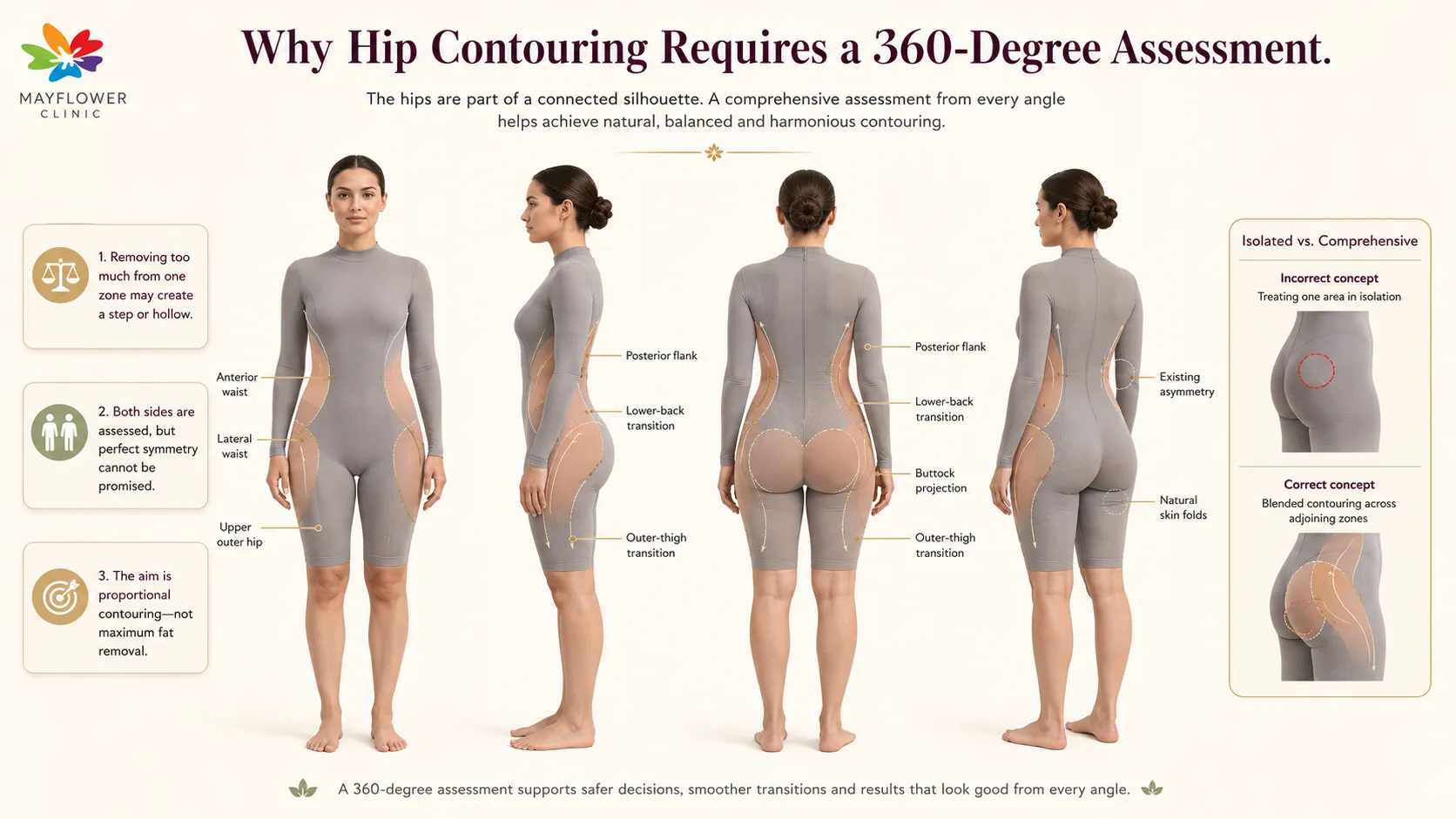
Planning should also account for the view from the front, side and back. Treating the flank but ignoring the outer hip may leave a step; aggressively hollowing the outer hip can make the greater trochanter or buttock edge more obvious. Conservative blending is often more important than volume removed.
The correct plan depends on which of these dominates. More than one may be present.
Usually sits above or behind the pelvic rim and affects the waistline from the front, side and back.
Localized tissue over the side of the pelvis may broaden the lower torso and merge into upper-thigh fullness.
Fullness often sits lower than the hip and belongs to the outer-thigh transition; isolated aggressive treatment may create a shelf.
Ageing, pregnancy or major weight loss can leave tissue that will not reliably contract after fat removal alone.
Fibrous bands, skin and fat architecture create dimples. Liposuction does not directly release these bands.
Bone width, buttock projection, muscle bulk and posture may create the dominant silhouette and cannot be narrowed by liposuction.
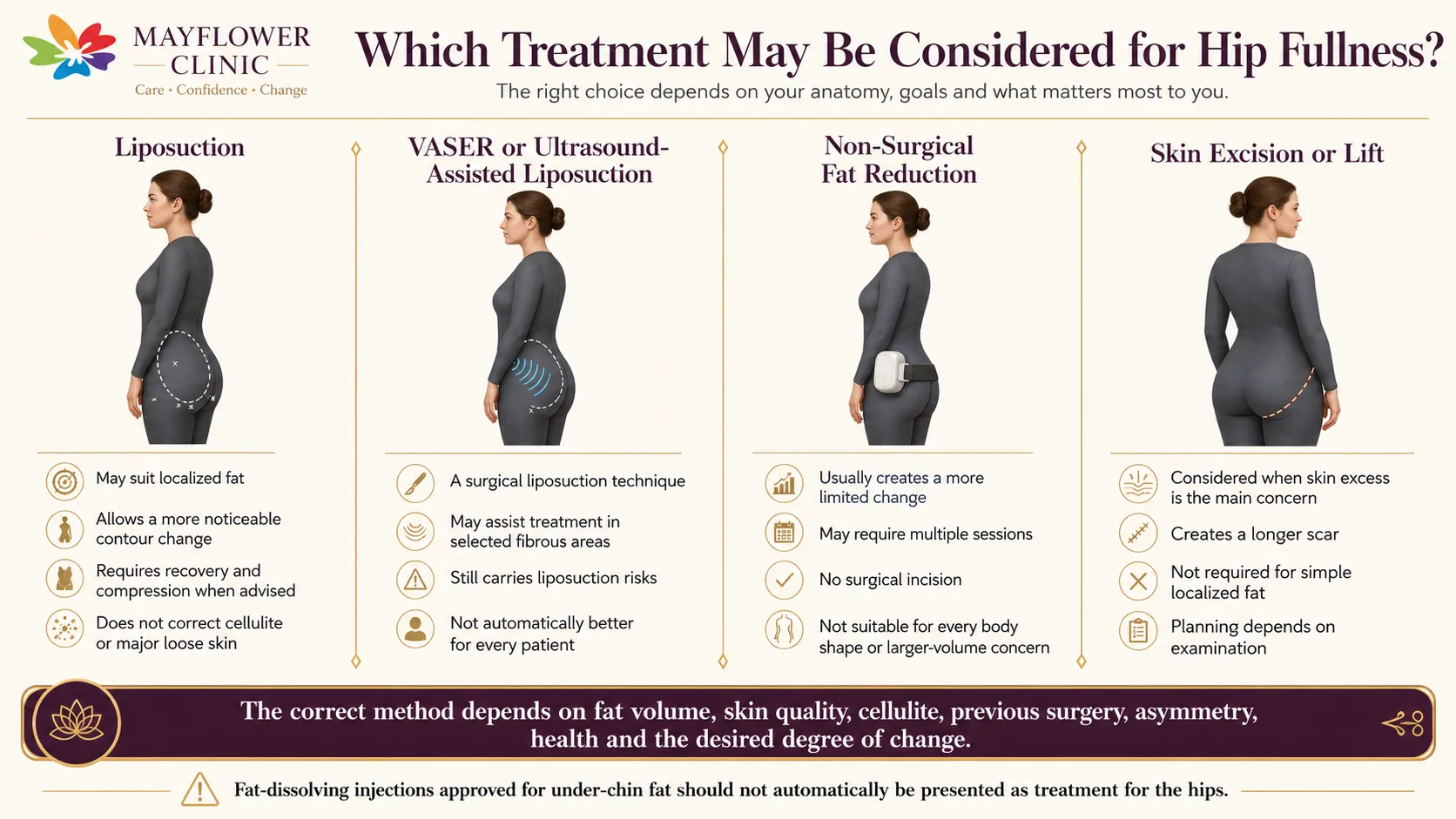
A device name should follow diagnosis. It should not replace diagnosis.
| Option | Main target | What it may offer | Important limitation |
|---|---|---|---|
| Conventional liposuction | Localized pinchable fat | Direct removal and three-dimensional blending of flanks, outer hip and adjacent zones | Relies on skin elasticity; does not narrow bone or treat cellulite |
| VASER-assisted liposuction | Selected fibrous or definition-sensitive zones | Ultrasound energy may assist fat emulsification before aspiration in an appropriate plan | Not automatically superior; adds device-specific risks and cost |
| Laser-assisted lipolysis | Selected small or localized contour concerns | Internal laser energy may assist treatment and can be followed by aspiration | Thermal injury is possible; skin contraction is variable and not a lift |
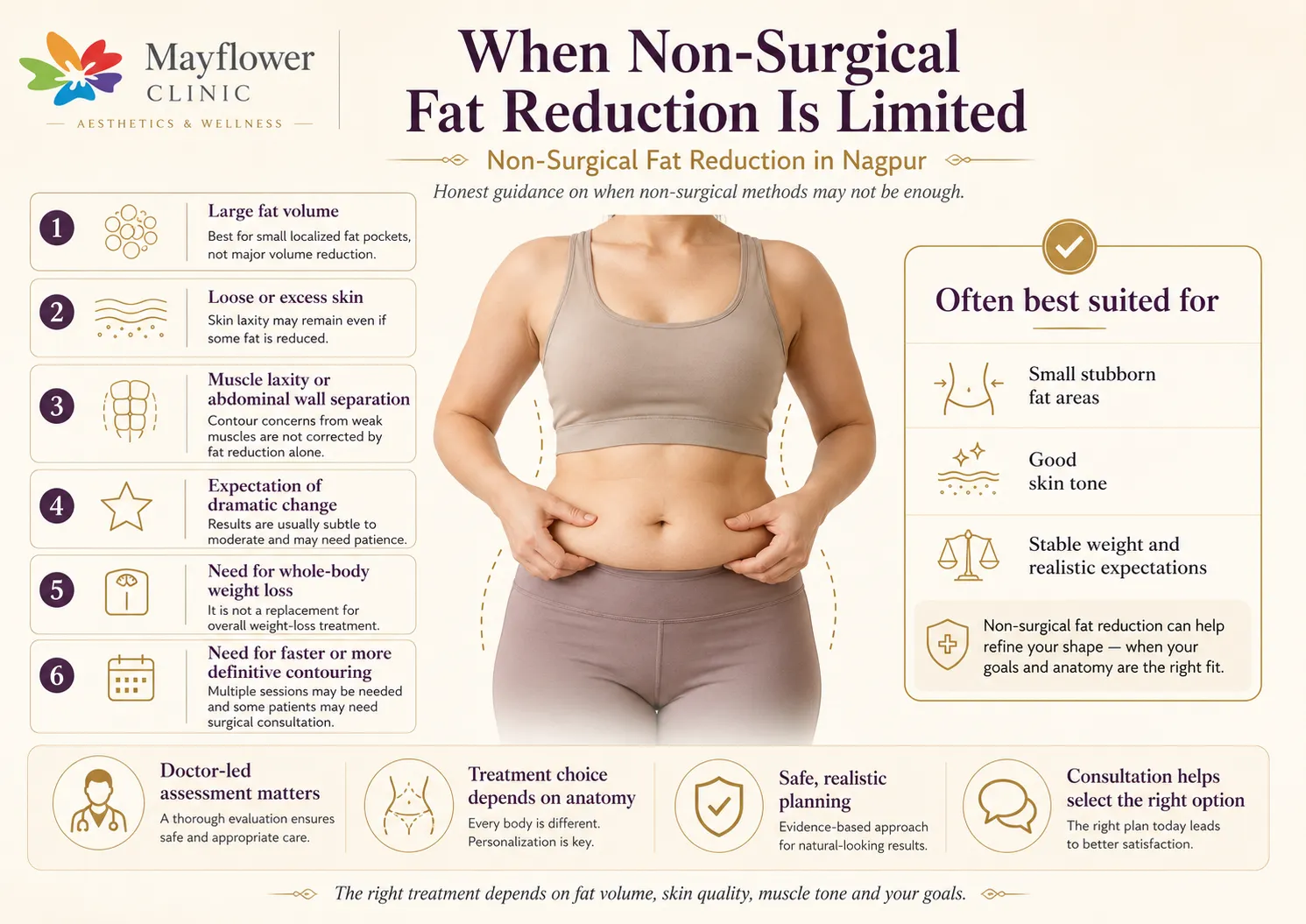
| Non-surgical fat reduction | Modest, well-defined localized fat | Lower procedural downtime and no surgical suction | Usually less dramatic, slower and less predictable; repeated sessions may be needed |
| Lower body lift / flank lift | Substantial loose skin after major weight loss or ageing | Removes and repositions redundant skin, sometimes with liposuction | Longer scars, recovery and higher wound-care burden |
| No procedure / weight stabilization | Structural width, unstable weight, unrealistic goal or medical risk | Avoids a procedure unlikely to answer the actual concern | Requires acceptance of anatomical limits or a different health pathway |
Posterior flanks should meet the back and waist without a sharp ledge or overly carved groove.
Fat removal should preserve a natural lateral buttock curve and avoid creating a hollow beside the gluteal muscle.
Outer-hip and saddlebag fullness may need coordinated conservative reduction to prevent an abrupt upper-thigh shelf.
Stretch marks, thin skin, previous weight loss and age influence how smoothly the envelope can redrape.
Natural differences in pelvis, spine, muscle and fat distribution should be documented before surgery.
The goal is a smoother relationship between waist, hip, buttock and thigh—not a promised weight or dress-size change.
These are educational signals, not a candidacy decision.
Standing, sitting and movement can reveal different contour patterns. The concern should be described in practical terms rather than a target body copied from another person.
Pinch thickness, skin recoil, scars, stretch marks, buttock shape, pelvic width and adjacent zones are examined.
Medical conditions, medicines, supplements, allergies, nicotine, previous thrombosis and prior procedures matter.
Flanks, back, outer hips, buttock edge and upper thighs are marked in relation to one another rather than as disconnected circles.
Ask what VASER, laser assistance or another tool is expected to add, and what the standard-liposuction alternative would be.
Pelvic width, cellulite, existing asymmetry, skin laxity and buttock anatomy should be discussed before consent.
A clear follow-up plan should cover movement, travel, compression, medicines, reviews and red-flag symptoms.
Investigations, medicine changes, fasting, transport, nicotine cessation and compression-garment planning are individualized.
The waist, flanks, posterior roll, outer hip, buttock edge and upper thigh are reviewed in multiple views before anaesthesia.
Local/tumescent anaesthesia, sedation or general anaesthesia may be used according to zones, duration, health and facility plan.
Access sites are planned near natural folds or less conspicuous areas while maintaining safe cannula direction.
The aim is even residual thickness and safe preservation of important tissue—not maximal suction.
The surgeon reassesses transitions to reduce visible step-offs, grooves, hollows and left-right imbalance.
Written instructions cover garment use, medicines, hydration, walking, sleeping position and review schedule.
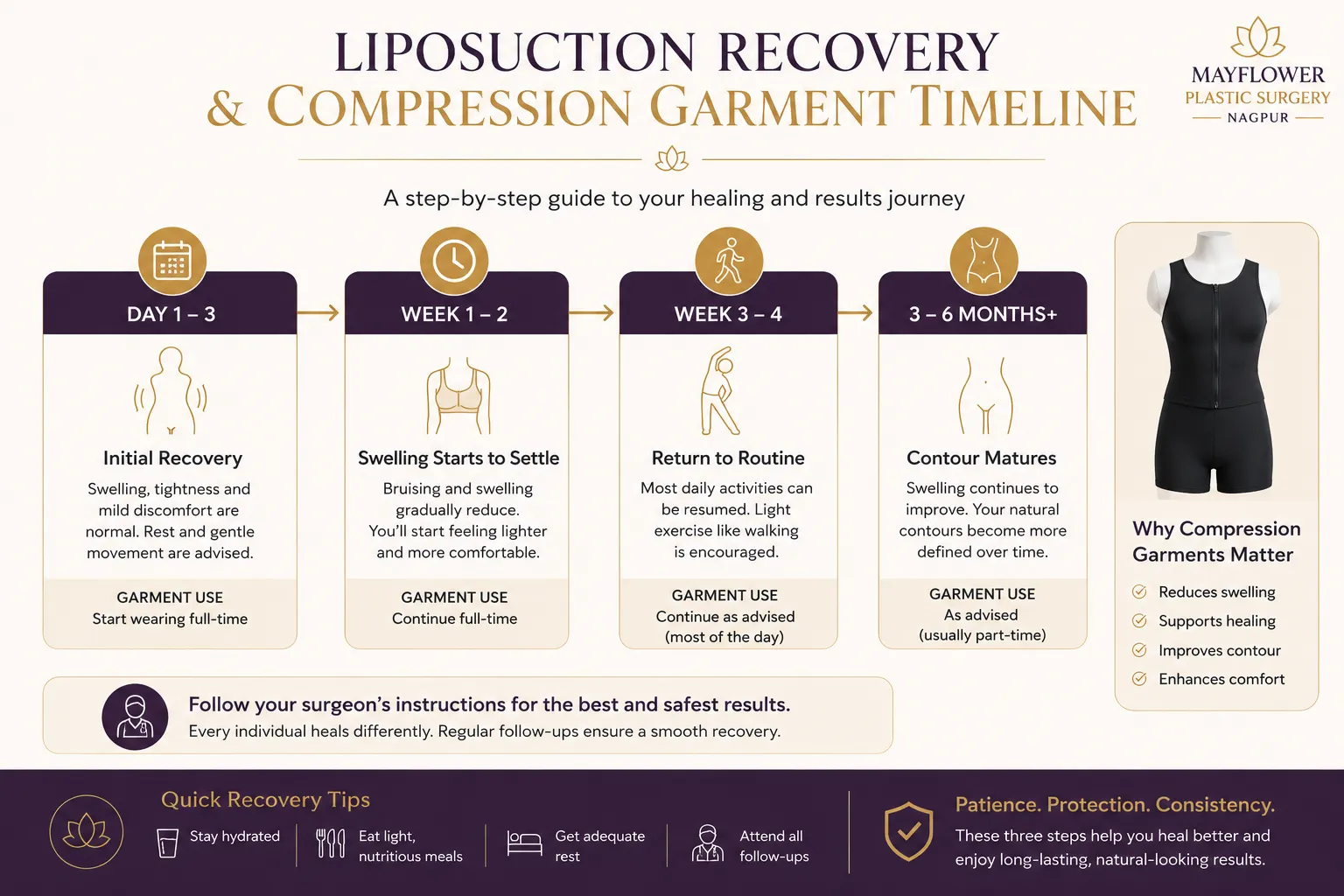
Individual recovery varies with the treatment extent, anaesthesia, medical health and whether other areas are combined.
Walking is encouraged. Bruising, tightness, fluid leakage from small access sites and altered sensation may occur.
Many limited-procedure patients can manage light desk activity, but prolonged sitting, driving and travel need individualized clearance.
Swelling, firmness, numbness and small asymmetries may remain. Garment use and activity progression follow review.
More activity may resume after medical review. The contour is visible but not final.
Residual swelling and tissue firmness continue to soften. Skin redraping and scars mature over time.
Short, frequent walking supports circulation. Avoid prolonged immobility unless specifically advised.
The garment should be smooth and supportive, not folded, painfully tight or causing colour change and numbness.
Follow dressing and bathing instructions. Do not apply unapproved creams, massage or heat to early wounds.
Heavy lifting, strenuous lower-body exercise and long journeys wait until the surgeon confirms progression.
Early swelling and firmness can be asymmetric. Do not judge the final contour in the first weeks.
Do not wait for a routine appointment if pain, swelling, breathing or wound symptoms are concerning.
Shortness of breath, chest pain, fainting, new one-sided leg swelling, rapidly increasing pain or swelling, heavy bleeding, spreading redness, pus, high fever, skin turning pale/dusky/black, or a garment causing severe pain, numbness or colour change. Use local emergency services when symptoms are severe; do not rely only on a WhatsApp message.
The intended change is a smoother waist-to-hip or hip-to-thigh transition. It is not a promise of a “zero hip dip,” a particular dress size, a celebrity silhouette, perfectly symmetric curves or permanent immunity from future weight change.
Some asymmetry is normal before surgery and may remain after healing. The visible contour can also change with posture, muscle use, menstrual or hormonal changes, ageing, pregnancy and weight fluctuation. A conservative result may be safer and look more natural than maximal reduction.
A responsible fee cannot be calculated from the words “hip fat” alone. It follows examination and a written plan.
Flanks alone differ from circumferential waist, back, outer hips and upper thighs.
Conventional, VASER- or laser-assisted treatment can require different equipment and disposables.
Local treatment, sedation or general anaesthesia require different personnel and monitoring.
Investigations and specialist clearance may be needed according to health and procedure extent.
Abdomen, thighs, fat transfer or skin excision change operating time, recovery and safety planning.
Garment type, replacements and fit adjustment should be clarified in the quote.
Dressings, prescriptions, planned reviews and scar care may be included differently.
Previous liposuction, scarred tissue or contour irregularity can require more cautious planning.
Patients travelling from Wardha, Amravati, Chandrapur, Bhandara, Gondia, Chhindwara, Jabalpur, Raipur or other cities should not assume that small access points mean unrestricted same-day travel. Anaesthesia, treatment extent, garment fit, pain control, clot prevention and access to urgent care affect timing.
“Amazing experience with Dr Pawan Shahane. I recommend him for all cosmetic surgery. He is good in knowledge… and he is very kind in nature… I am happy with results and now feeling full of confidence.”Jithin RajPatient testimonial
“Good experience. Highly skilled surgeon. Post op care and consultation was also done nicely… Thanks.”Mahika GoelPatient testimonial
“I am happy with results. I recommend him for cosmetic surgery. His staff are also good… honest and explains everything well.”Sandip BhudePatient testimonial
These are authentic general cosmetic-surgery testimonials from the clinic’s testimonial inventory. They are not presented as hip-liposuction-specific outcome claims. Individual outcomes and experiences vary.
Clear answers to common questions before considering treatment.
Bring a clear description of the area that concerns you, your medical and medicine history, previous procedure details, weight changes and practical recovery constraints. The consultation should determine whether the concern is treatable fat—or whether skin, cellulite, structure, weight stabilization or another pathway is more important.
Medical Disclaimer: Hip fat reduction and liposuction are body-contouring procedures and carry surgical, anaesthetic and device-specific risks. Individual outcomes vary with anatomy, skin quality, medical health, treatment extent, technique and healing biology. Results, symmetry, cellulite improvement and skin tightening are not guaranteed. Formal in-person consultation with Dr. Pawan Shahane is required before any procedure decision. This page is for general educational purposes only and does not constitute medical advice, diagnosis or a treatment recommendation. It is not for emergencies.

Case of the Month: Grade 3 Gynecomastia…

The Science of Facial Aging: Why Wrinkles,…