

0712 6692706 / 0712 3551170 / +91 8087471244   |   contact@mayflowerclinic.in

Home / Body Contouring / Fat Transfer to Buttocks
M.Ch. Plastic Surgery · Nagpur

Fat Transfer to Buttocks in Nagpur — Shape Planning With Safety First.

Gluteal fat grafting combines donor-area liposuction with carefully planned fat transfer to improve buttock contour and body proportion. It is a major elective operation—not a quick injection treatment—and requires realistic goals, adequate donor fat and an explicit discussion of its uncommon but potentially life-threatening risks.

Dr. Pawan Shahane, M.Ch. Plastic Surgeon in Nagpur
Reviewed by Dr. Pawan Shahane, M.Ch. Plastic Surgery21+ years surgical practice · Ex-Asst. Prof. GMC Nagpur · IAAPS Member · Personally planned surgical care
Dr. Pawan Shahane discussing a personalized body-contouring plan with a patient at Mayflower Clinic Nagpur
Mayflower Clinic · Dhantoli, Nagpur
!

Important safety context: Professional-society guidance recognizes gluteal fat grafting as carrying significant risk compared with many other elective aesthetic operations. Fat must not be placed inside or beneath the gluteal muscle; current multi-society guidance supports real-time ultrasound to verify the cannula remains in a safe anatomical plane.

M.Ch.Plastic Surgery
21+ YearsSurgical practice
Personal PlanAnatomy-led consultation
Safety FirstNo guaranteed outcome claims
Page Guide

Quick Answer

Quick guidance · Detailed explanations below.

Local clinic information only

Fat is removed by liposuction from selected areas, prepared, and transferred into the subcutaneous buttock tissues. It changes volume and proportion but does not remove loose skin.

Understanding the operation

What fat transfer can—and cannot—change

Fat transfer to the buttocks, also called gluteal fat grafting or commonly a Brazilian butt lift (BBL), is a two-part body-contouring operation. Liposuction is first used to collect fat from suitable donor areas such as the abdomen, flanks, back or thighs. The collected tissue is then prepared and placed in selected subcutaneous areas of the buttocks.

The visual change comes from both sides of the plan: reducing selected donor-area fullness and adding measured volume to the buttock contour. The objective may be improved projection, upper-pole fullness, side-profile balance or correction of selected asymmetry—not simply making the buttocks as large as possible.

A BBL is not the same as a true buttock lift. Fat grafting adds volume; it does not remove substantial loose skin. After major weight loss or where skin laxity is prominent, a skin-removal lift, a different contouring strategy or no operation may be more appropriate.
Uses the patient’s own fat
Includes liposuction donor sites
Volume survival is variable
May require staged treatment
Not a weight-loss treatment: This operation reshapes selected areas. It does not treat obesity, replace exercise, or guarantee a specific waist-to-hip ratio.
Suitability

Who may—or may not—be a candidate?

01

Adequate donor fat

There must be enough safely harvestable subcutaneous fat without over-treating the abdomen, flanks, back or thighs.

02

Reasonably stable weight

Large future weight changes can alter both the liposuction areas and the transferred-fat volume.

03

Medical fitness

Heart, lung, clotting, diabetes, anaesthesia and previous-surgery risks require individualized assessment.

04

Smoking control

Nicotine can impair healing and fat survival. Surgery may be postponed until cessation requirements are met.

05

Realistic proportion goals

The safest achievable contour depends on anatomy, skin quality, donor volume and the amount that survives.

06

Recovery support

You need help, transport and the ability to comply with pressure, garment, walking and follow-up instructions.

Surgery may be deferred or declined when risks are disproportionate, donor fat is insufficient, expectations are unsafe, nicotine use continues, health is unstable, or postoperative instructions cannot be followed.
Patient journey

How the plan is developed

Consultation

Goals and proportions

Discuss desired change, previous surgery, weight history, exercise, clothing concerns and acceptable limits.

Examination

Donor and recipient areas

Assess skin laxity, muscle frame, asymmetry, existing projection and safely harvestable fat.

Safety review

Medical and anaesthesia plan

Review medicines, nicotine, clot risk, laboratory tests, facility, positioning and emergency arrangements.

Marking

Contour map

Plan what to reduce and where modest volume may improve balance without chasing an unsafe size target.

Operation

Harvest and preparation

Fat is collected using liposuction and prepared for transfer; fluid balance and donor contours are monitored.

Transfer

Subcutaneous placement

Fat placement should remain above the gluteal muscle in accordance with modern safety principles.

Follow-up

Protection and review

Walking, pressure restriction, garments, medicines, wound care and staged activity are individualized.

Long term

Settled contour

Swelling and resorption change early fullness. Final evaluation waits until the tissues have matured.

Educational visuals

Donor-area planning and recovery

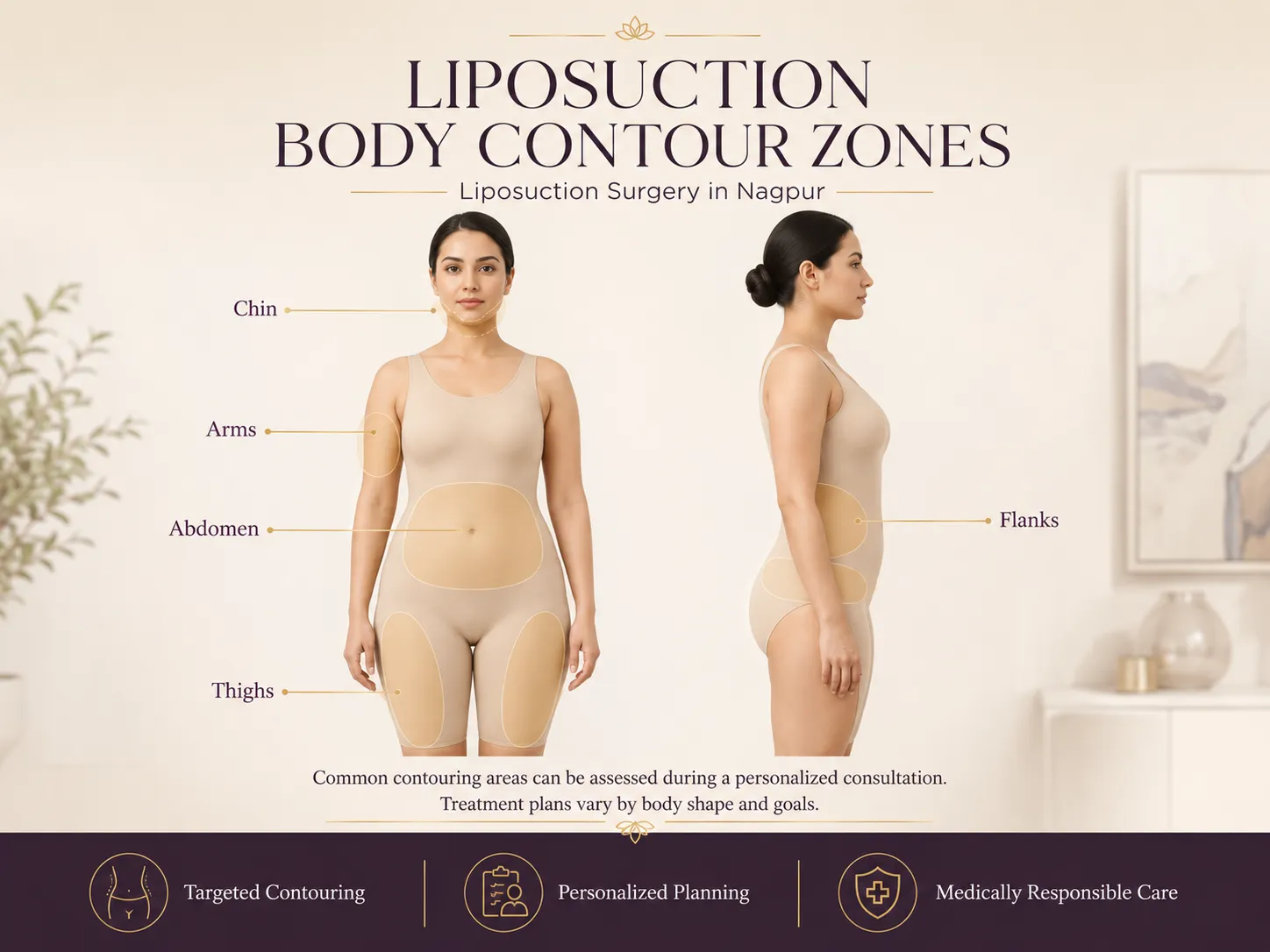
Educational illustration of common liposuction body contour zones used when planning donor fat
Donor-area map: fat availability is assessed across the abdomen, waist, back and thighs. The goal is controlled contouring—not aggressive removal from every possible area.
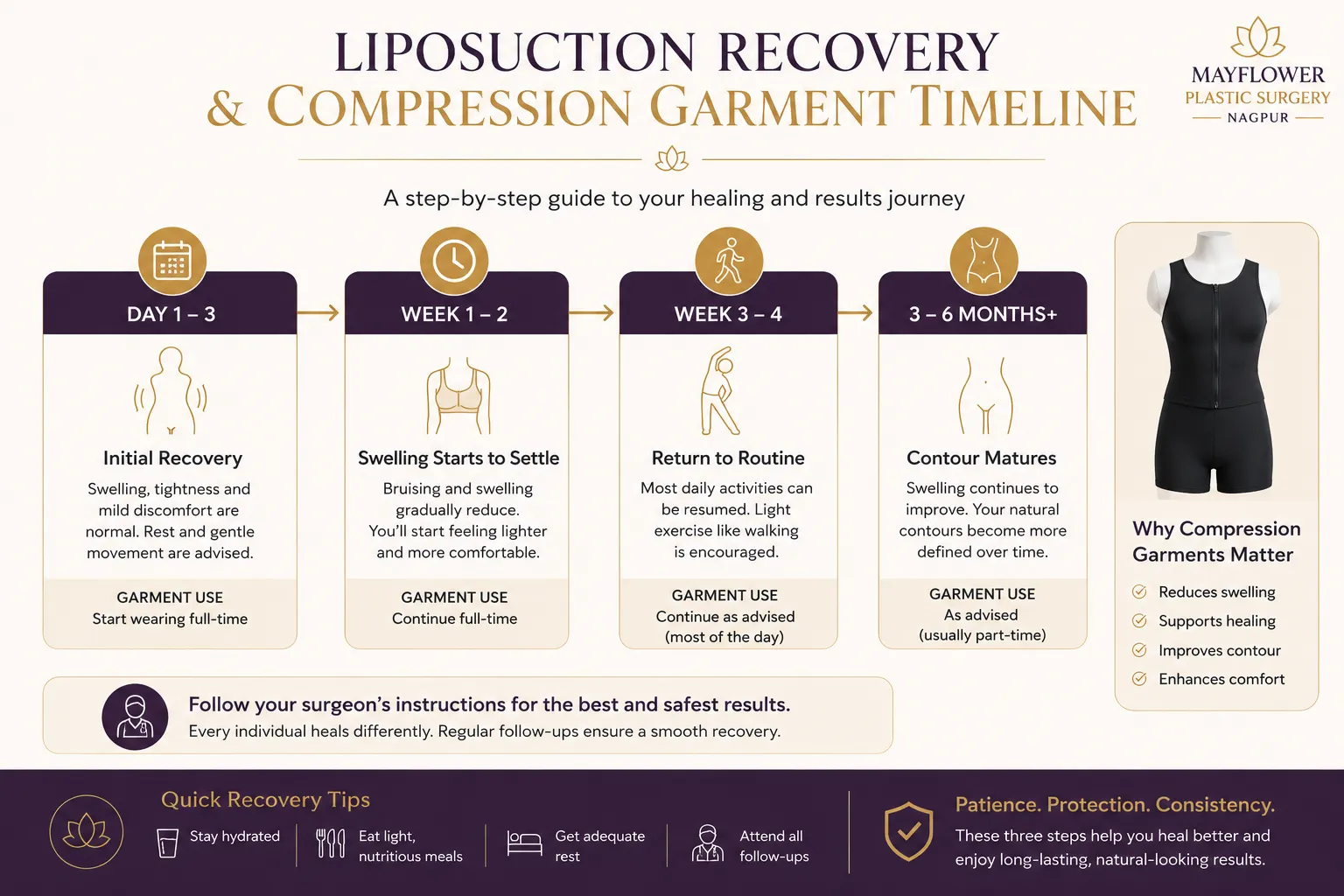
Liposuction recovery and compression garment timeline for body contouring patients
Two-area recovery: both the liposuction donor sites and grafted buttocks require care. Your final instructions may differ from a liposuction-only timeline.
Safety and limitations

Risks deserve direct, unhurried discussion

Fat embolism

Fat entering injured gluteal veins can travel to the lungs and may be fatal. This is the procedure-specific danger behind modern subcutaneous-only and ultrasound-supported safety guidance.

General surgical risks

  • Anaesthesia complications
  • Bleeding, infection or fluid collection
  • Deep-vein thrombosis or pulmonary embolism
  • Delayed healing or skin injury

Fat-graft limitations

  • Partial fat resorption
  • Fat necrosis, cysts or firm areas
  • Under-correction or over-correction
  • Asymmetry or contour irregularity

Donor-area risks

  • Bruising, swelling and altered sensation
  • Dents, waviness or uneven skin
  • Seroma or persistent swelling
  • Need for secondary correction
Emergency symptoms: shortness of breath, chest pain, fainting, unusual heartbeat, coughing blood, sudden confusion, severe leg swelling, uncontrolled bleeding or rapid deterioration require immediate emergency care—not a routine clinic message.
Recovery

A practical recovery timeline

0–2d

Observation and early walking

Monitoring, medicines, hydration, assisted walking and careful positioning begin immediately. A responsible adult is needed after discharge.

1wk

Swelling and garment care

Bruising, tightness and donor-area soreness are expected. Garment use and wound care follow the personalized discharge plan.

2–3w

Modified sitting and work

Desk work depends on pain, travel and the ability to avoid prolonged pressure. Do not improvise pillows or sitting positions.

4–6w

Progressive activity

Activity and exercise increase only after review. Swelling may remain and the apparent volume will continue changing.

3–6m

Contour maturation

Donor areas soften, residual swelling reduces and the retained graft becomes easier to assess.

6–12m

Final assessment

Long-term contour, asymmetry and any need for staged refinement are considered after full settling.

Clinical perspective

Proportion matters more than a number

“A responsible gluteal fat-transfer plan begins with anatomy and safety—not a requested volume. Sometimes the best recommendation is a smaller transfer, a staged plan, liposuction alone, a different operation, or no surgery.”
Dr. Pawan Shahane, M.Ch. Plastic Surgery · Founder, Mayflower Clinic, Nagpur
Alternatives

Other options may fit the actual concern better

Waist and flank liposuction alone

Reducing selected surrounding fullness can improve silhouette without adding buttock volume.

True buttock lift

After major weight loss, excess skin may require removal rather than volume addition.

Buttock implants

Implants are a different operation with distinct infection, displacement, wound and long-term risks.

Staged modest fat transfer

Where donor fat or tissue capacity is limited, a staged plan may be safer than attempting a large one-stage change.

Weight stability and training

Exercise cannot reproduce surgical fat transfer, but gluteal muscle development and stable weight affect overall shape.

No procedure

Choosing not to undergo surgery is valid, particularly when expectations or medical risk do not support an operation.

Verified patient feedback

What patients say about Dr. Shahane’s care

The following verified Google reviews relate to other Mayflower Clinic procedures. They are shown as feedback about consultation, communication and postoperative care—not as buttock fat-transfer outcome claims.
★★★★★

“Had a treatment for the injury and it was a great experience. It was like after removing stitches it looks as it was almost before the injury”

Maroti Nawghade
Google review · Injury/reconstruction
★★★★★

“Best cosmetic surgeon, I strongly recommend, him for all plastic surgery. He is very intelligent and guides you very well. my son suffered from gynecomastia and so we get done surgery... And surgery was the best decision. Thanks sir.”

Sachin Batra
Google review · Gynecomastia
★★★★★

“Hi I am from Pune and recently had nose surgery performed by Dr. Pawan Shahane, and I am absolutely thrilled with the results! From the initial consultation to the post-operative care, Dr. Shahane demonstrated exceptional skill, professionalism, and a genuine care for my well-being…”

Nishant Menghare
Google review · Rhinoplasty
Clear answers

Common questions about fat transfer to the buttocks

What is fat transfer to the buttocks?

It is a two-part operation in which fat is removed by liposuction from selected donor areas, processed, and placed into the subcutaneous tissues of the buttocks to improve contour and proportion. It is commonly called gluteal fat grafting or a Brazilian butt lift, although it does not remove loose skin like a surgical buttock lift.

Is a Brazilian butt lift the same as a buttock lift?

No. Fat grafting adds selected volume and may improve shape. A true buttock lift removes loose skin and repositions tissues, usually after major weight loss. Some patients need one approach, a combination, or no surgery after examination.

Why is safety especially important in gluteal fat grafting?

Fat entering large gluteal veins can cause a life-threatening pulmonary fat embolism. Modern safety guidance emphasizes fat placement only in the subcutaneous plane above the muscle and supports real-time ultrasound to verify the cannula position.

Who may be suitable for buttock fat transfer?

Potential candidates are medically fit, have enough donor fat, maintain a reasonably stable weight, do not smoke or can stop as instructed, have realistic goals, and can follow sitting, sleeping, garment and activity restrictions during recovery.

Can a very thin person have this procedure?

Suitability depends on whether enough harvestable fat is available without creating donor-site irregularity or an unsafe liposuction plan. A modest or staged correction, another option, or no operation may be more appropriate for a thin patient.

How much of the transferred fat survives?

Fat survival is variable and cannot be predicted precisely. Some transferred fat is naturally reabsorbed during healing, so early fullness is not the final result and a second procedure may occasionally be considered after tissues have settled.

Will the operation help loose or sagging skin?

Fat transfer primarily adds volume and changes contour. It does not reliably remove significant loose skin. Patients with marked laxity may need a different operation such as a buttock lift, or may be advised against adding volume.

How long does recovery take?

Walking begins early, while bruising and swelling commonly last several weeks. Direct pressure and prolonged sitting are restricted initially, exercise returns gradually, and the contour may continue settling for several months; final assessment can take up to a year.

How should I sit or sleep after surgery?

The exact plan is individualized. Patients are commonly instructed to avoid prolonged direct pressure on the grafted area, sleep on the front or side when permitted, and use only the positioning method recommended by their surgeon.

What are the main risks?

Risks include fat embolism, blood clots, anaesthesia complications, bleeding, infection, fluid collection, fat necrosis, contour irregularity, asymmetry, donor-site dents, skin injury, loss of transferred volume and the possibility of revision surgery.

What symptoms need urgent medical attention?

Seek emergency care for shortness of breath, chest pain, fainting, unusual or rapid heartbeat, coughing blood, sudden confusion, severe leg swelling, uncontrolled bleeding, rapidly worsening pain or any other sudden deterioration.

Can fat transfer replace weight loss or exercise?

No. It is a body-contouring operation, not a weight-loss treatment or substitute for fitness. Weight stability and realistic expectations are important because future weight changes can alter both donor and recipient areas.

Book a Safety-Focused Body Contouring Consultation

Bring your goals, medical history and questions. Dr. Pawan Shahane will assess donor fat, skin quality, body proportions, surgical risk and whether fat transfer—or a different plan—is appropriate.

Mayflower ClinicSurdham Complex, Dhantoli,
Nagpur — 440012, Maharashtra
Clinic hoursMonday–Saturday
11 AM–6 PM · Sunday closed

Medical Disclaimer: Fat transfer to the buttocks is major elective surgery with inherent risks, including rare life-threatening complications. Individual outcomes vary according to anatomy, health, donor fat, surgical plan and healing biology. Results and fat survival are not guaranteed. Formal in-person consultation with Dr. Pawan Shahane is required before any surgical decision. This page is for general educational purposes only and does not constitute medical advice or a treatment recommendation.