⚠️Severe or recent facial trauma may be an emergency. For breathing difficulty, heavy bleeding, altered consciousness, repeated vomiting or sudden visual symptoms, go to the nearest emergency department now.
M.Ch. Plastic Surgery · Planned Facial Trauma Care
Face Injury Treatment in Nagpur — Restore Function First, Then Form.
Facial trauma can involve the skin, bones, eyes, nerves, teeth, airway and bite. This page explains what needs urgent hospital care, how a facial injury is assessed, when observation or surgery may be considered, and how later scar or reconstructive treatment is planned.
🏥
This clinic webpage is not an emergency service. Mayflower Clinic provides planned plastic-surgery assessment, follow-up and reconstructive consultation after appropriate emergency stabilisation. Complex injuries may require coordinated care with emergency medicine, ophthalmology, ENT, neurosurgery, dentistry or maxillofacial teams.
Reviewed by Dr. Pawan Shahane, M.Ch. Plastic Surgery21+ years surgical practice · Ex-Asst. Prof. GMC Nagpur · IAAPS Member · 9 yrs ThreeBestRated Nagpur
Planned consultation after emergency stabilisation · Dhantoli, Nagpur
Hospital firstfor acute red flags
Whole-facefunctional assessment
M.Ch.plastic surgery training
Personalsurgeon-led planning
A facial bruise does not reveal the complete injury.
“The first priorities are breathing, bleeding, brain and neck safety, and vision. Only after those are addressed should we plan bone alignment, wound repair, scars and facial symmetry.”
Dr. Pawan Shahane, M.Ch. Plastic Surgery · Founder, Mayflower Clinic, Nagpur
Safety First
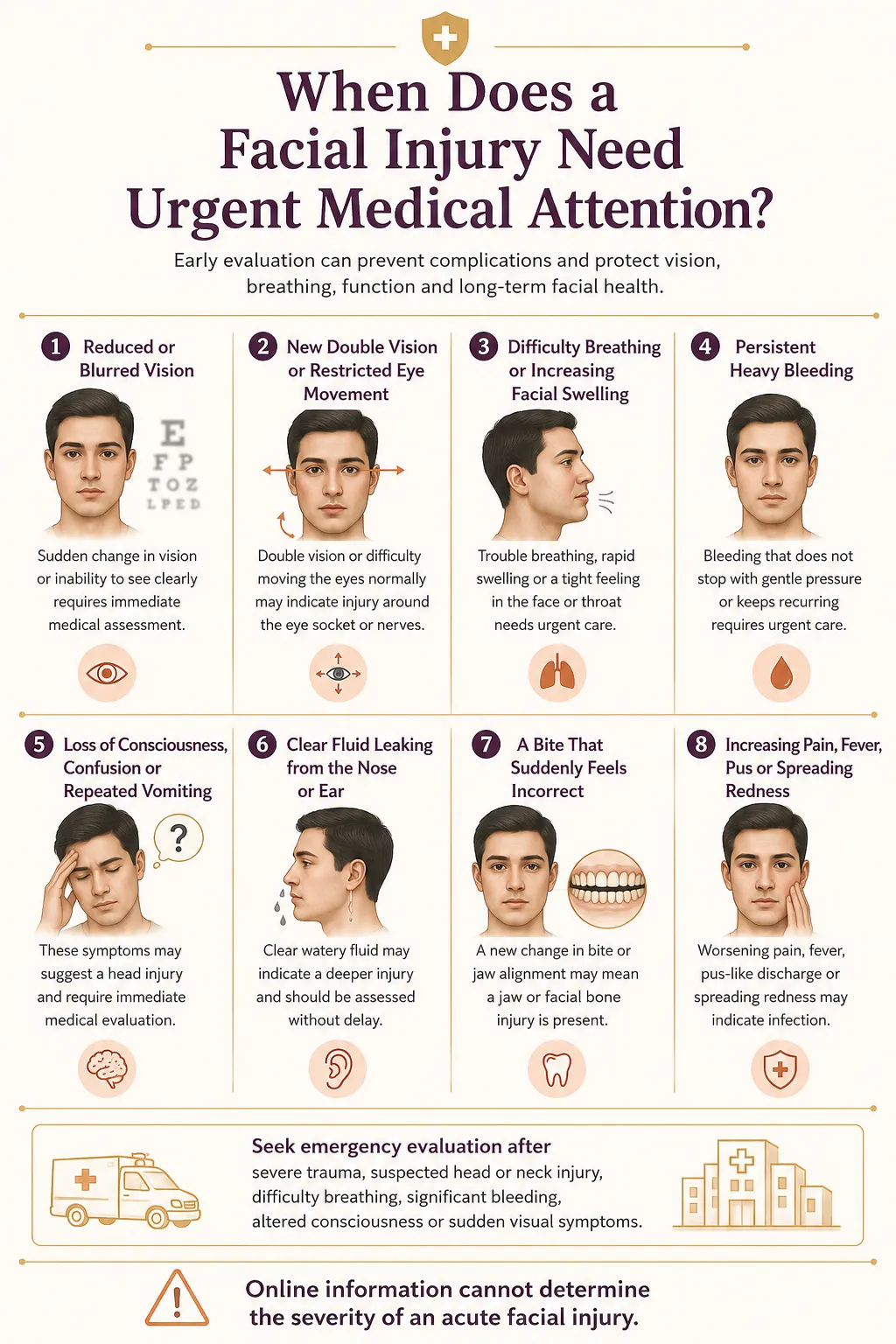
When does a facial injury need urgent medical attention?
Do not wait for an outpatient consultation after severe trauma or when symptoms suggest a threat to breathing, vision, the brain, the neck, or uncontrolled bleeding. An emergency team may need to stabilise the patient before a plastic or reconstructive plan is considered.
Vision or eye movement changes
Reduced or blurred vision, new double vision, severe eye pain, an eye that appears displaced, or restricted eye movement needs urgent assessment.
Breathing or rapidly increasing swelling
Difficulty breathing, swallowing, speaking, or rapidly progressive facial or neck swelling should be treated as an emergency.
Head-injury symptoms
Loss of consciousness, confusion, unusual drowsiness, seizure, repeated vomiting, weakness, or clear fluid from the nose or ear requires emergency evaluation.
Bleeding or open injury
Persistent heavy bleeding, deep contaminated wounds, exposed tissue, or a rapidly expanding swelling requires hospital assessment.
Facial injury warning signs — emergency symptoms should not wait for a clinic appointment.
Questions Patients Often Ask
Clear answers before the detailed sections
Quick guidance for patients and families. These answers cannot determine the severity of an individual injury.
Should I come directly to the clinic after an accident?
Not when there is severe bleeding, breathing difficulty, loss of consciousness, repeated vomiting, sudden vision change or severe trauma. Go to an emergency department first.
No. Stable and minimally displaced injuries may be observed. Surgery depends on displacement, function, bite, eye findings, wounds and realistic benefit.
Cost depends on the injury, imaging, hospital and anaesthesia needs, fixation material, specialist coordination and follow-up—not simply the size of the bruise.
Private local search — no data sent to external servers
Select a common question to jump to the most useful section.
Choose a question above. For immediate danger, use emergency services rather than this page guide.
Overview
What is face injury treatment?
Face injury treatment is not one operation. It is a sequence that begins with triage and diagnosis, then moves to wound care, observation, fracture management, rehabilitation, scar follow-up or delayed reconstruction according to the actual injury.
The face contains connected bones and soft tissues that support vision, breathing, chewing, speech, facial expression and appearance. A patient may have a visible cut with no fracture, a fracture hidden by swelling, or several injuries at the same time.
At Mayflower Clinic, the appropriate role is planned plastic-surgery assessment and reconstructive follow-up after emergency stabilisation. Dr. Pawan Shahane personally reviews the injury, previous treatment, scars, functional concerns and available imaging. Some cases require coordinated care with other specialists or treatment in a hospital setting.
Concerns that may be assessed
Facial cuts, tissue loss, wound-healing problems and scars
Nasal, orbital, cheekbone, upper-jaw or lower-jaw injury
Altered bite, mouth opening, chewing or jaw movement
Facial numbness, weakness or contour irregularity
Post-traumatic eyelid, cheek, lip, nose or chin distortion
Delayed asymmetry or reconstructive problems after earlier treatment
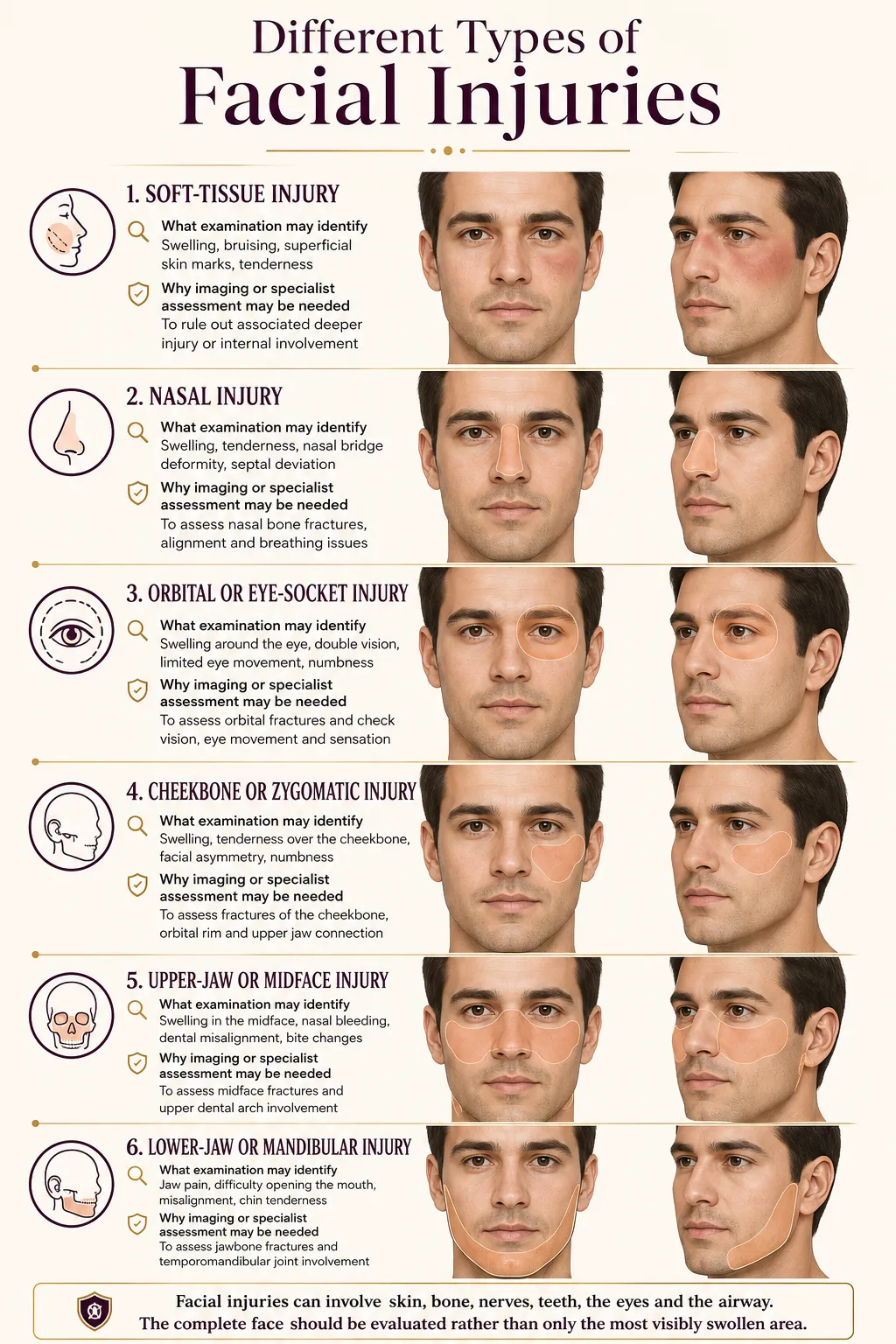
Different types of facial injuries — more than one region may be affected.
Injury Patterns
Different types of facial injuries
🩹
Soft-tissue injury
Cuts, abrasions, bruising, tissue crushing, contamination or tissue loss may require cleaning, closure, dressing and later scar care.
👃
Nasal injury
Assessment considers nasal alignment, obstruction, septal injury, bleeding and whether reduction is time-sensitive.
👁️
Orbital injury
Vision, pupils, eye movement, double vision, globe position and facial sensation require careful assessment.
◒
Cheekbone injury
Zygomatic injuries can affect cheek projection, the orbital rim, mouth opening and sensation of the cheek or upper lip.
🦷
Upper-jaw or midface injury
These injuries may disturb facial height, nasal support, the dental bite, airway and connections around the orbit.
▱
Lower-jaw injury
Mandibular injuries may cause an incorrect bite, pain, loose teeth, numbness, restricted opening or instability.
Connected Anatomy
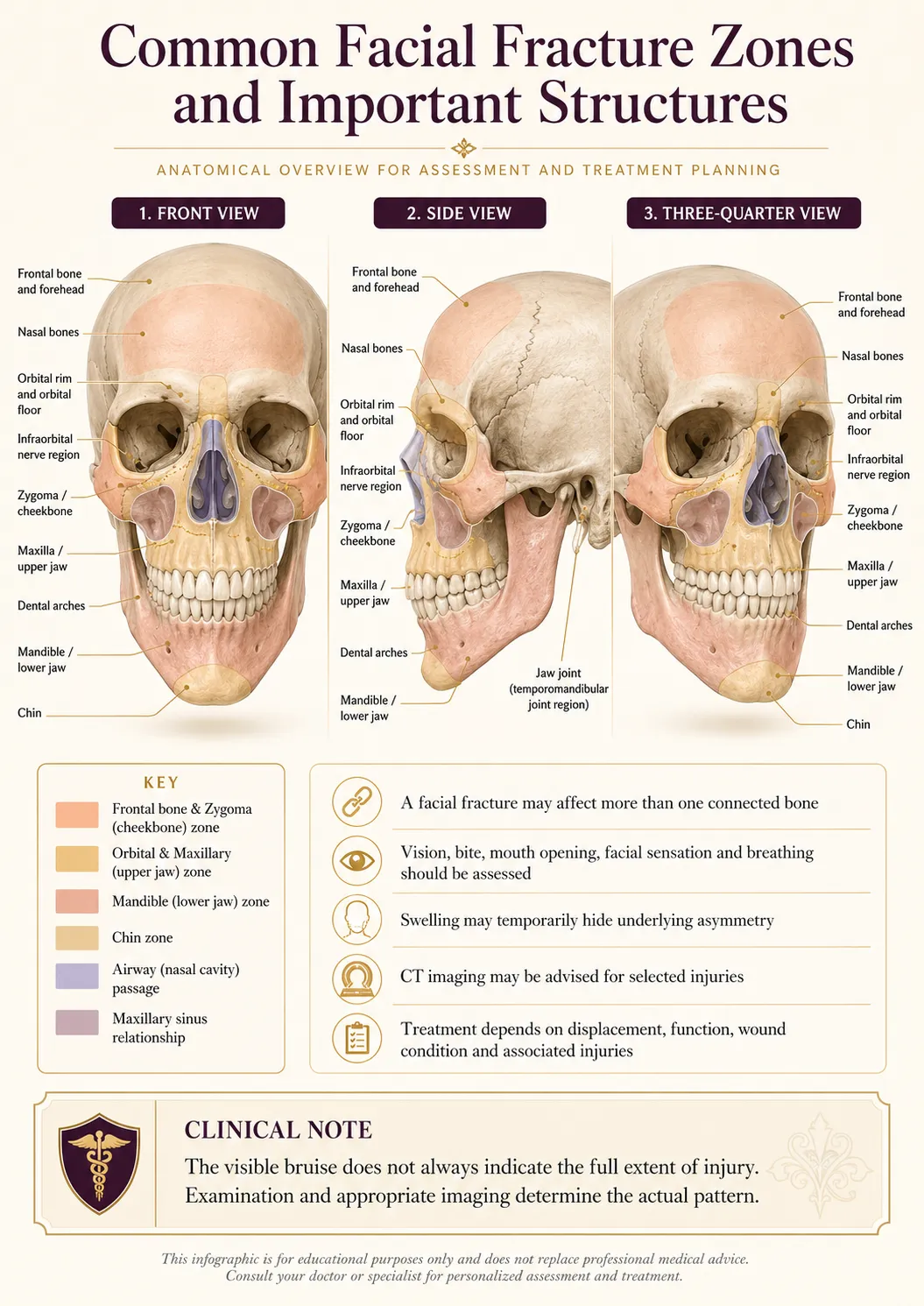
Common facial fracture zones and important structures
The facial skeleton is a connected framework. The nasal bones, orbit, cheekbone, maxilla, mandible, chin, jaw joints and dental arches influence one another. A fracture in one zone can therefore affect a nearby function.
Swelling can temporarily hide asymmetry, while numbness may indicate bruising or injury to a sensory nerve. The location of a bruise alone does not reliably identify the complete fracture pattern.
Vision and eye movement must be considered with orbital injury
The dental bite is an important guide in jaw and midface injuries
Breathing and sinus relationships matter in nasal and midface trauma
Facial sensation and movement should be documented
Head and neck injuries must be excluded after significant trauma
Facial fracture zones and functional structures assessed after trauma.
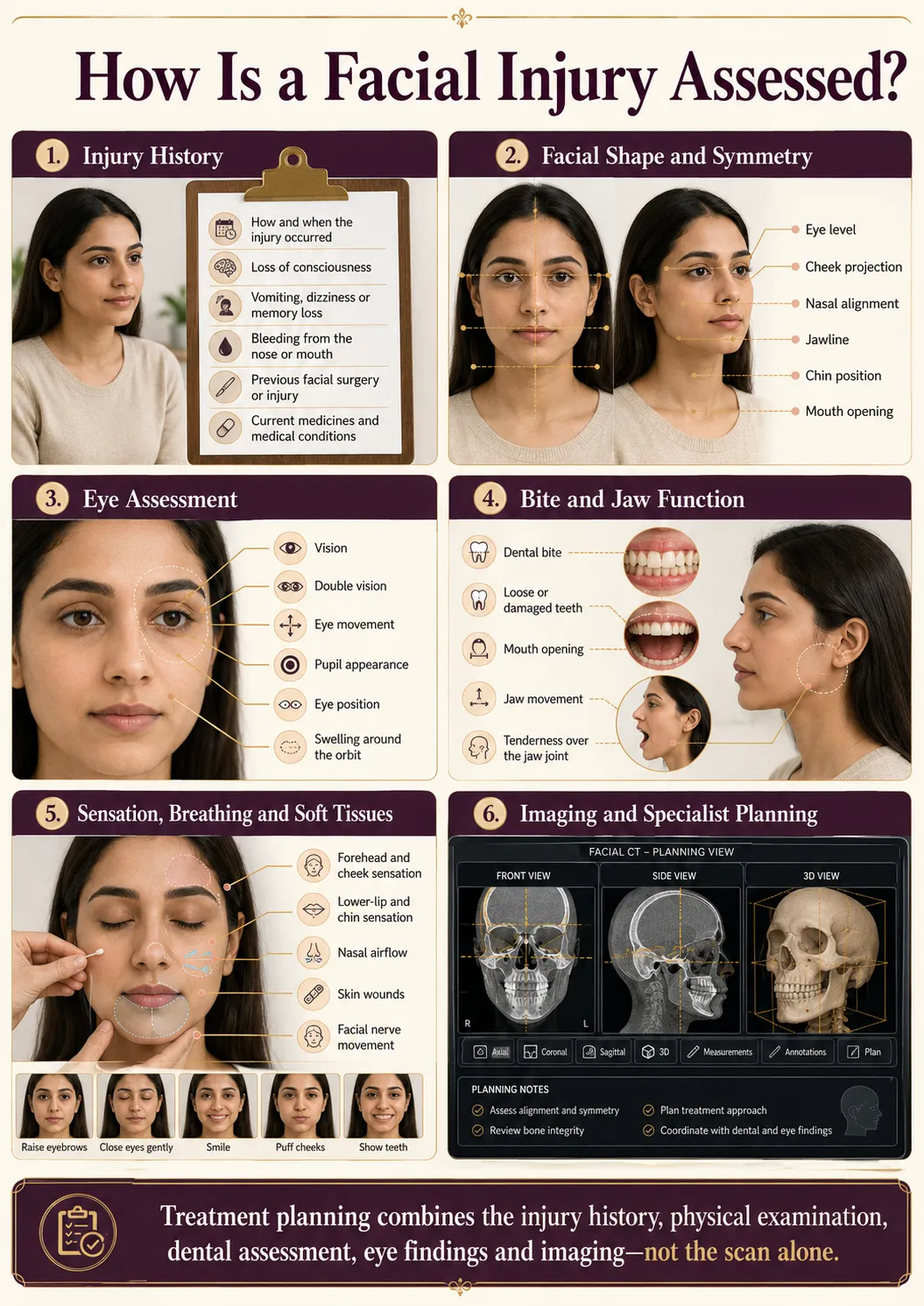
A structured facial injury assessment looks beyond the most visible bruise or cut.
Consultation and Evaluation
How is a facial injury assessed?
Assessment begins with the mechanism and timing of injury. A high-speed road accident, fall, assault, sports injury or work injury may carry different associated risks. The surgeon also reviews loss of consciousness, vomiting, dizziness, bleeding, previous facial surgery, current medicines and medical conditions.
1
History
Injury mechanism and symptoms
When and how the injury occurred, emergency treatment already given, neurological symptoms, visual symptoms and medicines are reviewed.
2
Examination
Face, eyes, bite and function
Facial symmetry, wounds, tenderness, eye movement, pupils, sensation, breathing, dental bite, jaw movement and mouth opening are assessed.
3
Imaging
Targeted radiology
CT or other imaging may be advised when a fracture, orbital injury, jaw injury or deeper structural problem is suspected.
4
Coordination
Specialist input when required
Ophthalmology, ENT, neurosurgery, dentistry, maxillofacial surgery, anaesthesia or rehabilitation may be involved according to the injury.
Treatment Decisions
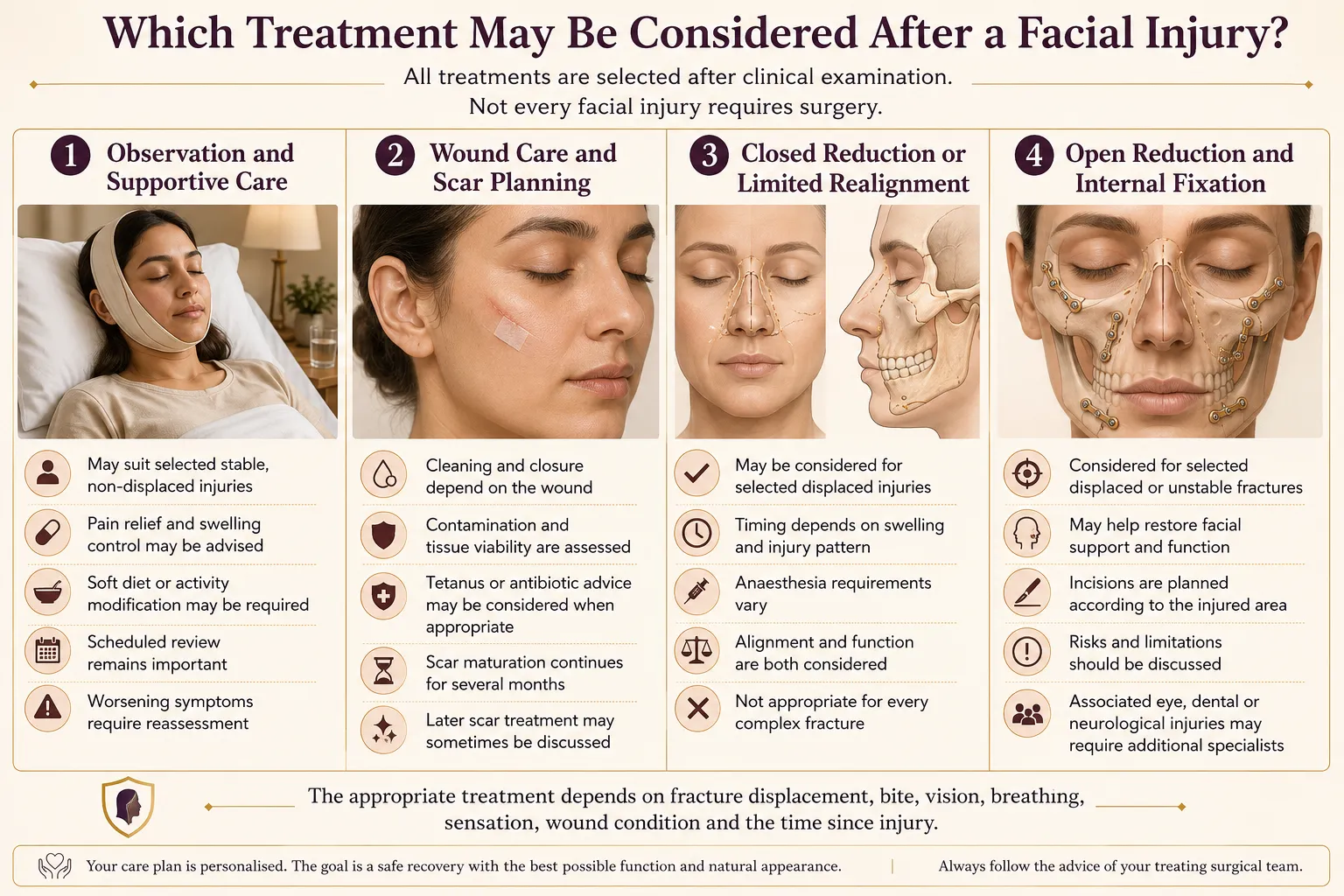
Which treatment may be considered after a facial injury?
Treatment is selected after examination and imaging. Not every injury requires an operation, and no single technique suits every fracture or wound.
Facial injury treatment options — selected according to stability, function, wounds, displacement and associated injuries.
🛏️
Observation and supportive care
May suit selected stable injuries. Pain relief, swelling control, a soft diet, activity restriction and scheduled reassessment may be advised.
🧼
Wound care and repair
Cleaning, removal of non-viable contamination, layered closure, dressing and scar-direction planning depend on wound depth, timing and tissue condition.
↔️
Closed reduction
Selected nasal, jaw or other injuries may be realigned without exposing the fracture widely. Suitability and timing are injury-specific.
▦
Open reduction and fixation
Displaced or unstable fractures may require direct realignment and fixation with plates, screws or other supports in an appropriate hospital setting.
🧩
Soft-tissue reconstruction
Local tissue rearrangement, grafts or flaps may be considered when there is tissue loss, distortion or a complex wound.
🕰️
Delayed reconstruction
After healing, selected patients may be assessed for scar revision, contour correction, eyelid or nasal reconstruction, bite correction or staged reconstruction.
Treatment Pathway
From injury to reconstruction: the usual sequence
The exact pathway changes according to urgency, associated injuries and whether the patient is seen immediately or after earlier treatment elsewhere.
1
Immediately
Emergency stabilisation
Airway, breathing, circulation, neurological status, cervical-spine safety, severe bleeding and vision threats take priority.
2
Early assessment
Document the injury
Clinical examination, photographs when appropriate, dental bite assessment and selected imaging define the injury pattern.
3
Decision point
Observe, repair or refer
The team decides whether the injury can be observed, needs wound repair, reduction, fixation or multidisciplinary care.
4
Treatment
Restore function and structural support
When surgery is appropriate, the aim is to restore safe function, facial support, eye position, bite and soft-tissue alignment as far as reasonably possible.
5
First weeks
Protect healing tissues
Wound care, dietary advice, medication, swelling control, review appointments and restrictions are tailored to the injury.
6
Weeks to months
Reassess function and scars
Vision, bite, mouth opening, sensation, facial movement, scars and residual asymmetry are reassessed as swelling settles.
7
Later if needed
Secondary reconstruction
Persistent functional or contour problems may require delayed imaging, rehabilitation, scar treatment or staged corrective surgery.
Recovery and Follow-up
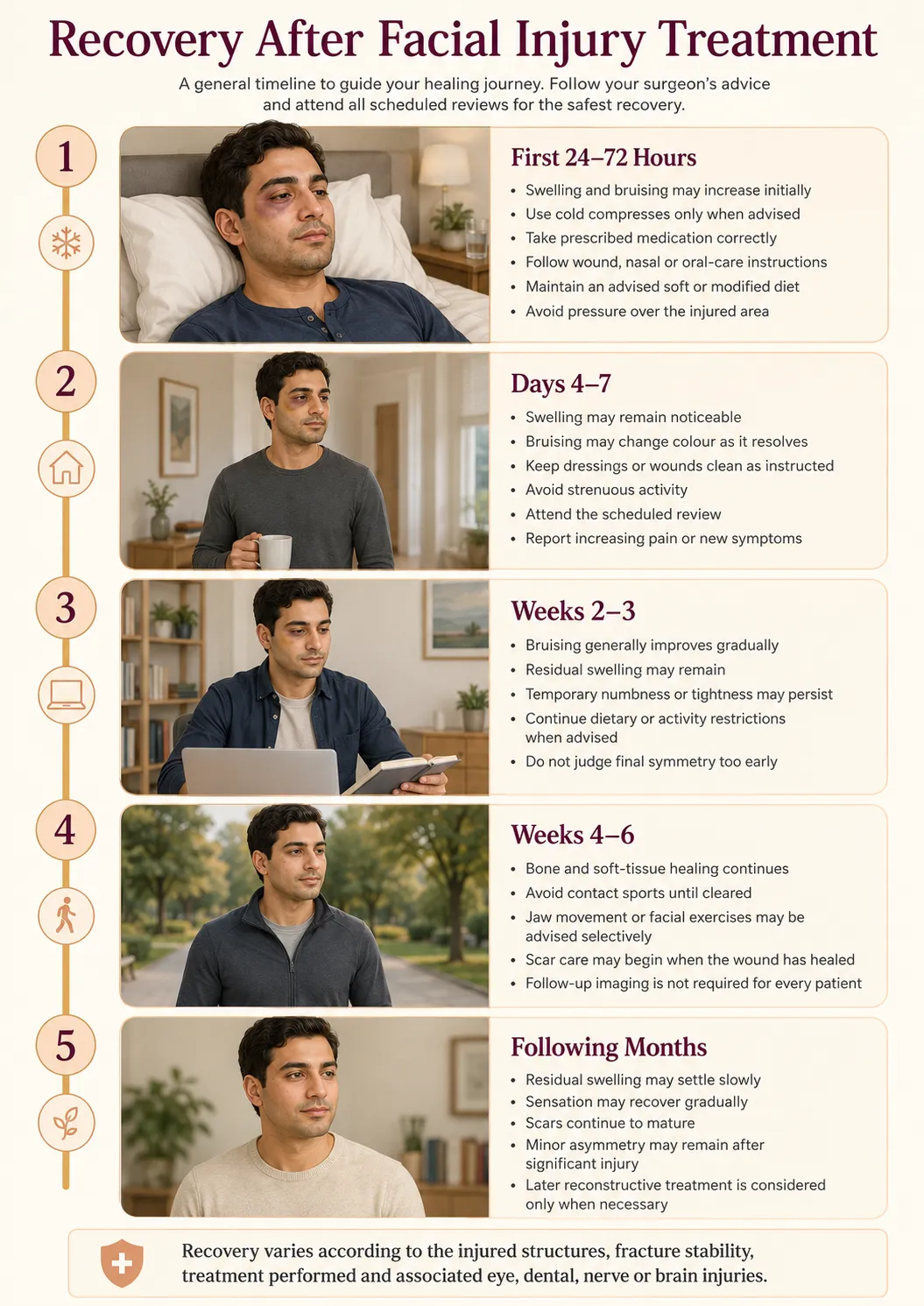
Recovery after facial injury treatment
Recovery is not identical for a facial cut, nasal fracture, orbital injury, cheekbone fracture or jaw fracture. Advice from the treating hospital or surgeon takes priority over general information.
What patients may notice
Swelling and bruising may increase during the first two to three days
Numbness, tightness or altered sensation may persist for weeks or months
A soft or modified diet may be required for jaw or midface injuries
Residual swelling can temporarily distort symmetry
Bone healing commonly continues for six to eight weeks or longer
Scar maturation continues for several months and sometimes longer
⚠️
Contact the treating team urgently for increasing pain, fever, pus, spreading redness, worsening swelling, breathing or swallowing difficulty, vomiting, unusual drowsiness, or any new visual symptom.
General recovery timeline after facial injury treatment — individual instructions vary.
Realistic Expectations
Risks, limitations and problems that may persist
Treatment aims to improve function, healing and facial structure, but the original trauma may cause permanent changes and results cannot be guaranteed.
🦠
Wound and infection problems
Contamination, tissue damage, smoking, diabetes or poor blood supply can increase delayed healing, infection or tissue-loss risk.
〰️
Scars and contour change
Scars may remain visible, widen, darken, become raised or pull nearby structures. Revision can improve selected scars but cannot erase them.
⚡
Nerve symptoms
Numbness, tingling, facial weakness or altered sensation can improve slowly, remain partial or occasionally persist.
👁️
Eye-related problems
Double vision, eye-position change, restricted movement or visual impairment may require ophthalmic assessment and may not be fully reversible.
🦷
Bite and jaw limitations
An altered bite, stiffness, pain, reduced mouth opening or jaw-joint symptoms can require rehabilitation or further treatment.
🔁
Additional treatment
Complex trauma may need more than one operation, later scar treatment, plate removal, dental care or secondary reconstruction.
Transparent Planning
What affects the cost of face injury treatment in Nagpur?
There is no responsible single price for “face injury treatment” because the term can describe a small planned scar revision, complex wound repair, fracture fixation, or delayed reconstruction. A public estimate without examination can be misleading.
Injury and procedure
Observation, wound repair, closed reduction, fixation, reconstruction or scar revision have different requirements.
Imaging and specialists
CT, dental imaging, ophthalmology, ENT, dental or other assessments can affect the treatment pathway.
Anaesthesia and facility
Local anaesthesia, sedation, general anaesthesia, operating-theatre needs and hospital admission are considered.
Implants and follow-up
Plates, screws, splints, dressings, rehabilitation and staged follow-up may influence total cost.
Bring these to a planned consultation
Emergency or hospital discharge papers
CT, X-ray or dental imaging with reports and image files
Previous operation notes when available
Current medicines, allergies and medical history
Chronological photographs if the injury is old
A list of functional concerns: vision, bite, breathing, sensation, movement and scars
Bring prior scans, hospital notes and a clear list of present symptoms.
Surgeon-led Review
Consultation with Dr. Pawan Shahane
Dr. Pawan Shahane is an M.Ch. plastic surgeon. During a planned facial-trauma consultation, he reviews what happened, emergency treatment already received, current function, scars, facial symmetry and available imaging.
The purpose is not to promise a perfect restoration. It is to identify what has healed well, what remains unsafe or functionally important, which concerns may improve naturally, and which problems might reasonably benefit from rehabilitation or reconstructive treatment.
Personally reviewed treatment plan
Clear separation between emergency care and elective reconstruction
Function-first assessment of vision, bite, breathing and movement
Transparent discussion of limits, scars, risks and staged treatment
Referral or coordinated specialist care when the case requires it
Patient Experiences
Existing Mayflower Clinic testimonials
Individual experiences are not guarantees of outcome. Quotations below are reproduced from testimonials already published in the clinic’s WordPress export.
★★★★★
“I had accident and had trauma to face. Had scar on face and near my eye. It was badly stitched and healed, so i was sad with the scar. Scar was pulling my eye...”
Rajendra UkeyExisting Mayflower Clinic testimonial · Facial scar case
★★★★★
“Good experience. Highly skilled surgeon. Post op care and consultation was also done nicely. Husband and wife make a good team! Thanks”
Mahika GoelExisting Mayflower Clinic testimonial
★★★★★
“I was having Gynecomastia, but thank God I met Dr Shahane. he is simply best and knows everything. After consultation I decided to go ahead with surgery...”
Kunal SatputeExisting Mayflower Clinic testimonial · Different procedure
Frequently Asked Questions
Face injury treatment in Nagpur: detailed questions
These answers provide general education and do not replace emergency or in-person assessment.
What should I do immediately after a facial injury?+
After a significant facial injury, prioritise emergency assessment of breathing, bleeding, consciousness, the eyes, and possible head or neck injury. Do not wait for a clinic appointment when symptoms are severe or worsening. Once urgent problems are stabilised, specialist facial assessment and follow-up can be planned.
Which facial injury symptoms need emergency care?+
Emergency evaluation is needed for difficulty breathing, persistent heavy bleeding, loss of consciousness, confusion, repeated vomiting, clear fluid from the nose or ear, sudden visual loss or blurred vision, new double vision, restricted eye movement, or rapidly increasing swelling. Severe trauma may also require assessment for head and cervical-spine injury.
Does every facial fracture need surgery?+
No. Selected stable and minimally displaced fractures may be managed with observation, symptom control, dietary or activity modification, and scheduled review. Surgery is considered when displacement, instability, an incorrect bite, eye-position or eye-movement problems, open wounds, functional impairment, or an unacceptable deformity makes repair appropriate.
How is a facial injury assessed?+
Assessment considers how and when the injury occurred, consciousness and neurological symptoms, facial shape, vision and eye movement, breathing, wounds, sensation, mouth opening, jaw movement, dental bite, loose teeth, and tenderness or steps in the facial skeleton. The complete head, face, mouth, eyes, ears, nose, throat, and neck may need evaluation.
Will I need an X-ray or CT scan?+
Imaging depends on the injury pattern and examination. A CT scan is commonly considered when a facial fracture, orbital injury, complex midface injury, jaw fracture, or deeper structural damage is suspected. Dental imaging or other specialist tests may also be needed. Imaging should answer a clinical question rather than be ordered automatically for every bruise or cut.
When may facial fracture surgery be considered?+
Surgery may be discussed when fractured bones are displaced or unstable, the bite has changed, the eye is displaced or movement is restricted, tissue is trapped, an open fracture or contaminated wound is present, breathing is affected, or facial support and symmetry cannot heal acceptably without realignment. Timing depends on urgency, swelling, associated injuries, and the specific fracture.
Can a facial cut be closed to reduce scarring?+
Careful cleaning, assessment of contamination and tissue viability, layered repair when required, and alignment with natural facial lines can support healing. Even well-repaired wounds form scars, and scar appearance changes for months. Later scar treatment may be discussed only after the wound has healed and the scar has matured sufficiently.
How long does recovery after facial injury treatment take?+
Recovery varies widely. Bruising and visible swelling often improve over the first few weeks, while bone and deeper soft-tissue healing commonly continue for six to eight weeks or longer. Numbness, tightness, firmness, altered bite, or residual swelling may take longer to settle. The treating team should give injury-specific guidance.
When can I return to work after facial injury treatment?+
Return to work depends on the injury, treatment, pain, vision, diet, swelling, and the physical demands of the job. Some people with minor stable injuries return to desk work within days, while fracture repair or physically demanding work may require a longer restriction. Driving, machinery use, lifting, and contact sports need separate clearance when relevant.
Can an old facial injury or scar still be treated?+
Sometimes. Delayed problems may include a depressed or widened scar, eyelid distortion, nasal obstruction, facial asymmetry, altered bite, contour deficiency, numbness, or restricted movement. Secondary reconstruction or scar revision is different from acute fracture treatment and requires examination, photographs, previous records, and often imaging before realistic options can be discussed.
What risks or limitations should I understand?+
Possible problems include infection, bleeding, delayed healing, visible or widened scars, numbness, facial weakness, asymmetry, persistent swelling, altered bite, restricted jaw movement, double vision, eye-position change, implant or plate-related problems, and the need for additional treatment. Some damage from the original injury may not be fully reversible.
What affects the cost of face injury treatment in Nagpur?+
Cost depends on whether care is observation, wound repair, fracture reduction, fixation, scar revision, or delayed reconstruction; the imaging and specialist assessments required; anaesthesia and hospital facility needs; implants or plates; admission duration; and follow-up. A responsible estimate is given only after the injury and treatment setting are understood.
Medical Review
References and review information
This page was medically reviewed on 26 July 2026. The safety and assessment sections were checked against established trauma and hospital patient-information resources.
Important: Reference links provide general background. Diagnosis and treatment decisions must be based on an individual examination, local emergency pathways, imaging and the judgement of the treating clinical team.
Book a facial injury or scar consultation in Nagpur
For a stable injury, post-hospital review, facial scar, residual asymmetry or delayed reconstructive concern, bring previous scans and treatment records for a surgeon-led assessment.
Medical Disclaimer: All surgical procedures carry inherent risks, and individual outcomes vary based on the original injury, anatomy, tissue damage, timing, associated injuries and healing biology. Surgical results are not guaranteed. Formal in-person consultation with Dr. Pawan Shahane and, where appropriate, hospital or multidisciplinary assessment are required before any surgical decision. This page is for general educational purposes only and does not constitute emergency advice, diagnosis, medical advice or a treatment recommendation.