
Potentially suitable
Adults with a stable, clearly diagnosed texture or scar concern, realistic expectations, willingness to accept downtime and ability to follow strict aftercare.
Fractional CO₂ laser resurfacing creates controlled microscopic treatment zones in selected skin to support remodelling of texture and scars. At Mayflower Clinic, the decision is based on the problem being treated, skin type, pigment-change risk, treatment depth, healing capacity and acceptable downtime—not on using the strongest available setting.

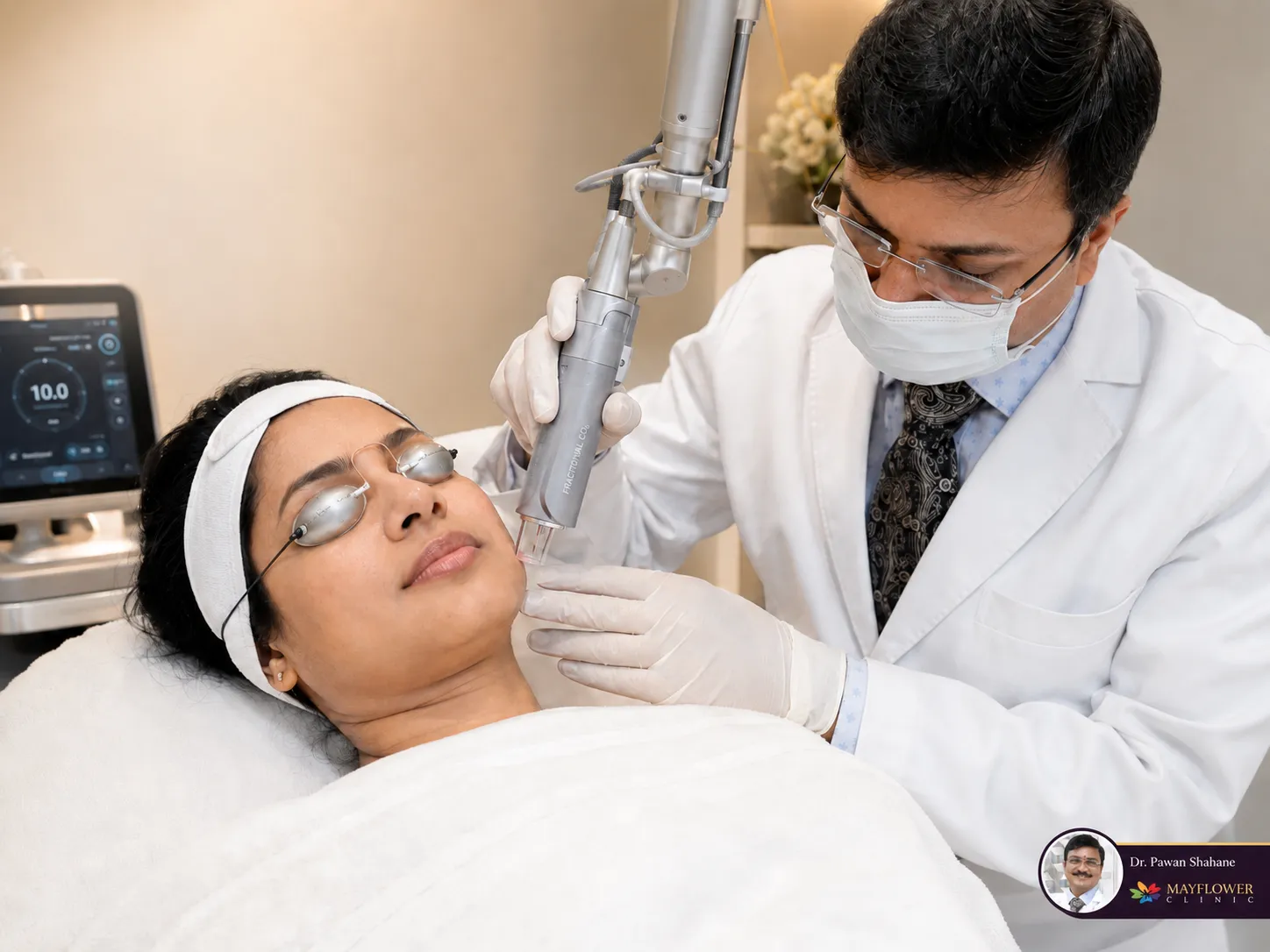
CO₂ resurfacing is powerful enough to create meaningful downtime and real complications. The best candidate is not simply “someone who wants better skin.”
Fractional CO₂ laser is an ablative resurfacing treatment that delivers laser energy in microscopic columns, leaving intervening skin untreated. It may be considered for selected acne scars, uneven texture, fine lines, photoageing and some superficial scars.
It does not erase scars, stop ageing, remove major loose skin, permanently eliminate pores or guarantee a particular skin finish. In brown and Indian skin tones, post-inflammatory hyperpigmentation is an important part of the consent and planning discussion.
Treatment density, depth, number of passes and coverage must match the diagnosis and the patient’s skin. More aggressive settings can increase downtime and complication risk. A conservative staged plan may be safer than trying to obtain the maximum visible change in one session.
Carbon dioxide laser energy is strongly absorbed by water in skin. In a fractional delivery pattern, the beam is divided into many microscopic treatment zones. These controlled columns of ablation and thermal effect are surrounded by intervening untreated skin.
The healing response can support re-epithelialisation and dermal remodelling over time. This is why improvement is gradual and why the visible result is not judged during the first few days of redness or peeling.
The word fractional does not mean risk-free. Treatment intensity still matters, and fractional ablative resurfacing can cause pigment change, prolonged redness, infection, herpes reactivation, delayed healing and scarring.
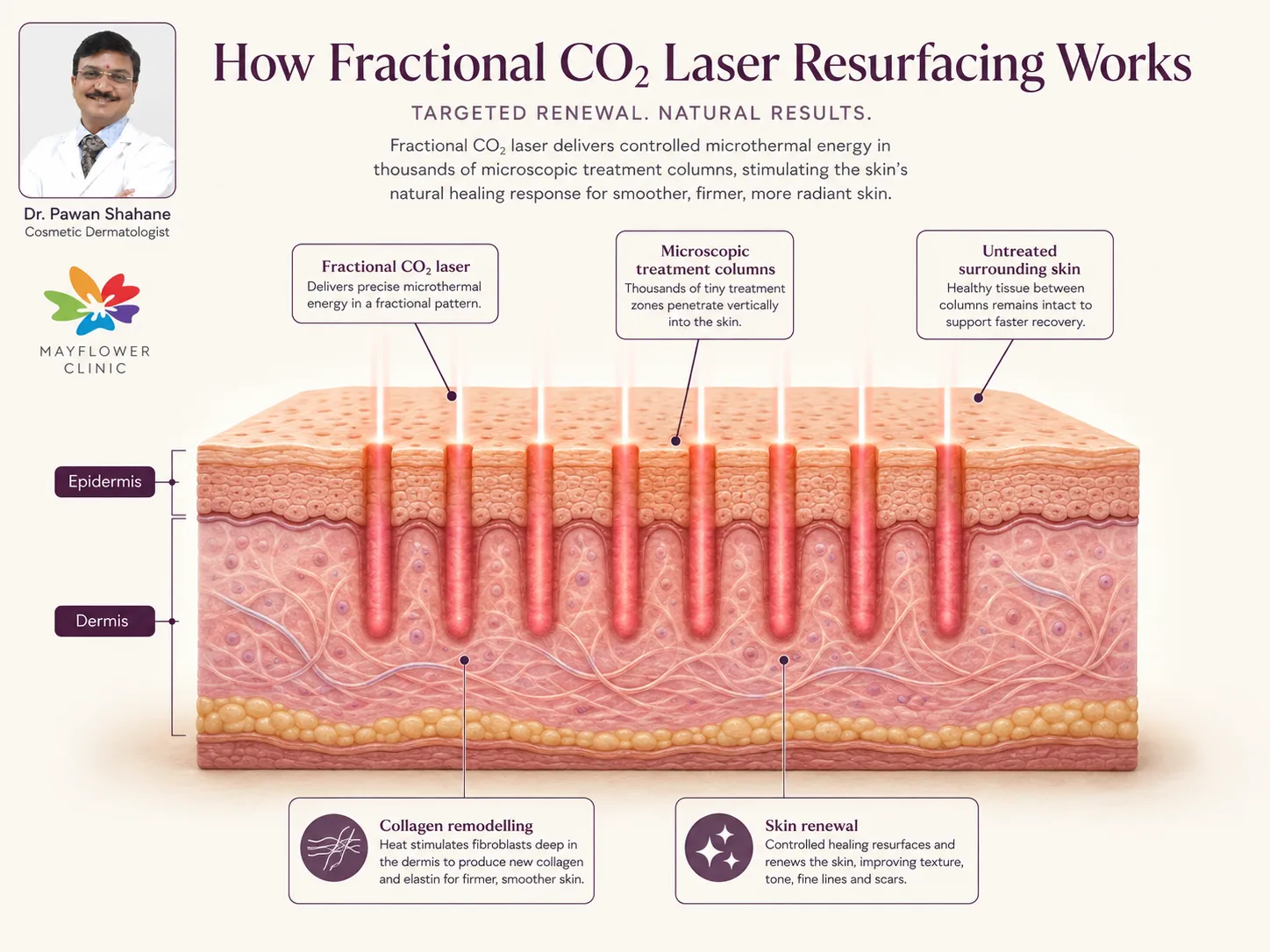
Fractional delivery treats a pattern of small columns rather than uniformly ablating the entire surface. The untreated areas between columns help provide reservoirs for healing.
The precise pattern is chosen according to the concern. A scar-focused session may not use the same coverage or intensity as a broader facial-resurfacing plan.
Microscopic treatment columns remove selected tissue and create a measured wound-healing response.
Heat in the surrounding treatment zone can contribute to collagen remodelling during healing.
New surface skin forms while redness, dryness, crusting and peeling gradually settle.
Texture and scar change is assessed over weeks to months rather than immediately after treatment.
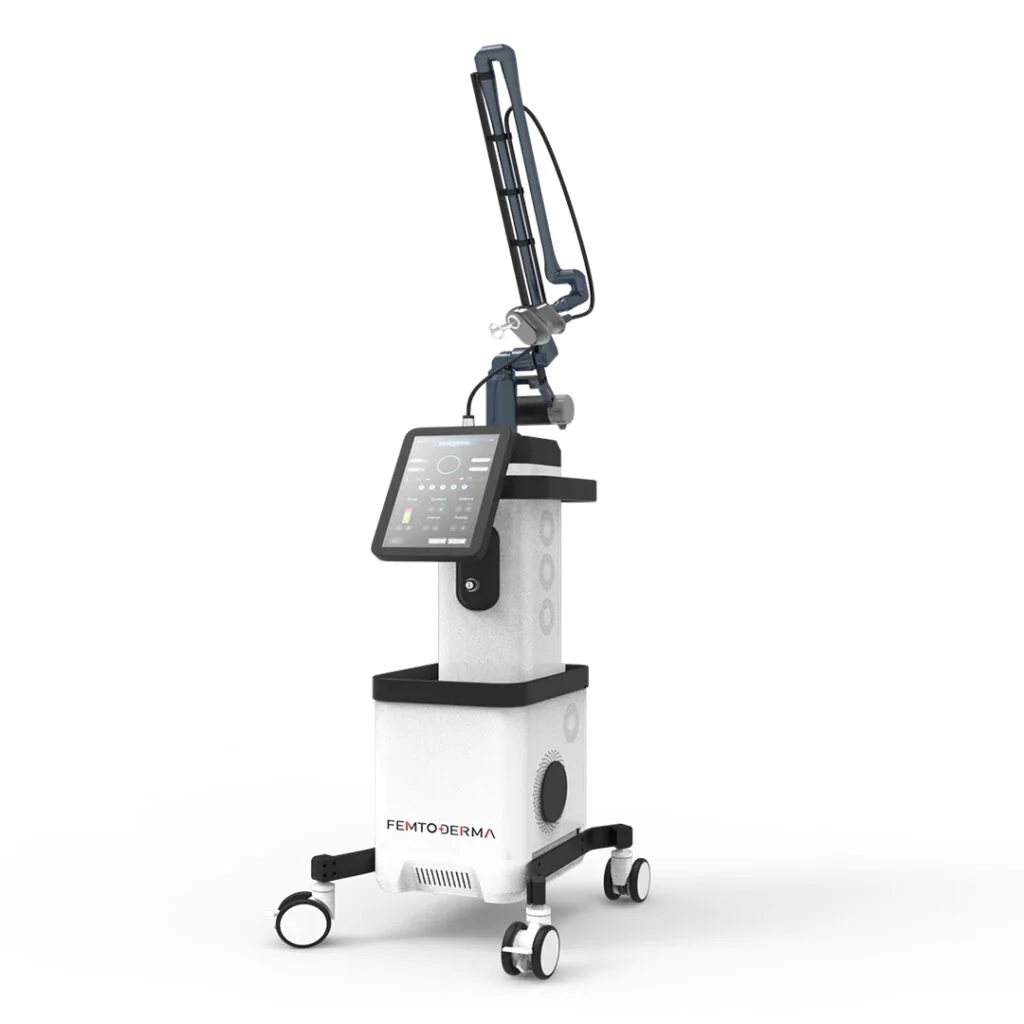
The clinic’s project record identifies an in-house Femto Derma CO₂ laser from Coherent USA with an RF metallic tube and 70W platform. This page deliberately presents those as device specifications—not as a promise of better results.
The clinically relevant decision is how the device is used for the person in front of the doctor: the indication, skin type, pigmentation risk, treatment density, depth, passes, anatomical area, downtime tolerance and aftercare.
“Laser” is not one treatment for every facial concern. The pattern of the problem matters.
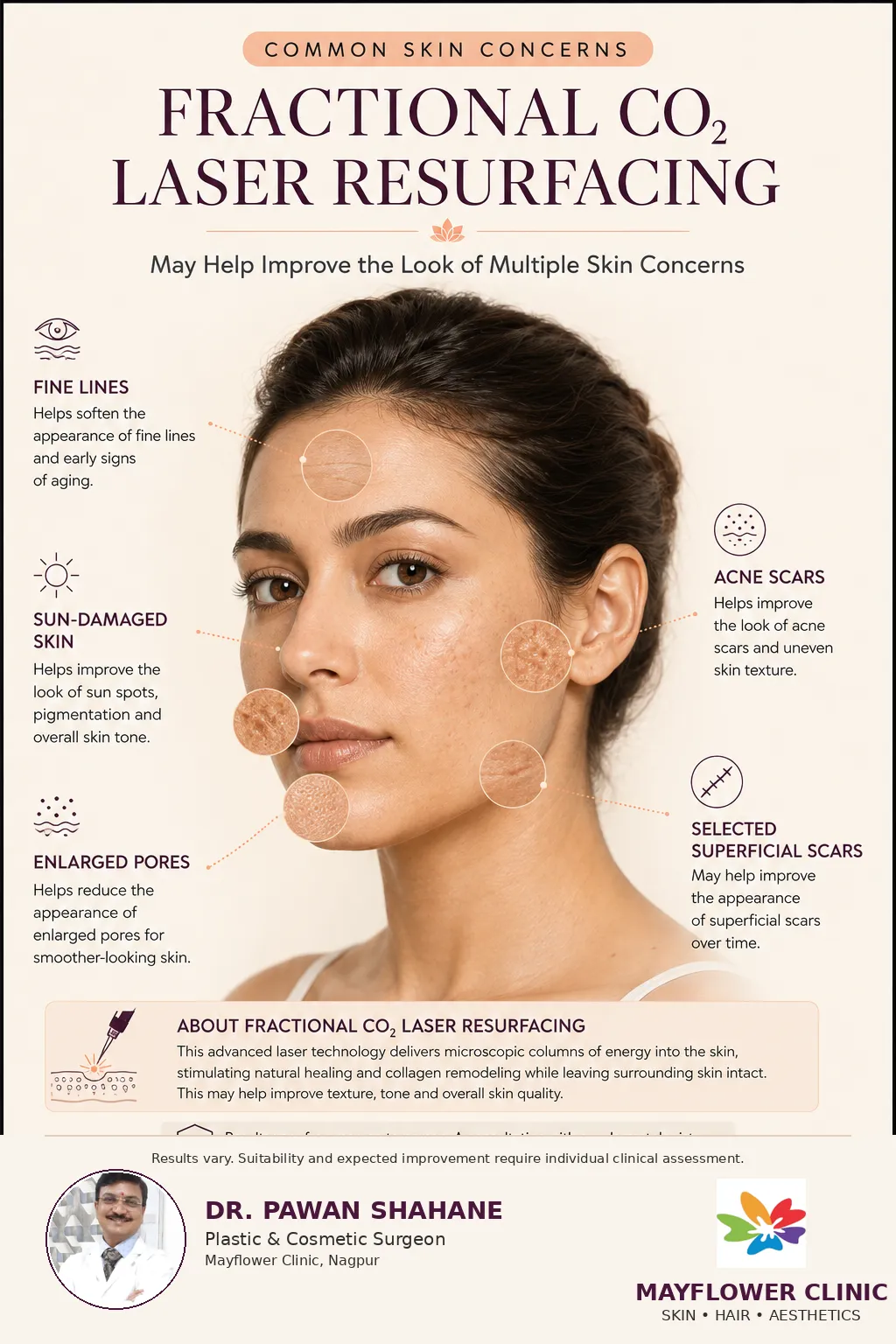
Adults with a stable, clearly diagnosed texture or scar concern, realistic expectations, willingness to accept downtime and ability to follow strict aftercare.
Darker or pigment-prone skin, previous post-inflammatory hyperpigmentation, prior herpes, diabetes, smoking, medicines affecting healing or a history of abnormal scars.
Active infection, active inflamed acne, open wounds, significant dermatitis flare, recent sunburn or tanning, or another untreated skin condition in the treatment area.
Acne scars can be rolling, boxcar, ice-pick, tethered or mixed. A single resurfacing method may not adequately address deep focal scars or tethering. Depending on examination, options may include subcision, focal techniques, microneedling with PRP, fractional CO₂ laser, scar revision or staged combination treatment.
Likewise, pigmentation, melasma, redness and laxity are different biological problems. Treating the wrong diagnosis with an ablative laser can create more inflammation without solving the original concern.
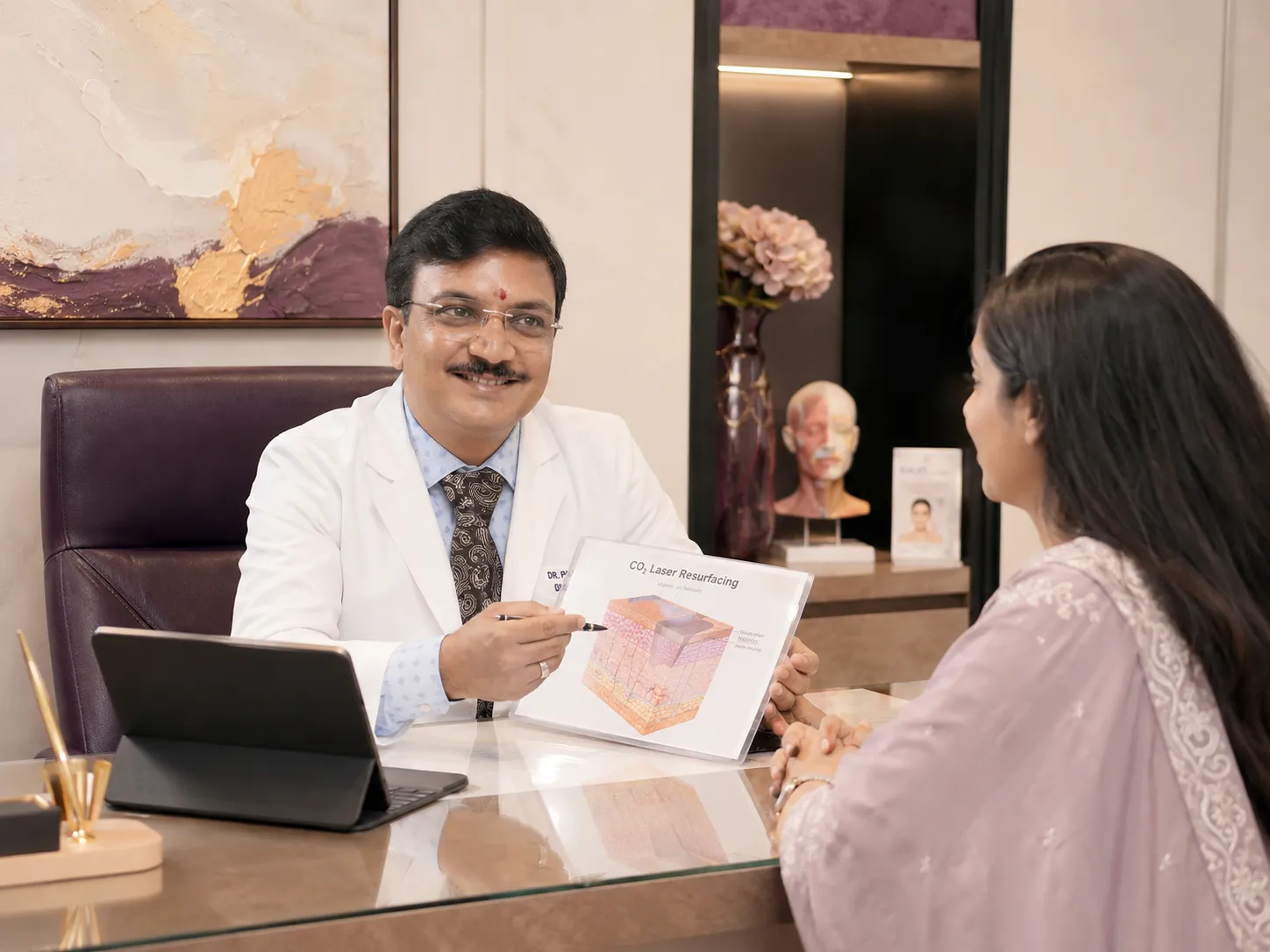
Examine scars or texture, identify active skin disease, review previous treatments, pigmentation tendency, cold sores, medicines, sun exposure and expectations.
Discuss alternatives, expected degree of improvement, downtime, pigment risk, whether a focal or broader treatment makes sense, and whether combination treatment should be staged.
Follow only the personalised instructions given by the treating doctor. Sun exposure, irritating actives and cold-sore history may change preparation.
The treatment area is prepared and appropriate eye protection is used. Comfort measures depend on the area and treatment intensity. Laser parameters are selected for the planned indication.
Warmth, redness, swelling, tightness, bronzing, crusting or peeling can occur. Use only advised products and avoid picking or scrubbing.
Surface healing does not mean all inflammation has settled. Restart active products or makeup only when advised, especially if the skin remains pink or sensitive.
Scar and texture change is reviewed over time. A further session or another modality is considered only after the response and side effects of the first treatment are clear.
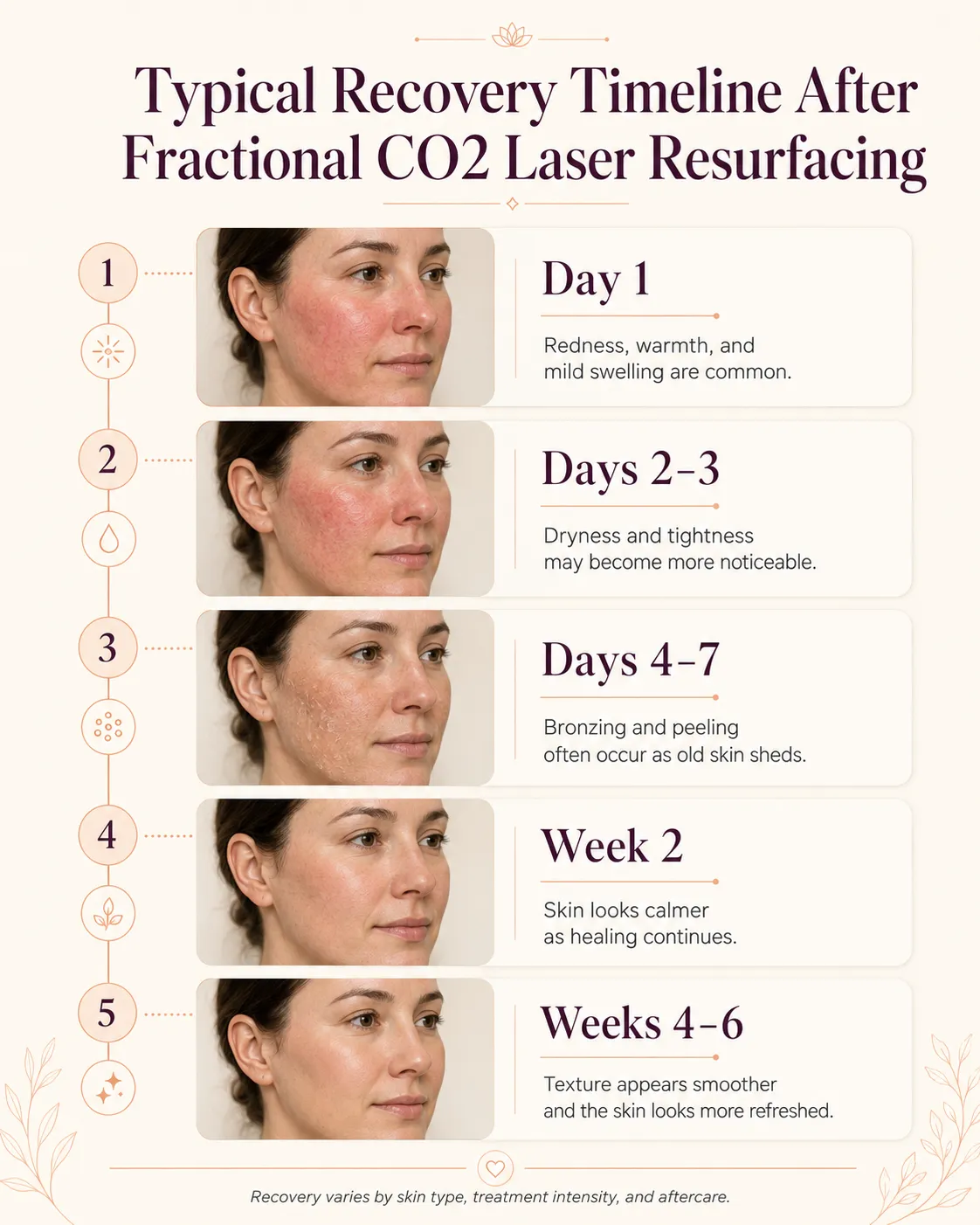
Skin can feel warm, tight or sensitive. Oozing or pinpoint crusting can occur after more intensive resurfacing.
Colour can temporarily deepen and the surface may feel rough. Do not peel or scrub the skin.
Flaking and crusting gradually settle. The new surface may look pink or more sensitive than usual.
Many patients become more socially presentable, but residual redness, sensitivity or pigment change can remain.
Pinkness or pigment variation may persist beyond initial surface healing. Sun protection remains important.
Collagen remodelling is gradual. Final assessment should not be based on the first week alone.
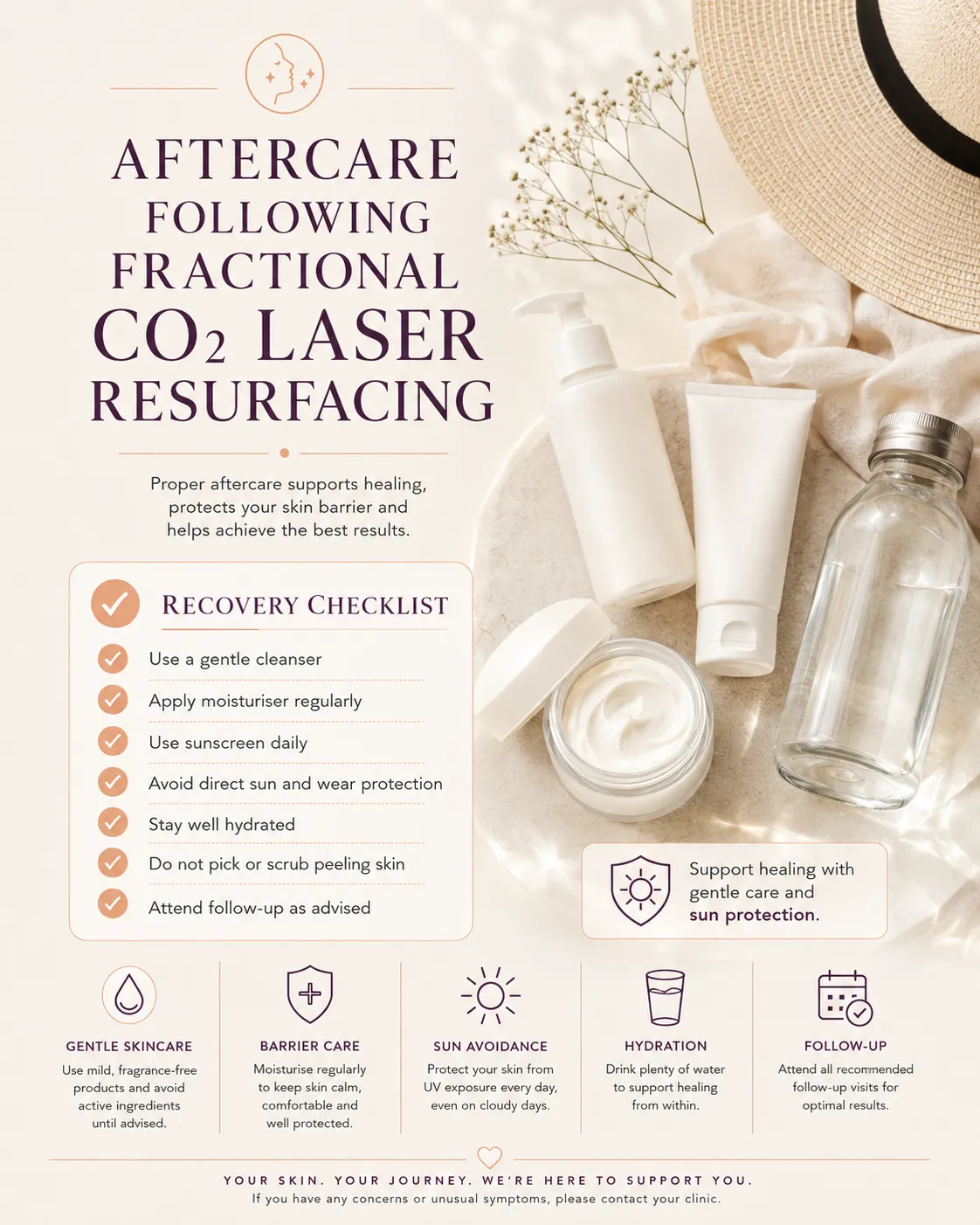
Your written instructions take priority because aftercare changes with treatment intensity and skin type.
Use the cleansing method and frequency advised for your treatment. Avoid scrubbing, exfoliating brushes and unapproved antiseptics.
Use only the moisturiser, ointment or recovery products specifically advised while the skin is healing.
Picking crusts or peeling skin can prolong inflammation and increase pigment or scar risk.
Avoid unnecessary sun exposure. Once appropriate for the healing stage, use the advised broad-spectrum sunscreen and physical sun protection.
Retinoids, acids, scrubs, fragranced products and other actives should be restarted only according to the treating doctor’s plan.
Do not judge infection, pigmentation or delayed healing from photographs alone. Arrange review when advised.
Scar treatment aims to improve visibility, texture or contour. Deep, tethered or ice-pick scars may require another technique or a combination plan.
Skin continues to age and accumulate future sun damage. Maintenance skincare and photoprotection remain important.
Laser resurfacing does not remove major skin excess or reproduce the tissue repositioning of a facelift.
Post-inflammatory hyperpigmentation or, less commonly, hypopigmentation can occur. Risk is especially relevant in pigment-prone skin.
Bacterial infection and cold-sore reactivation are recognised complications. A history of herpes should be disclosed before treatment.
Persistent redness, delayed healing, acne or milia flare, textural change and scarring are possible even when care is appropriate.
May suit selected texture or scar concerns when a different depth profile or downtime trade-off is preferred.
Vampire Facial / PRP Microneedling →Tethered or deep focal acne scars may need release or focal techniques rather than surface resurfacing alone.
Acne Scar Correction →Exosome-based products may be discussed only as adjuncts in selected protocols. Evidence, product quality and regulation vary; they are not presented as proven age reversal.
Exosome Therapy →Selected superficial pigmentation or texture concerns may be better served by a less aggressive approach. Deep phenol peels are not part of the clinic’s stated protocol.
Skin, Scar & Laser Hub →Some mature scars may be better managed by excision, repositioning or reconstructive planning rather than repeated resurfacing.
Face Scar Revision →Active acne, dermatitis, recent tanning or an uncertain pigment diagnosis may need stabilization or diagnostic clarification before any resurfacing.
Book Assessment →There is no single correct public price for “CO₂ laser” because a small focal scar treatment and a broader facial resurfacing plan are not the same procedure.
Cost depends on the area treated, treatment intensity, number of scar zones, anaesthesia or comfort measures, dressing/aftercare needs, whether treatment is staged, and the review plan.
Mayflower Clinic provides a transparent quote after examination rather than presenting a fixed multi-session package as medically necessary before the skin response is known.
These verbatim Google reviews describe general experience with Dr. Pawan Shahane and Mayflower Clinic. They are not presented as CO₂-laser outcome claims.
“Good Work on Cosmatic surgery.”
5-star Google review · General cosmetic surgery“Had a great experience with Dr. Pawan Shahane. He was extremely helpful, patient, and always took the time to address my concerns. His calm and reassuring approach made the entire process much more comfortable. Truly appreciate the care and support provided throughout. Highly recommended.”
5-star Google review · General patient experience“Dr. Pawan Shahane is awesome doctor. Feel safe with him. With his decades of experience, knowledge you are in the best hands. Doctor goes in detail and he is flawless in his execution.”
5-star Google review · General patient experienceIndividual experiences vary. General clinic reviews must not be interpreted as a promise of a particular CO₂ laser result.
The visible questions below match the FAQ structured data on this page.
Fractional CO₂ resurfacing is an ablative laser treatment that delivers carbon dioxide laser energy in microscopic treatment columns rather than treating every point of the surface uniformly. It is used selectively for skin texture, photoageing and some scars after clinical assessment.
It may be considered for selected acne scars, rough or uneven texture, fine lines, photoageing, enlarged-looking pores and some superficial scars. It cannot correct every scar type, major skin laxity or every pigmentation disorder.
Yes. The clinic project record lists a Femto Derma CO₂ laser from Coherent USA with an RF metallic tube and a 70W platform. Device capability does not determine suitability by itself; treatment parameters are selected after examination.
It can be useful for selected atrophic acne scars, but acne scars are not all alike. Rolling, boxcar, ice-pick and tethered scars may need different or combined approaches such as subcision, focal techniques, microneedling or other treatments.
Selected Indian skin tones can be treated, but post-inflammatory hyperpigmentation and other pigment changes are important risks. Skin type, recent tanning, pigmentation history, treatment density and aftercare influence planning.
Downtime varies with treatment area and intensity. Redness, warmth, swelling, dryness, bronzing, crusting or peeling can occur during the first days, and visible pinkness or pigment variation can persist beyond surface healing. A personal recovery estimate is given after treatment depth is planned.
There is no fixed session number for everyone. Some concerns may be treated in one carefully selected session, while acne scars or broader texture concerns may require staged treatment. The skin response should be reviewed before repeating treatment.
Expected effects include redness, swelling, heat, tightness, crusting and peeling. Possible complications include prolonged redness, post-inflammatory hyperpigmentation or hypopigmentation, infection, acne or milia flare, herpes reactivation, delayed healing and scarring.
Use only the cleansing, moisturising or barrier-care products advised for your treatment, do not pick or scrub healing skin, avoid unapproved active products, protect the area carefully from sun and attend scheduled follow-up. Your personalised instructions take priority over generic internet advice.
Contact the treating team promptly for severe or increasing pain, rapidly spreading redness, pus, fever, marked unexpected swelling, blistering, dark or pale areas that are worsening, eye-area symptoms, or healing that is deteriorating rather than steadily improving. Emergency symptoms need urgent local medical assessment.
Combination treatment is not automatic. PRP, microneedling, exosome adjuncts, subcision, peels or other treatments may be discussed only when the scar or skin problem justifies them, and procedures may be staged rather than performed together.
No. Laser resurfacing can improve selected texture and scar features, but it does not erase scars, stop ageing, permanently eliminate pores or guarantee a specific degree of improvement. Results vary with the problem being treated and individual healing.
Bring your main concern, previous treatment history, current skincare and any history of pigmentation or cold sores. The first decision is whether fractional CO₂ is the right tool for your skin—not how many sessions to sell.

Case of the Month: Grade 3 Gynecomastia…

The Science of Facial Aging: Why Wrinkles,…