0712 6692706 / 0712 3551170 / +91 8087471244   |   contact@mayflowerclinic.in
Home / Non-Surgical Aesthetics / Exosome Therapy in Nagpur
Doctor-led skin treatment · Nagpur

Exosome Therapy in Nagpur — An Emerging Skin-Recovery Adjunct, Used With Caution.

Exosome-based aesthetic treatment is attracting attention for skin quality and post-procedure recovery support. The important question is not whether a product is fashionable, but whether the skin concern, delivery method, product quality and evidence make sense for you.

Dr. Pawan Shahane, M.Ch. Plastic Surgery
Reviewed by Dr. Pawan Shahane, M.Ch. Plastic Surgery 21+ years surgical practice · Ex-Asst. Prof. GMC Nagpur · IAAPS Member · Fellowship in Cosmetic Laser Surgery
Quick answer: At Mayflower Clinic, exosome therapy is presented as a supportive adjunct that may be considered with microneedling or selected resurfacing plans. It is not described as a stem-cell cure, an injectable rejuvenation shortcut, or a guaranteed way to regenerate skin.
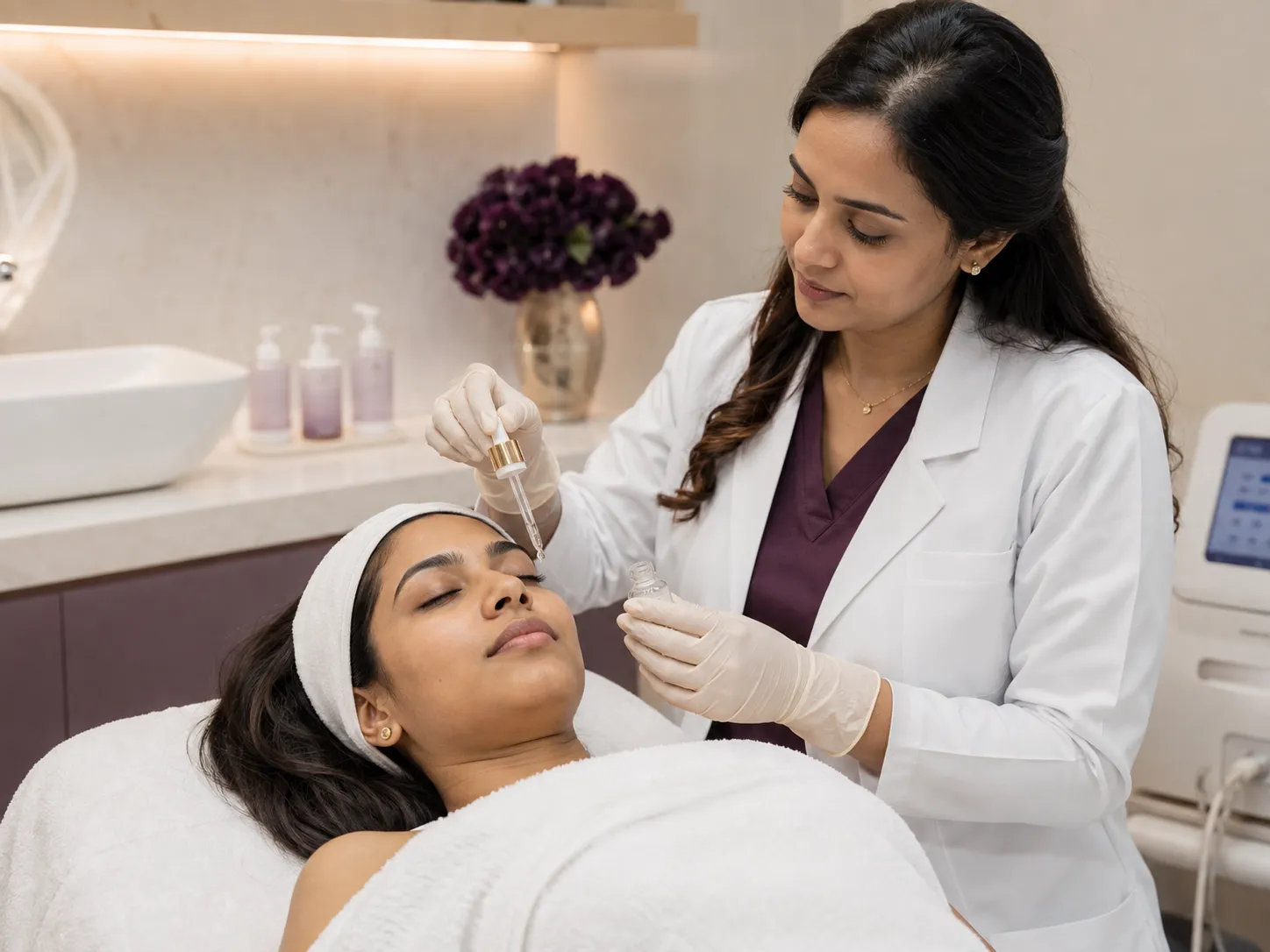
Exosome-assisted facial skin rejuvenation treatment at Mayflower Clinic in Nagpur
Mayflower Clinic · Dhantoli, Nagpur
M.Ch.Plastic Surgery
21+ yrsSurgical practice
IAAPSMember
Doctor-ledAssessment before treatment
Page guide

Start with the question you actually need answered

Exosome treatment should be understood in context: what it is, what evidence supports, what procedure delivers it, and what recovery that procedure creates.

What are exosomes?

Small cell-to-cell signalling vesicles — not living stem cells

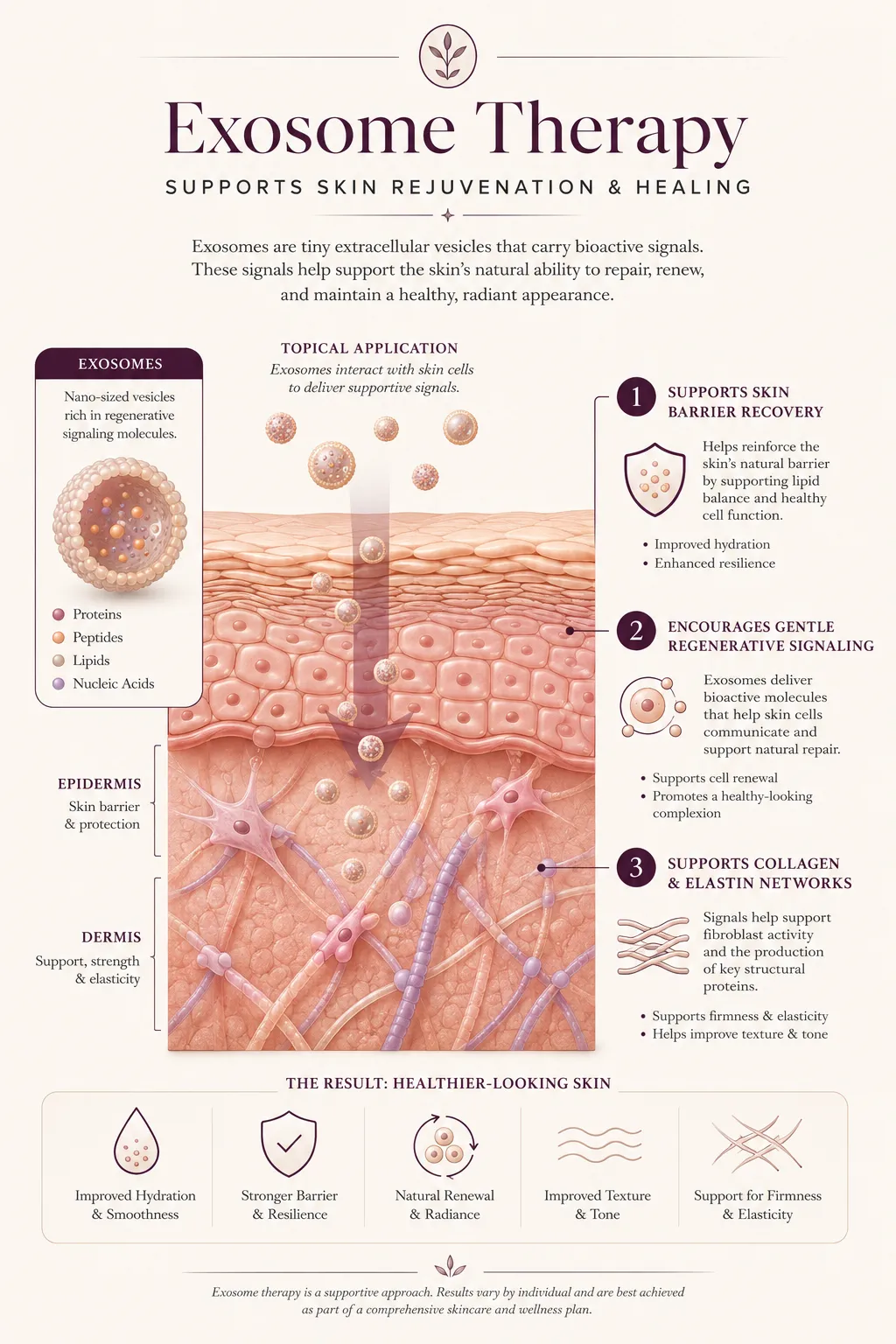
Exosomes are tiny extracellular vesicles released by cells. They can carry proteins, lipids and nucleic-acid signals between cells. In aesthetic medicine, interest has focused on whether carefully prepared exosome-containing products can support aspects of skin recovery and remodelling when used alongside a controlled procedure.

This distinction matters: an exosome product is not the same thing as a stem-cell treatment. Source material, manufacturing, purification, sterility, storage and the way a product is used can differ markedly between products. A label that says “exosome” does not by itself prove quality, dose or clinical benefit.

At Mayflower Clinic, the treatment conversation begins with the skin problem. Exosomes are not used to replace diagnosis, sunscreen, acne control, pigment management, scar-specific treatment or a procedure that better matches the underlying problem.

  • Used only after a doctor-led assessment
  • Positioned as an adjunct, not a miracle treatment
  • No claim of permanent rejuvenation or guaranteed collagen production
  • No online prescription of session count or delivery depth
Medical illustration showing how exosome therapy may support skin recovery and cellular signalling
Educational illustration: proposed signalling and skin-recovery concepts are simplified and should not be read as a guaranteed biological effect in an individual patient.
How it may fit

Supportive signalling is the concept; clinical outcome depends on much more

Laboratory and early clinical research has explored extracellular-vesicle signalling in inflammation, barrier recovery, extracellular-matrix remodelling and skin ageing. In real patients, however, outcome is also influenced by baseline skin, sun exposure, pigmentation tendency, active disease, the delivery procedure and the actual product used.

That is why Mayflower Clinic does not sell “exosome therapy” as a stand-alone promise. A patient with active acne, melasma, deep acne scars, laxity or etched wrinkles may need a very different primary treatment even if an exosome adjunct is discussed.

Plain-language ruleChoose the treatment for the problem first. Consider the exosome adjunct only if it adds a rational role to that plan.
Evidence standard

Promising early studies do not equal a settled standard of care

Human studies have reported encouraging short-term changes in measures such as texture, hydration, fine-line appearance and recovery when exosome-based products are used with procedures such as microneedling. But studies use different cell sources, products, concentrations, delivery methods and outcome measures.

Long-term safety, product standardisation, optimal dosing and which patients benefit most are still being worked out. For that reason, this page uses language such as “may support” and “adjunct” rather than “regenerates,” “reverses ageing,” or “guarantees collagen.”

What evidence can support

Discussion of potential short-term skin-quality benefit in selected, clinician-controlled protocols.
What remains uncertain

Best product source, dose, session interval, delivery method, durability and long-term safety across diverse patients.

×

What we do not claim

Permanent rejuvenation, scar erasure, pore elimination, disease treatment, stem-cell replacement or guaranteed results.
Skin concerns

Concerns that may enter the discussion — after the diagnosis is clear

Dull or tired-looking skinSkin quality may improve through basic barrier care, sun protection or a procedure; an exosome adjunct is not automatically necessary.
Uneven texture and fine-line appearanceMicroneedling or resurfacing may be the active treatment, with an adjunct considered in selected cases.
Acne-scar supportScar morphology must be assessed first. Deep tethered, rolling, boxcar and ice-pick scars often need different techniques.
Post-procedure recovery supportSome protocols use exosome products after controlled procedures, but basic aftercare and appropriate procedural depth remain central.
Barrier-stressed or sensitive skinActive irritation may be a reason to postpone a procedure rather than add more products.
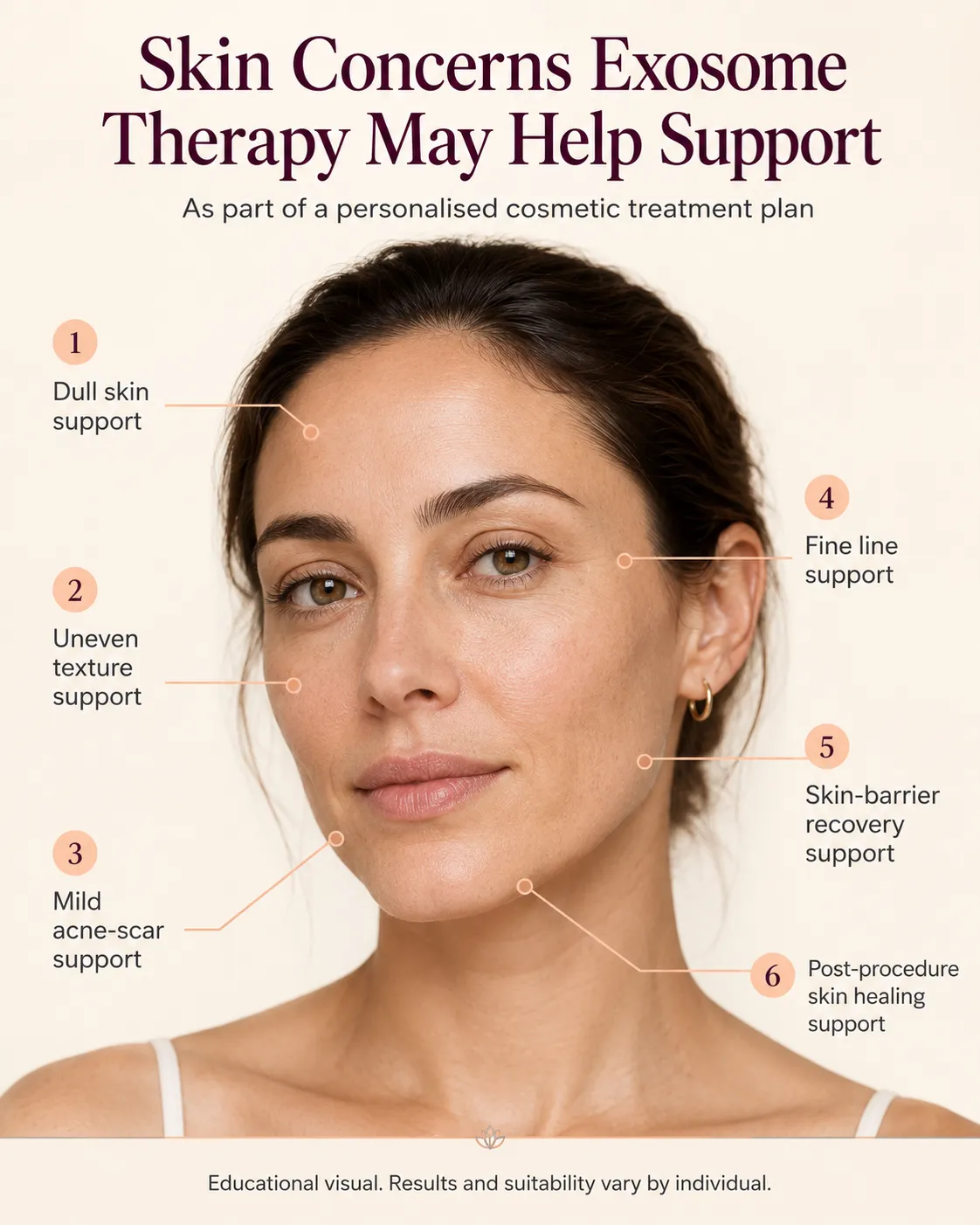
Skin concerns that may be discussed for exosome-assisted therapy including texture fine lines and recovery support
Illustrative concern map. It does not diagnose the cause of pigmentation, scars, fine lines or skin sensitivity.
Candidacy

Who may be suitable — and when treatment should wait

Potentially suitable

Adults seeking conservative skin-quality improvement who understand that the main effect may come from the paired procedure and that exosome evidence is still evolving.

Often postpone first

Active infection, cold sore, open wound, uncontrolled dermatitis, marked sunburn, inflamed acne or another condition that makes microneedling/resurfacing unsafe on that day.

?

Needs individual medical review

Pregnancy or breastfeeding, immune suppression, significant healing problems, previous severe reactions, cancer history, or medicines that may change procedural risk.

Important: “Not suitable today” does not necessarily mean “never suitable.” The priority is to treat active skin disease, stabilise the barrier or choose a better-matched procedure before elective rejuvenation.
Treatment process

A typical exosome-assisted visit is a sequence, not a serum-only appointment

1
Before treatment

Consultation and skin assessment

Clarify the main concern, diagnose conditions that need medical treatment, review previous procedures, sensitivities, medicines and pigment/healing risk.

2
Plan

Choose the active procedure first

Decide whether skincare alone, microneedling, PRP, a peel, fractional CO2 resurfacing or another approach is more appropriate.

3
Preparation

Cleanse and prepare the skin

The skin is cleaned and the planned procedure is prepared using procedure-appropriate hygiene and comfort measures.

4
Procedure

Controlled treatment

Microneedling or another selected procedure is performed at a depth/intensity chosen for the indication and skin type.

5
Adjunct

Exosome-based topical application where appropriate

The adjunct is applied according to the treatment plan. This page does not promote self-application into freshly injured skin or injectable exosome treatment.

6
Immediately after

Barrier-focused recovery care

Use only the products and sun-protection plan advised for the specific procedure. More actives are not better during early healing.

7
Follow-up

Review response before repeating

Future sessions should be based on visible response, tolerance and whether the treatment is still justified—not a pre-sold fixed package.
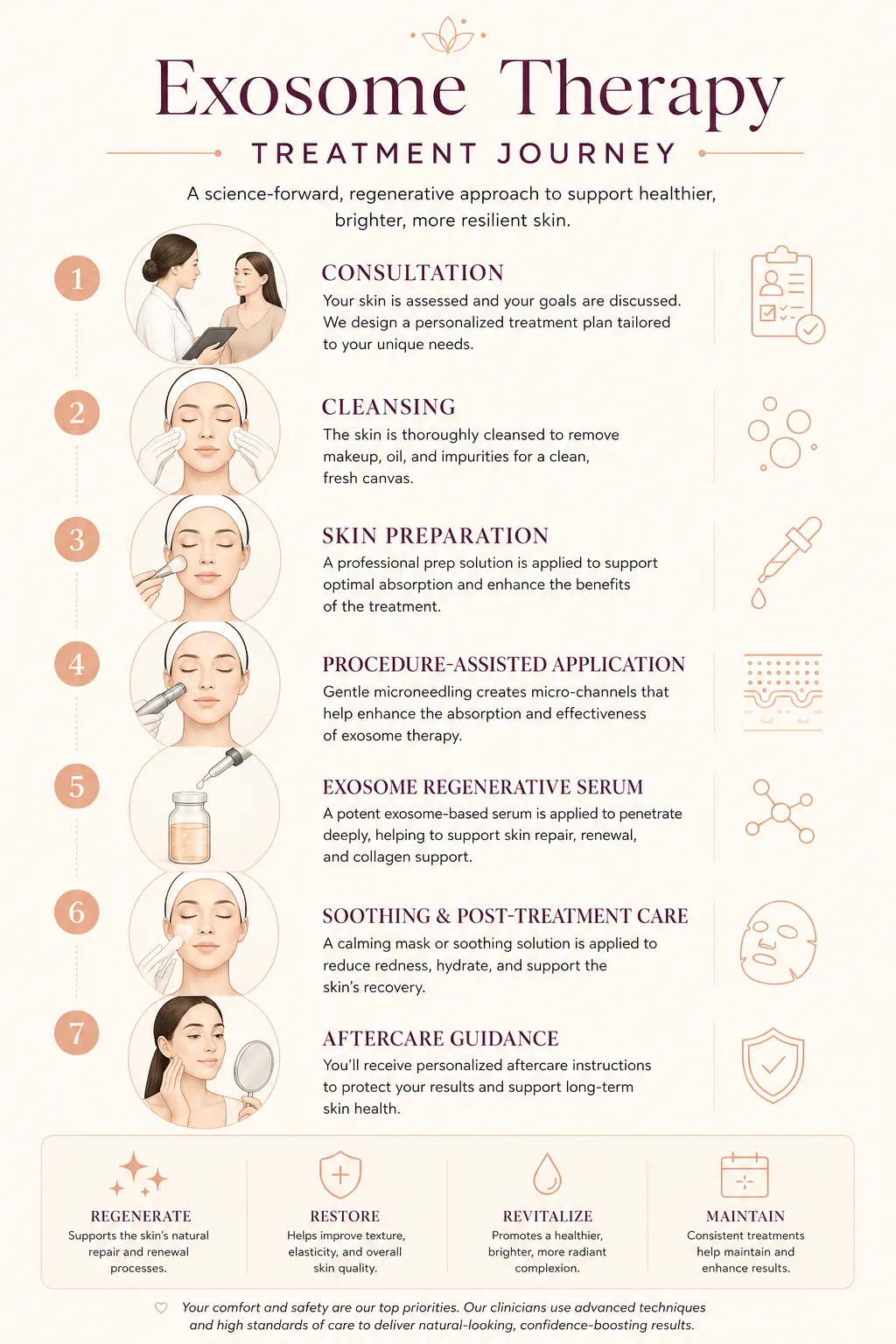
Exosome therapy treatment process from consultation and microneedling to topical application and aftercare
Typical workflow illustration. The exact delivery method and sequence may differ after clinical assessment.
Combination treatment

Exosomes are usually the adjunct; the core procedure does the controlled remodelling

Microneedling

Creates controlled microchannels and a wound-healing response. An exosome product may be considered topically in selected protocols.

Compare with microneedling + PRP →

Femto Derma CO2 laser

For selected resurfacing indications, Mayflower Clinic uses the Femto Derma fractional CO2 laser. Recovery and pigmentation risk depend on treatment depth and skin type.

Open CO2 laser guide →
PRP

PRP / Vampire Facial

Autologous platelet-rich plasma is a different biological adjunct. It should not be described as the same product or mechanism as an exosome preparation.

Open Vampire Facial guide →
SPF

Skincare and photoprotection

Barrier care and sunscreen remain foundational. No regenerative add-on compensates for repeated UV exposure or an untreated skin disorder.

Open care guide →

Aftercare following exosome therapy with gentle cleansing moisturiser hydration and sun protection
Aftercare illustration. Follow your written instructions because care differs after microneedling versus fractional laser resurfacing.
Aftercare

Protect the skin barrier; do not over-treat freshly treated skin

Gentle cleansing

Use a mild cleanser and avoid scrubbing, brushes or exfoliating tools until advised.

Moisturise

Use the simple barrier-support product recommended for your procedure rather than layering multiple actives.

Sun protection

Strict photoprotection is particularly important after microneedling or resurfacing in pigment-prone skin.

Pause irritants

Retinoids, acids, peels and strong actives may need a temporary break. Restart only as advised.

Avoid rubbing and picking

Do not peel flakes or repeatedly touch treated skin. Mechanical irritation can prolong inflammation.

Attend follow-up

Review is useful if recovery is slower than expected, pigmentation changes or another session is being considered.

Risks & limitations

The risks come from both the product and the procedure used to deliver it

A safe discussion separates expected temporary effects from complications that need review.

Common temporary effects

  • Redness, warmth or mild swelling
  • Dryness, tightness or sensitivity
  • Temporary roughness or fine flaking
  • Short-lived discomfort from the paired procedure

Possible complications

  • Irritant or allergic-type reaction
  • Infection or herpes/acne flare
  • Post-inflammatory hyperpigmentation or prolonged redness
  • Delayed healing, crusting or unexpected inflammation
  • Little or no visible benefit
Contact the treating team promptly for rapidly worsening pain, spreading redness, pus, fever, significant swelling, blistering, extensive crusting, a severe rash, unexpected darkening, or any symptom that feels substantially outside the recovery plan. Sudden visual symptoms, breathing difficulty or other severe acute symptoms require emergency assessment.
Product-quality limitation: exosome products are not interchangeable. Source, sterility, processing, storage and regulatory status vary. Mayflower Clinic should use only a product and route that are lawful, traceable and clinically justified; this page does not endorse self-purchased or injectable products.
Cost factors

Exosome therapy cost in Nagpur

A responsible quote depends on what is actually being done. “Exosome therapy” may refer to a topical adjunct after microneedling in one patient, while another patient may need a different primary treatment or no exosome product at all.

Cost can therefore vary with consultation, delivery procedure, treatment area, product used, number of sessions actually justified and follow-up. Mayflower Clinic provides a transparent treatment estimate after assessment rather than publishing a one-size-fits-all package.

Ask these questions before paying for a package

  • What exact skin concern are we treating?
  • What is the primary procedure, and why?
  • What does the exosome product add to that plan?
  • What are the product source and quality controls?
  • What happens if my skin does not respond?
  • Can we reassess before committing to more sessions?
Book Assessment
Patient feedback

Verified Mayflower Clinic reviewers — without inventing an exosome outcome

The current verified review inventory does not provide an exosome-specific verbatim quotation. To preserve review integrity, this page lists verified clinic reviewers and links to the original Google source rather than assigning them a procedure.

Authenticity rule: these names are from Mayflower Clinic’s verified Google review inventory. They are not presented as exosome patients and no treatment result is inferred from their names.
★★★★★

Aarti Kate

Verified Mayflower Clinic Google reviewer inventory. Procedure and outcome are not inferred on this page.

Source: clinic verified review inventory
★★★★★

Shubhangi Chourasiya

Verified Mayflower Clinic Google reviewer inventory. Procedure and outcome are not inferred on this page.

Source: clinic verified review inventory
★★★★★

Aneesa Annu

Verified Mayflower Clinic Google reviewer inventory. Procedure and outcome are not inferred on this page.

Source: clinic verified review inventory
Frequently asked questions

Exosome therapy in Nagpur: questions to ask before treatment

What is exosome therapy for skin?
Exosome-based skin treatment is an emerging aesthetic approach in which extracellular-vesicle products are used as an adjunct to a controlled skin procedure. At Mayflower Clinic it is presented as a supportive, consultation-led option rather than a stem-cell cure or guaranteed regenerative treatment.
Is exosome therapy the same as stem-cell therapy?
No. Exosomes are extracellular vesicles released by cells; they are not living stem cells. Product source, processing and quality matter, and the terms should not be used interchangeably.
How is exosome therapy used at Mayflower Clinic?
When appropriate, a topical exosome-based preparation may be considered as an adjunct after a controlled procedure such as microneedling or selected resurfacing treatment. The exact plan is decided only after skin assessment.
What skin concerns may be discussed for exosome-assisted treatment?
Discussion may include overall skin quality, dullness, uneven texture, fine-line appearance and recovery support after selected procedures. It is not a substitute for diagnosing pigmentation disorders, active acne, scars or other skin disease.
How strong is the evidence for exosome skin rejuvenation?
Early human studies are promising, particularly when exosome products are used with procedures such as microneedling, but products and protocols vary and long-term evidence is still developing. Outcomes should therefore be described cautiously.
Will exosome therapy remove acne scars?
No single exosome treatment should be presented as an acne-scar cure. Scar type and depth first need assessment; microneedling, fractional CO2 laser, subcision or other methods may be more relevant, with an exosome product considered only as an adjunct in selected plans.
Can exosomes be combined with microneedling?
Yes, this is one of the approaches studied in aesthetic practice. Suitability, needle depth, sterility, product choice and aftercare should be clinician-directed rather than copied from a standard package.
Can exosomes be combined with fractional CO2 laser resurfacing?
Selected protocols have studied topical exosome products after energy-based treatment, but this should not be routine for every patient. If resurfacing is indicated, Mayflower Clinic uses the Femto Derma CO2 laser and the complete plan is individualised.
How much downtime should I expect?
Downtime is driven mainly by the procedure used to prepare or treat the skin. Superficial microneedling may cause temporary redness and sensitivity, while fractional laser resurfacing can require a longer recovery period.
How many exosome sessions will I need?
There is no universal evidence-based session number that is appropriate for everyone. The plan depends on the concern, delivery procedure, response, skin tolerance and whether continued treatment is justified.
What are the risks of exosome-assisted skin treatment?
Risks include irritation or reaction to the product and the usual risks of the delivery procedure, such as redness, swelling, infection, acne or herpes flare, prolonged inflammation, pigmentation change or delayed healing. Product quality and sterility are important.
What aftercare is important after exosome-assisted treatment?
Use gentle cleansing, moisturiser and strict sun protection as instructed; avoid unnecessary active skincare, picking, rubbing, heat and unadvised products while the skin barrier is recovering. Your written procedure-specific instructions take priority.
Explore Mayflower Clinic

Clinical context matters more than a single treatment page

Consultation first

Ask whether exosomes add anything meaningful to your skin-treatment plan

Bring your main concern, current skincare and previous procedure history. The goal of consultation is to decide whether exosome-assisted treatment is reasonable, unnecessary, or less suitable than another option.

Medical Disclaimer: Exosome-based skin treatment is an evolving area of aesthetic medicine. Non-surgical treatments have variable individual response. Results are not guaranteed and depend on skin type, treatment selection, product quality, treatment adherence and biological factors. Formal in-person consultation with Dr. Pawan Shahane is recommended before beginning any treatment course. This page is for general education and does not constitute medical advice, a diagnosis, or a treatment recommendation.

Cosmetic, plastic, hair restoration and aesthetic care in Dhantoli, Nagpur.

Mayflower Clinic

Surdham Complex, Dhantoli
Nagpur — 440012
Maharashtra, India

Contact & hours

0712 6692706
+91 80874 71244
Monday–Saturday · 11 AM–6 PM
Closed Sunday