
Chin or skeletal projection
A recessed, narrow or asymmetrical chin can shorten the visible mandibular line even when fat and skin are not excessive.
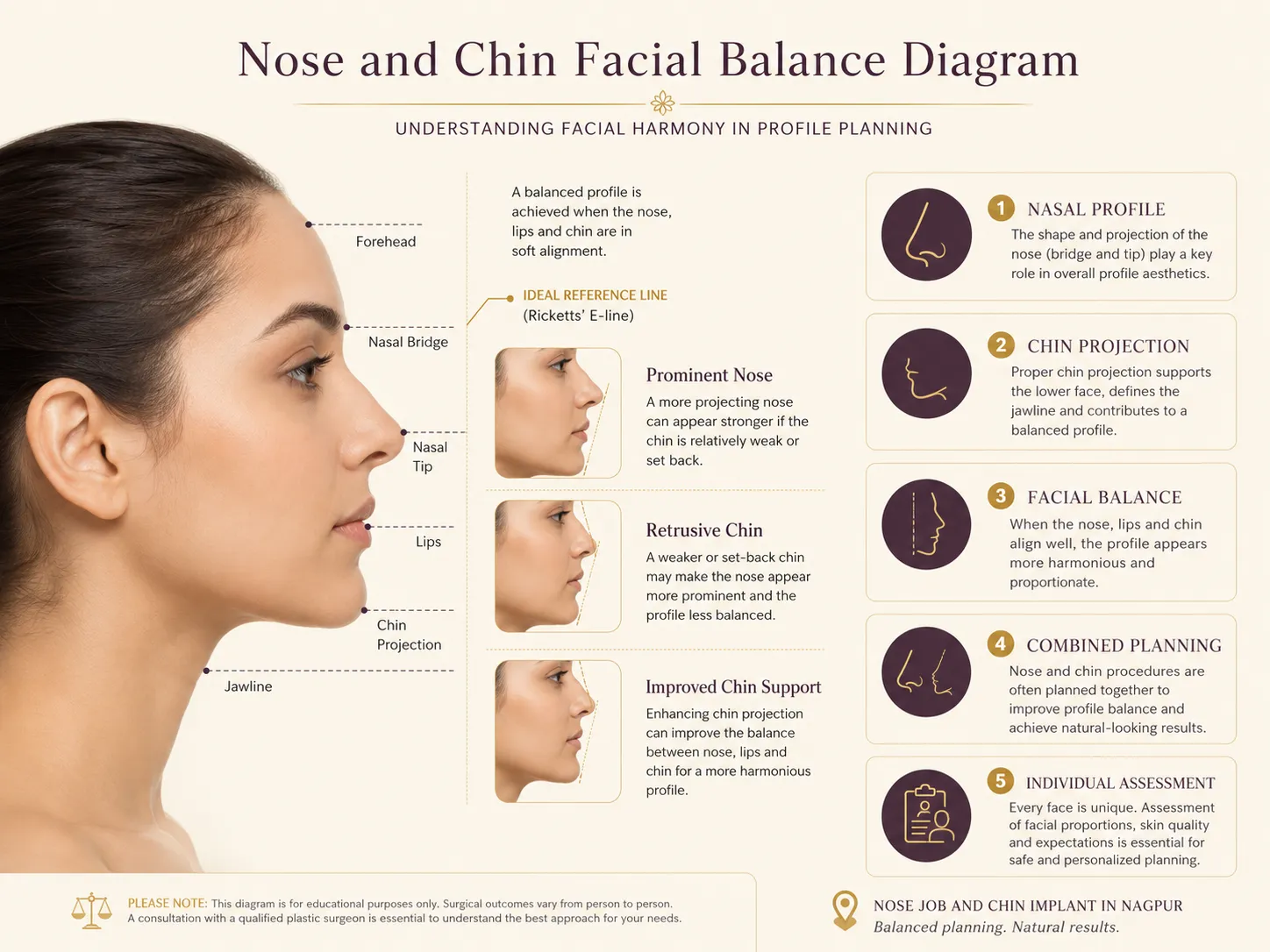
A less-defined jawline may come from a small chin, broad masseter muscles, submental fat, early jowls, loose skin or neck anatomy. The safest plan begins by identifying which structure actually needs treatment.


Select a question for a concise answer. Full explanations continue below.
The cause may be bone or chin projection, muscle width, fat, jowls, skin laxity or neck structure. More than one factor may be present.
The jawline is the meeting point of the chin, mandible, chewing muscles, facial fat, skin and neck. Treating the wrong layer can add heaviness, expose laxity or create an imbalanced profile.
A recessed, narrow or asymmetrical chin can shorten the visible mandibular line even when fat and skin are not excessive.
Strong or enlarged chewing muscles can make the lower face look broad. This is different from fat or bony width.
A pinchable fat layer beneath the chin can blur the chin-neck angle, but deeper anatomy and skin recoil still matter.
Age-related tissue descent may create fullness beside the chin and an interrupted mandibular border.
Loose skin or neck-muscle bands usually need a different plan from volume addition or fat removal alone.
Jaw position, dental occlusion, old injury or side-to-side skeletal difference may affect treatment suitability.
“The lower face should be assessed as bone, muscle, fat, skin and neck—not as a single line to be filled. The best plan may add structure, reduce width or fat, support tissue, or recommend no procedure.”— Dr. Pawan Shahane, M.Ch. Plastic Surgery · Mayflower Clinic, Nagpur
Some options are temporary and non-surgical; others are operations with a longer recovery. Suitability is determined after examination.
May support a small chin, prejowl hollow or selected mandibular-border contour. It adds volume and cannot remove fat or significant loose skin.
Read the filler safety guide →May reduce lower-face width when true masseter hypertrophy is present. Effects are temporary and should preserve chewing and smile balance.
Understand injection planning →May offer limited temporary support for selected mild early jowling. It is not equivalent to surgical repositioning and carries thread-specific risks.
Compare thread-lift benefits and limits →May remove a localized superficial fat layer when skin recoil is adequate. It does not correct every loose-skin, platysma or skeletal problem.
See the double-chin assessment →Filler, fat grafting, an implant or bony genioplasty may be considered when structural projection is the main limitation. Bite and jaw relationships must be assessed.
Explore chin and profile planning →May be more appropriate for substantial jowls, loose skin or platysma changes. A surgical lift has different scars, anaesthesia and recovery from injectable treatment.
Review face and neck lift planning →Selected energy-based treatment may provide gradual, limited support. Fractional Femto Derma CO2 resurfacing may improve surface quality and mild tightening, not structural deficiency.
Compare non-surgical options →Useful only when each component has a clear indication—for example, modest structural support with targeted fat or muscle treatment. More procedures are not automatically better.
A normal softer jawline does not require treatment. Choosing no intervention is appropriate when the likely benefit is small or the risk-benefit balance is unfavourable.
| Main finding | Option that may be discussed | Typical interruption | Important limitation |
|---|---|---|---|
| Small contour deficit | Conservative filler | Often short-lived swelling or bruising | Adds volume; vascular and product risks remain |
| Masseter hypertrophy | Muscle-relaxing injection | Usually minimal visible downtime | Temporary; not a fat or skin treatment |
| Mild early jowling | Selected thread lift | Swelling, tenderness or dimpling may occur | Limited lift and variable durability |
| Localized submental fat | Liposuction or selected fat-reduction plan | Bruising, compression and swelling | Skin may not retract if laxity is significant |
| Under-projected chin | Filler, fat, implant or genioplasty | Varies from injection recovery to surgery | Must assess bite, symmetry and required movement |
| Marked jowls or loose neck | Lower-face or neck lift | Planned surgical recovery | Scars and surgical risks; not replaced by filler |
Images are responsively contained so labels remain visible on desktop and mobile.
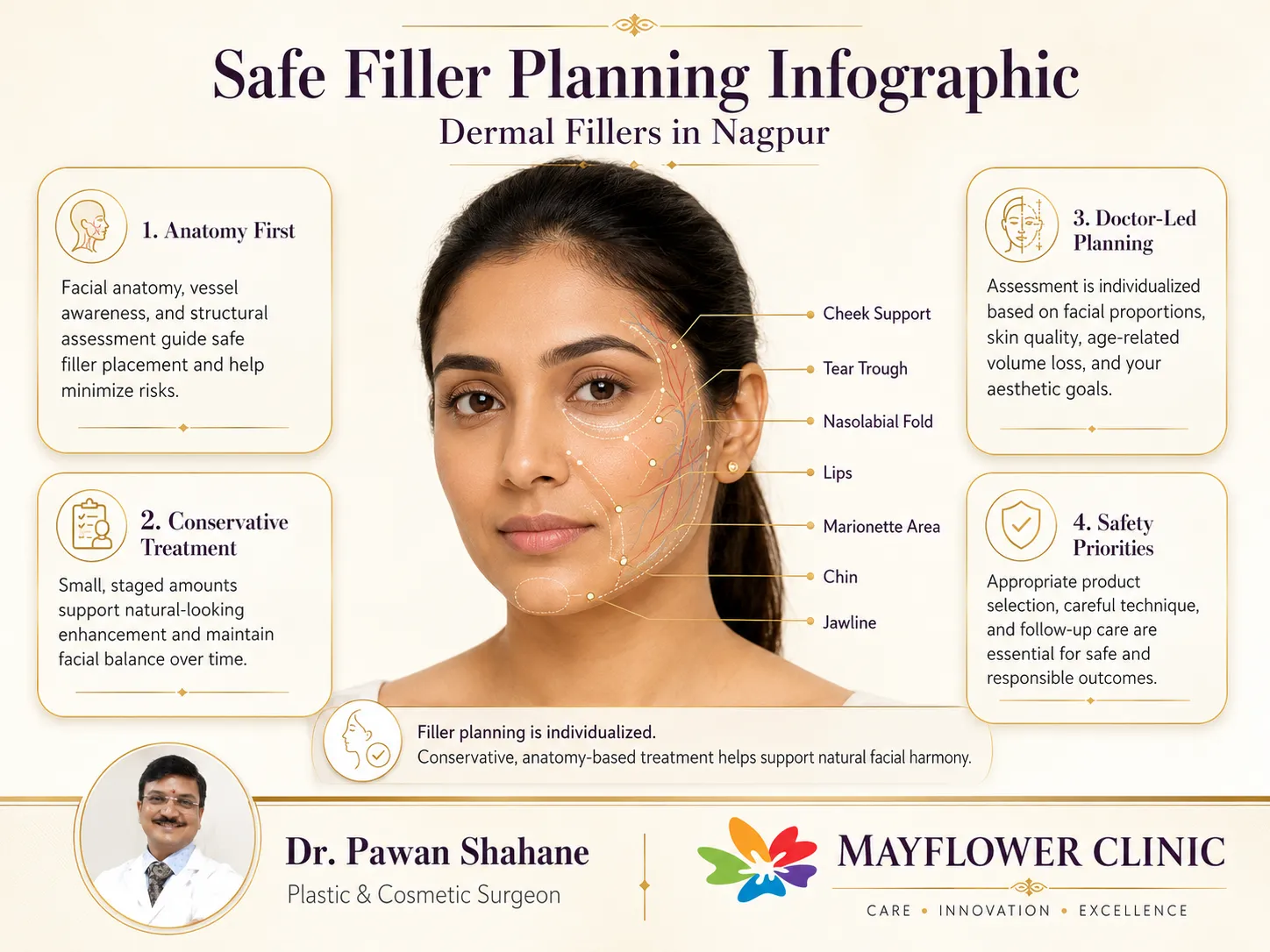
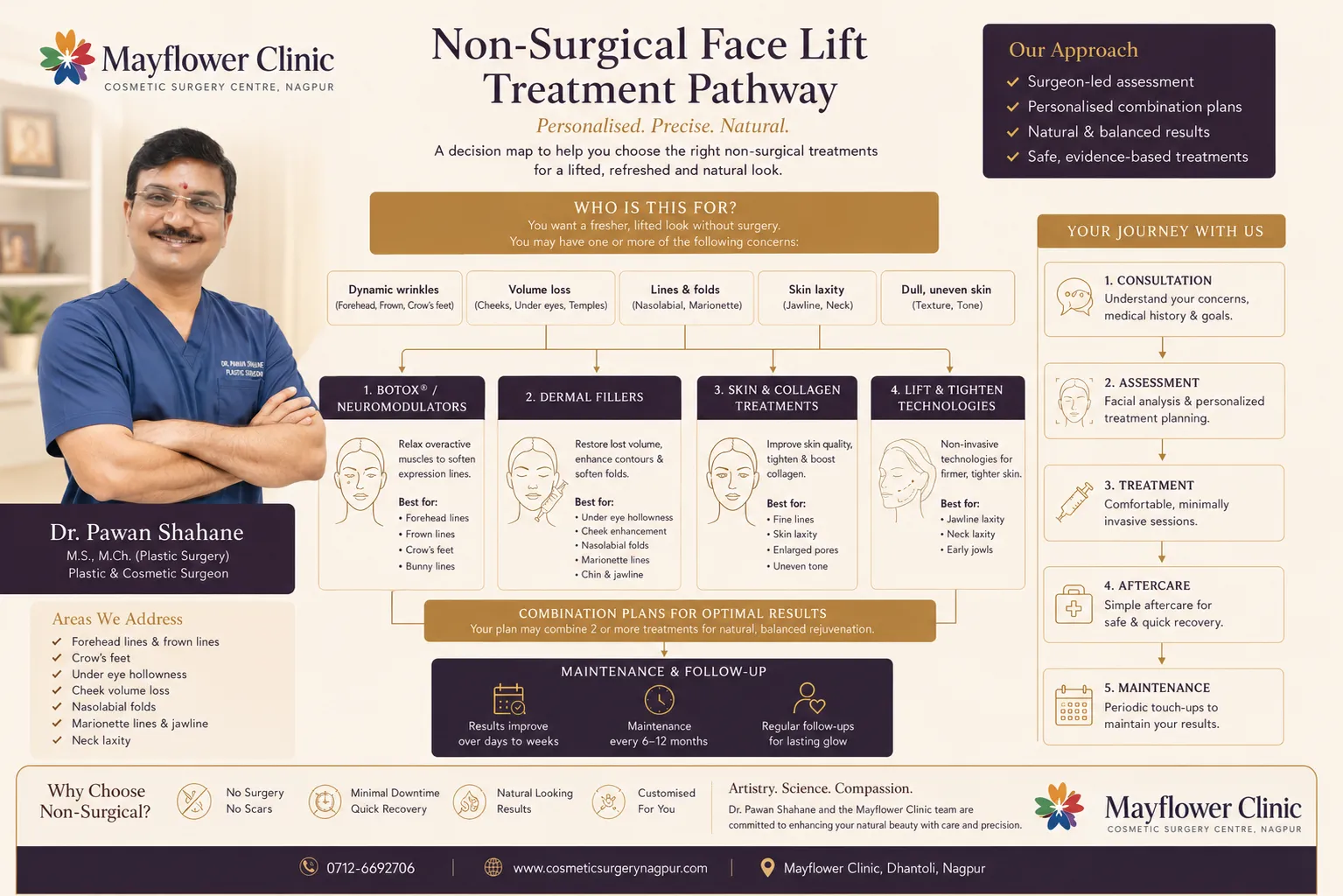
Front, side and three-quarter views help distinguish width, projection, fat, jowling, laxity and asymmetry.
Chin and jaw structure, bite, masseter activity, fat depth, skin recoil and neck muscle are assessed.
The plan identifies what can improve, what will remain, and whether a subtle or more structural change is appropriate.
Temporary and surgical routes are compared for benefit, risk, recovery, maintenance and alternatives.
Medicines, allergies, previous injections, dental concerns, smoking, investigations and anaesthesia needs are reviewed.
Treatment is personally planned by Dr. Shahane; the extent should not be increased without a clinical reason and consent.
Swelling, bruising, symmetry, movement, sensation, wounds or compression are checked according to the procedure.
Final assessment is delayed until temporary swelling and tissue adaptation have had time to settle.
These are broad planning bands, not promises. The written aftercare plan takes priority.
Redness, tenderness, swelling or bruising may be visible for several days. Masseter contour change develops gradually.
Swelling, tightness, dimpling or asymmetry can occur early. Strenuous activity and facial pressure may be restricted.
Compression, bruising, numbness and swelling are common. Contour often refines over 6–12 weeks or longer.
Recovery varies with the operation, anaesthesia and combined procedures. Final scar and contour maturation takes months.
No jawline treatment is risk-free. The relevant consent discussion depends on the chosen procedure.
There is no single jawline package because a small filler treatment, masseter injection, thread lift, liposuction, chin augmentation and lower-face lift are medically and financially different.
Cost can reflect the main anatomical concern, treatment method, product or device use, number of sessions, anaesthesia, operating facility, investigations, compression or dressings, medicines, combination procedures and follow-up.
Mayflower Clinic provides a written recommendation after examination. A lower advertised price should not replace correct diagnosis, qualified treatment and a complication plan.
There is no procedure-matched jawline-definition review in the approved inventory. The reviews below are clearly labelled general or other-procedure feedback and are not jawline outcome claims.
“Good Work on Cosmatic surgery.”Verified Google review · 5 stars
“Had a great experience with Dr. Pawan Shahane. He was extremely helpful, patient, and always took the time to address my concerns. His calm and reassuring approach made the entire process much more comfortable. Truly appreciate the care and support provided throughout. Highly recommended.”Verified Google review · 5 stars
“Had a treatment for the injury and it was a great experience. It was like after removing stitches it looks as it was almost before the injury”Verified Google review · 5 stars
Visible answers below match this page’s FAQ structured data.
Jawline definition is an umbrella term for treatments that improve the visible transition between the lower face, jaw and neck. It is not one fixed procedure; the plan may address bone or chin projection, muscle width, fat, jowls, loose skin or a combination.
Assessment includes front, side and three-quarter facial views; chin projection; jaw width and asymmetry; masseter activity; the amount and depth of submental fat; skin recoil; jowls; platysma bands; dental bite; medical history and previous treatment.
Selected patients may benefit from carefully placed filler along the chin, prejowl area or mandibular border. Filler adds volume rather than removing fat or loose skin, and excessive volume can make the lower face look heavier.
No. Bruising, swelling, tenderness, lumps, infection, asymmetry and product-related reactions can occur. Accidental injection into a blood vessel is uncommon but can cause tissue injury and other serious complications, so anatomical knowledge and an emergency plan are essential.
They may help when enlarged or overactive masseter muscles are an important cause of lower-face width. They do not remove fat, tighten loose skin or correct a small chin, and an unsuitable dose can affect chewing strength, smile balance or lower-face support.
Threads may offer a modest temporary lift for selected early jowling or mild laxity. They cannot reproduce a surgical lower-face or neck lift, and swelling, dimpling, asymmetry, palpable threads, infection or extrusion can occur.
It may improve the chin-neck angle when there is a removable superficial fat layer and the skin is likely to adapt. Removing fat alone may be unsuitable when loose skin, platysma bands, a small chin or deeper neck anatomy is the main problem.
Chin augmentation may be considered when limited chin projection shortens the visible jawline or weakens profile balance. Options can include filler, fat grafting, an implant or bony genioplasty depending on the required structural change and bite relationship.
A lower-face or neck lift may be more appropriate when jowls, significant skin laxity, platysma separation or neck ageing are the dominant findings. Injectable or energy-based treatment cannot reliably remove substantial loose skin.
Selected energy-based treatments may produce gradual, limited tightening in suitable skin. Fractional Femto Derma CO2 resurfacing may be considered for surface quality and mild tightening, but it is not a substitute for fat removal, structural augmentation or lifting significant laxity.
Yes, when each component has a clear anatomical indication. A plan may combine conservative contour support, masseter treatment, submental fat reduction or skin support, but adding procedures without a specific need increases cost, recovery and risk.
Duration depends on the treatment and the patient. Injectable effects are temporary, thread lift changes are limited and time-dependent, transferred fat can partly resorb, and surgical contouring changes are longer-lasting but still affected by ageing, weight change and healing.
Recovery ranges from short-lived redness or swelling after injections to bruising, compression, numbness and several weeks of settling after liposuction or surgery. The expected timeline should be explained for the exact procedure rather than for jawline treatment as a whole.
Treatment may be delayed or changed for active infection, uncontrolled illness, pregnancy or breastfeeding for selected procedures, bleeding risk, significant dental or jaw disease, smoking-related healing concerns, unrealistic expectations or an unexplained neck lump that needs diagnosis.
Cost depends on the underlying cause, treatment type, product or device use, number of sessions, anaesthesia, facility requirements, investigations, compression or aftercare, combination procedures and follow-up. A transparent written estimate follows examination.
Fat, skin, platysma and chin projection assessment.
Read guide →Filler, fat, implant and skeletal options compared.
Explore profile planning →Conservative contouring, vascular risk and aftercare.
Read filler guide →When muscle activity—not fat—is the concern.
Understand treatment →Temporary support, suitable anatomy and limitations.
Compare threads →Surgical planning for jowls and substantial laxity.
View surgical guide →Volume, skin-quality and early-laxity pathways.
Review options →Browse facial, body, breast, reconstructive and hair procedures.
Explore services →Medically reviewed: 2 August 2026. References support general education and do not replace individual examination or local product and regulatory requirements.
Bring your main concern, previous treatment details and questions about filler, muscle treatment, fat reduction, chin projection, threads or lifting. The consultation should help you understand not only what may help, but what should not be treated with a shortcut.
Medical Disclaimer: Jawline definition may involve non-surgical, minimally invasive or surgical treatment. All procedures have risks, individual responses vary and results are not guaranteed. Formal in-person consultation with Dr. Pawan Shahane is required before any treatment decision. This page is for general educational purposes and does not constitute diagnosis, medical advice or a treatment recommendation.

Case of the Month: Grade 3 Gynecomastia…

The Science of Facial Aging: Why Wrinkles,…