
Fat
Soft, diffuse fullness may change with overall body weight. Localized fat can sometimes be contoured with liposuction when weight and skin quality are suitable.

Treatment-selection guide · Nagpur
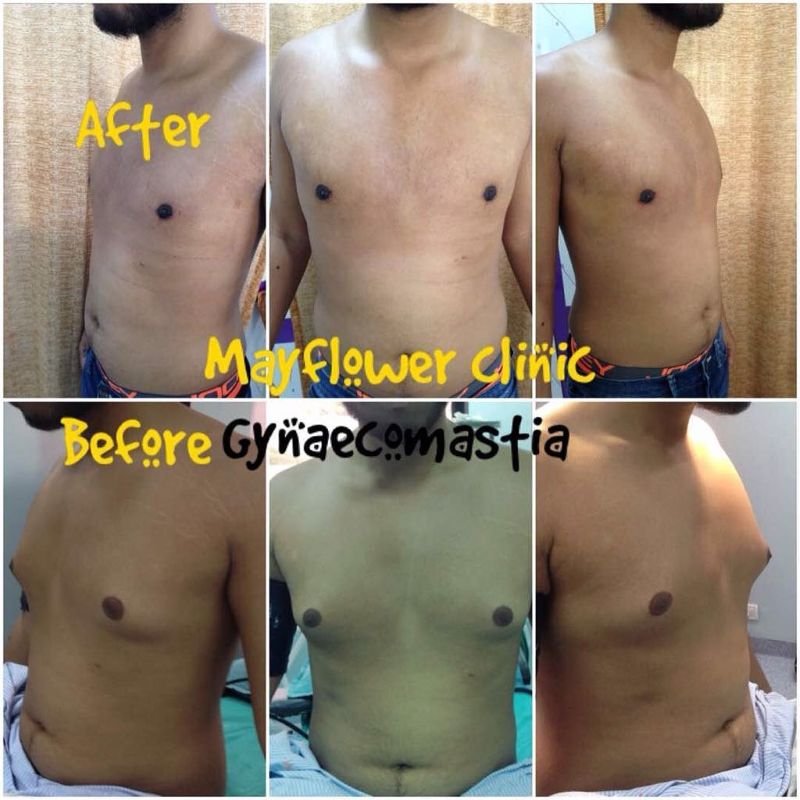
An enlarged male chest can contain fat, firm gland, loose skin—or all three. The right operation may be liposuction, gland excision, combined surgery or skin reduction. This guide explains how those choices differ and why examination comes before technique.
Quick Answer
Liposuction treats fatty fullness. Direct excision treats firm glandular tissue that suction may leave behind. Combined surgery treats a mixed pattern. Skin excision may be needed when substantial laxity, sagging or a low nipple position would remain after volume reduction.
The least extensive operation that can realistically address the anatomy is usually preferred—but “smaller surgery” is not better if it leaves the main problem untreated. A consultation should compare the likely contour benefit with the scars, recovery and risks of each option.
Start With Anatomy
Two patients may look similar through clothing but need different operations. Examination separates the tissues and contour features that matter.
Soft, diffuse fullness may change with overall body weight. Localized fat can sometimes be contoured with liposuction when weight and skin quality are suitable.
A denser disc beneath the nipple–areola can cause central projection or a puffy nipple. Significant firm gland may need direct excision.
Elastic skin may redrape after reduction; stretched or post-weight-loss skin may remain loose and require a separate scar-versus-contour discussion.
Nipple height, areola size, chest-wall shape and right–left differences affect incision placement and what a realistic result looks like.
Choose one for general orientation only. This tool cannot diagnose gynecomastia or select surgery.
Treatment Comparison
The comparison below is the core decision—not which machine has the most attractive marketing name.
| Possible approach | Best matched to | What it can address | What it may leave behind | Main trade-off |
|---|---|---|---|---|
| Liposuction only Fat dominant | Predominantly fatty fullness with suitable skin elasticity and little important firm gland | Reduces subcutaneous fat and blends the chest contour through small access points | Dense central gland, puffy-nipple projection or loose skin | Smaller access scars, but wrong selection can cause under-correction |
| Gland excision Gland dominant | Localized firm tissue, often concentrated beneath the nipple–areola | Directly removes gland that liposuction may not reliably extract | Surrounding fatty fullness or broad contour transitions | More direct treatment, with an incision and risk of hollowing if overdone |
| Liposuction + gland excision Mixed pattern | A combination of diffuse fat and firm central gland | Contours the broader chest and reduces the resistant central component | Substantial loose skin if its elasticity is inadequate | More complete tissue correction, but wider surgical scope and recovery |
| Skin reduction ± nipple repositioning Severe / loose skin | Marked skin excess, sagging, low nipple position or major post-weight-loss laxity | Removes redundant skin and reshapes the chest envelope; fat and gland may also be treated | Fine skin-texture changes, perfect symmetry or invisible scars | Flatter, tighter contour at the cost of longer permanent scars |
Liposuction removes selected subcutaneous fat through small access sites and is most useful when the fullness is predominantly fatty. It is a contouring operation—not a substitute for general weight reduction. Skin quality matters: reducing volume does not guarantee that lax skin will tighten sufficiently.
Power-assisted liposuction uses a mechanically assisted cannula for fat removal and contouring where clinically appropriate. Mayflower’s system is described generically as PAL; no MicroAire branding, equivalence or guaranteed advantage is claimed.
VASER uses ultrasound energy as part of an ultrasound-assisted liposuction technique. It is not the same as PAL. Either device remains a surgical tool and does not automatically eliminate a firm gland or excess skin.
Firm glandular tissue is commonly concentrated beneath the nipple–areola complex. When it is clinically important, direct excision may be used—often through an incision planned near the areolar border. The aim is not to remove every last trace of tissue, but to create a balanced contour while preserving blood supply and avoiding an obvious crater.
Many surgical chests contain both diffuse fat and a firm central component. Combining liposuction with gland excision allows the two layers to be treated differently: suction can smooth the wider transition while direct excision addresses the tissue it cannot reliably remove.
In severe gynecomastia or after major weight loss, the main problem may be the skin envelope as much as the tissue inside it. Removing fat and gland can reduce volume, but it cannot promise that stretched skin or a low nipple will return to an ideal position. Skin reduction may then be considered, with an incision pattern tailored to the amount and direction of excess.
Severe Gynecomastia & Weight Loss
Large or long-standing enlargement can stretch the skin and areola. Major weight loss can leave a deflated chest with redundant skin and a lower nipple position. These cases need a different conversation from mild puffy-nipple gynecomastia.
A limited-incision operation may leave more loose skin. A more extensive skin-reduction operation may create a tighter contour but necessarily adds longer scars. Scar placement, nipple blood supply, sensation, healing risk and the possibility of staged correction must be discussed before consent.
There is no honest “scarless” promise for a chest that requires skin removal.
Before Choosing Surgery
Gynecomastia can occur with normal life-stage hormone changes, weight gain, medicines, supplements, anabolic steroids, alcohol or recreational substances, and certain endocrine or systemic conditions. Often no single cause is found. History and examination determine whether laboratory tests, imaging or referral are indicated; not every patient needs the same investigation panel.
Duration, changes, symptoms, medicines, supplements, substance use, weight history and medical conditions.
Fat, gland, skin, nipple position, asymmetry, chest wall and any finding that needs further evaluation.
Which contour concerns matter most and which scars, limits and recovery demands are acceptable.
Observation, weight management, liposuction, excision, combined treatment or skin reduction.
Proposed technique, incision pattern, anaesthesia, risks, aftercare, costs and alternatives before consent.
Recovery, Limits & Safety
Recovery is not identical for liposuction-only, combined gland excision and skin-reduction surgery. Your written instructions and follow-up findings take priority over generic timelines.
Swelling, bruising, soreness, firmness and temporary numbness are expected to varying degrees. Dressings and compression are used as instructed.
Gentle walking is encouraged as advised. Desk work may resume before physical work, depending on surgical extent and comfort.
Heavy lifting, chest training and strenuous upper-body activity wait until clinical clearance. Skin excision may need a more cautious progression.
Early appearance is affected by swelling and tissue firmness. The chest settles progressively; scars continue to mature for many months.
Emergency symptoms require urgent medical care; website forms and routine WhatsApp are not emergency services.
Open the Patient Care Guide →
Surgeon-Led Planning
Dr. Pawan Shahane examines the chest as separate fat, gland and skin components before recommending a technique. Mayflower Clinic’s internal project record documents 21+ years of surgical practice, 1,100+ gynecomastia operations and peer-reviewed academic work related to gynecomastia surgery.
When surgery is chosen at Mayflower Clinic, the plan and procedure are personally performed by Dr. Shahane. Numbers describe clinic-recorded experience; they do not guarantee an individual result.
Frequently Asked Questions
Continue Your Research
This patient guide was checked against established professional and health-system information. Sources explain that liposuction treats excess fat, excision is used for gland or skin, and severe or post-weight-loss cases may need skin reduction or nipple repositioning.
Private Male Chest Consultation
The purpose of the consultation is to define the anatomy, compare realistic choices and explain the scar and recovery trade-offs before you decide. Booking an assessment does not commit you to surgery.

Case of the Month: Grade 3 Gynecomastia…

The Science of Facial Aging: Why Wrinkles,…