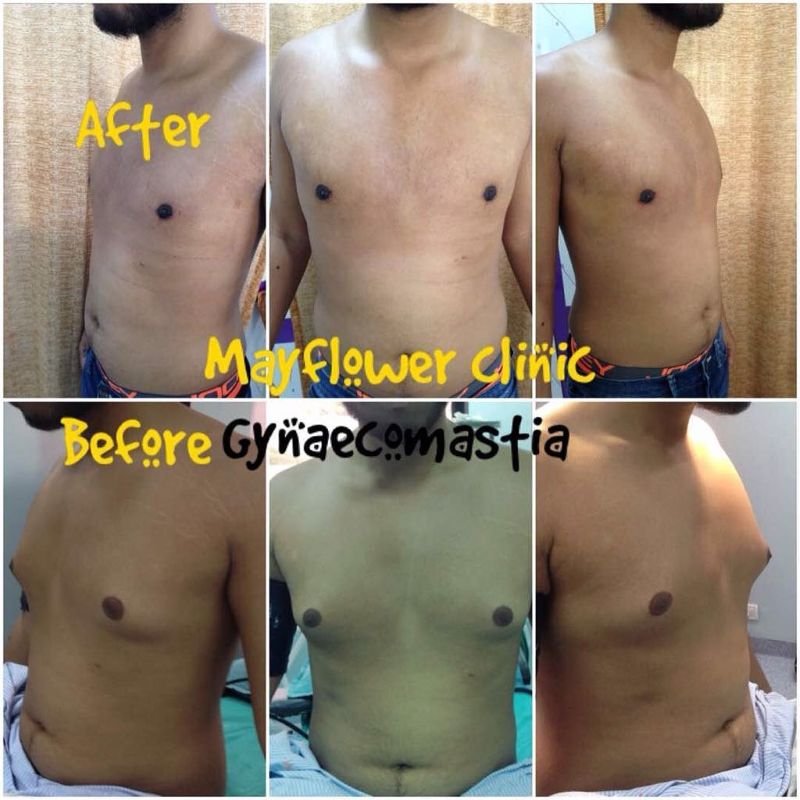
Gynecomastia Recovery Time — Day-by-Day and Week-by-Week
Recovery after gynecomastia surgery is gradual. Pain often improves before swelling, firmness, sensation and final chest contour have settled. Your timeline depends on whether treatment involved liposuction, power-assisted liposuction (PAL), gland excision, skin reduction, drains or combined procedures.
Day-care pathway when appropriateCompression garmentPlanned follow-upIndividual return to exercise
Recovery is not one finish date. Comfort, desk work, exercise, swelling, scars and final contour each recover on a different timeline.
Page Guide · Quick Answer
How long does gynecomastia recovery take?
Many patients can manage light daily activity within a few days and may return to desk-based work in roughly one week when comfortable and cleared. Heavy lifting, gym training and chest exercise usually require a longer, staged return. Swelling and firmness improve over weeks, while contour and scars may continue settling for several months.
These are planning ranges, not promises. Dr. Pawan Shahane’s written instructions and follow-up findings take priority.
Recovery timeline
What healing may look like after surgery
Surgery day
Monitoring, dressings and compression
After observation and discharge clearance, most suitable day-care patients return home with a responsible adult. Dressings and the compression garment are applied. Drains are used only when the operation requires them.
Days 1–3
Soreness, swelling and short walks
Chest tightness, bruising, swelling and discomfort are expected. Take prescribed medicines, walk gently at intervals, rest on your back with the upper body supported as advised, and avoid lifting or forceful arm movements.
Days 4–7
Early review and gradual independence
Discomfort often begins to reduce, but swelling can remain prominent. Dressings, wounds, skin and any drains are reviewed. Some patients can resume desk work if they are off sedating pain medicine, comfortable and able to protect the chest.
Days 8–14
Bruising fades; the result is still early
Movement usually becomes easier. Sutures, drain care or dressing changes depend on technique. Continue compression and restrictions. A firm ridge, lumpiness, numbness or mild side-to-side difference may still be part of normal healing but should be assessed at review.
Weeks 3–6
Activity increases in stages
Walking and lower-impact activity may progress after clearance. Upper-body resistance, push-ups, running and contact sports return later according to wounds, swelling and the operation performed. Do not test the chest simply because pain is low.
Months 2–3
Contour and sensation continue settling
Most swelling may be substantially improved, but firmness, tethering, altered sensation and scar redness can persist. Massage or scar treatment is introduced only at the advised stage.
Months 3–6+
More meaningful result assessment
Chest contour becomes easier to judge as swelling resolves and tissue softens. Scars and nipple sensation can continue changing beyond six months; scar maturation commonly continues for a year or longer.
Why timelines differ
The operation matters more than the marketing label
01
Liposuction or PAL
Fat removal can cause broad swelling, bruising, fluid shifts and temporary firmness. PAL is a surgical tool and does not guarantee painless or faster recovery.
02
Gland excision
Direct excision creates an incision near the areola in many plans and may produce local tenderness, swelling, scar firmness or temporary nipple-sensation change.
03
Combined treatment
Liposuction plus gland excision addresses mixed tissue but combines the healing patterns of both techniques.
04
Skin reduction
Selected larger or post-weight-loss chests may require longer incisions, more wound care and a slower return to strenuous activity.
05
Health and habits
Smoking, diabetes, obesity, medicines, nutrition, previous surgery and adherence to restrictions can affect wound healing and complication risk.
06
Individual biology
Swelling, bruising, scar quality, sensation and tissue contraction vary even when two patients have a similar procedure.
Compression garment
Support the chest without ignoring the skin
The garment helps control swelling and supports healing tissues. Wear it for the schedule and fit prescribed by Dr. Shahane; tighter is not automatically better.
Keep it smooth, dry and correctly positioned
Check skin edges, folds and pressure areas
Remove briefly 3–4 times daily as advised
Use removal time for hygiene and skin inspection
Reapply without rolling or bunching
Report numbness, severe pressure or skin colour change
Returning to routine
Work, driving, travel and exercise
Activity
Typical planning principle
Before resuming, confirm
Walking
Gentle short walks usually begin early to support circulation.
No dizziness; safe footwear; do not overexert.
Desk work
Often possible within several days to about one week, depending on comfort and commute.
No sedating medicines; wounds protected; breaks available.
Driving
Not while taking sedating pain medicine or when arm movement and emergency braking are limited.
Comfortable seat belt, full control, surgeon clearance.
Physical work
Requires more time than desk work, especially with lifting, pushing or overhead activity.
Exact job demands reviewed with the surgeon.
Gym and running
Return gradually after wound and swelling review; lower-body activity may precede chest training.
No pain, fluid collection, wound problem or unapproved strain.
Chest exercise
Push-ups, bench press and heavy upper-body work resume later and progressively.
Specific clearance based on procedure and healing.
Long travel
Discuss timing, compression, mobility, medicines and clot-risk precautions before booking.
Follow-up access and emergency plan at destination.
Contact sport
Direct impact to the chest should wait until healing is secure.
Surgeon approval and protective plan if relevant.
Common recovery concerns
What may be expected—and what needs review
Swelling and bruising
Common early and often uneven. Rapidly increasing one-sided swelling, severe tightness or a sudden size change needs urgent contact because a haematoma must be excluded.
Firmness and lumpiness
Healing tissue can feel firm or irregular for weeks. Do not force massage early. Examination distinguishes normal fibrosis from fluid, residual tissue or another problem.
Seroma
A fluid collection may produce swelling, movement of fluid or increasing asymmetry. It requires clinical assessment and sometimes drainage; do not puncture or compress it yourself.
Nipple sensation
Numbness, tingling or altered sensitivity may be temporary, but recovery is variable and permanent change is possible.
Scars
Incisions can remain red, firm or darker before maturing. Scar care begins only after wounds are closed and the surgeon approves the product and timing.
Asymmetry
Early asymmetry can reflect uneven swelling and pre-existing differences. Persistent contour concerns should be judged after adequate settling, not in the first weeks.
Massage and scar care
Start only after the tissues are ready
Lymphatic drainage massage may be considered after about 15 days when wounds are healed and Dr. Shahane has examined the chest. The exact start date, direction, pressure and frequency depend on the operation and findings.
Scar gel, silicone, moisturiser or other products should not be applied to an open, wet or infected wound. Sun protection matters once incisions are healed and exposed.
rapidly increasing swelling, especially on one side;
persistent or heavy bleeding through the dressing;
fever, pus, foul discharge or spreading redness;
severe or worsening pain not controlled by prescribed medicine;
dark, pale, blistered or progressively changing nipple or skin colour;
wound separation or exposed tissue;
new calf pain or swelling, chest pain, breathlessness, fainting or unusual heartbeat;
any symptom that feels rapidly different from the expected recovery explained at discharge.
Website messaging is not an emergency service. Severe breathing difficulty, chest pain, collapse or other acute symptoms require urgent medical care.
Surgeon-led follow-up
Recovery is reviewed, not guessed
Dr. Pawan Shahane, M.Ch. Plastic Surgery, plans the operation and follow-up according to the amount of fat, gland, skin excess, asymmetry and surgical technique. Reviews are used to assess wounds, swelling, fluid, compression, scar development and the safe return to activity.
PAL may be used where appropriate, but the recovery plan follows the actual operation and the patient’s healing—not the machine name.
Many patients plan several days to about one week for desk-based work, but pain control, commute, dressings, drains, arm movement and the procedure performed can change this. Physical work generally requires longer.
How long should I wear the compression garment?
Wear it for the duration and daily schedule prescribed by Dr. Shahane. The plan varies with liposuction, gland excision, skin work, swelling and skin tolerance. Do not shorten or extend use based only on internet advice.
Can I remove the garment for bathing?
Remove it only according to the wound and bathing instructions provided. Brief removal 3–4 times daily may be advised for hygiene, skin checks and garment adjustment, followed by careful reapplication.
When can lymphatic drainage massage start?
It may be considered after approximately 15 days when wounds are healed and the surgeon approves. It should not begin over an open wound, suspected fluid collection, infection or unexplained swelling.
When can I restart gym and chest exercise?
Walking begins earlier, while running, heavy lifting, push-ups and chest training return in stages after clinical clearance. The timing depends on swelling, wounds, gland excision, skin reduction and the intensity of exercise.
Is one side being more swollen normal?
Mild uneven swelling can occur, but a sudden or rapidly increasing one-sided swelling, marked tightness, worsening pain or extensive bruising needs urgent contact to exclude bleeding or fluid collection.
How long will numbness last?
Nipple and chest sensation may be reduced, increased or altered for weeks or months. Recovery varies, and permanent change is a recognised risk. New progressive symptoms should be reviewed.
When will I see the final chest contour?
Early reduction is visible, but swelling, firmness, skin contraction and scar maturation continue. A more meaningful contour assessment is often made after several months, with further changes possible beyond six months.
Does PAL make recovery faster?
Not necessarily. PAL is a power-assisted liposuction tool. Recovery depends on the overall amount of liposuction, gland excision, skin work, bruising, swelling, health and adherence to aftercare. No faster-recovery guarantee is appropriate.
When should I call the clinic urgently?
Call for rapidly increasing swelling, heavy bleeding, fever, pus, spreading redness, severe worsening pain, skin or nipple colour change, wound opening or other unexpected deterioration. Seek emergency care for chest pain, breathlessness, fainting or collapse.
Know the restrictions, reviews and warning signs in advance
A safe plan includes time away from work, transport, help at home, garment use, follow-up access and a gradual return to exercise—not only the surgery date.
Medical disclaimer: This page provides general educational information and does not replace the written instructions, examination or follow-up of the treating surgeon. Recovery varies with the procedure, health and healing. Timelines are broad planning ranges rather than guarantees. Seek urgent medical care for severe or rapidly worsening symptoms.