
Fat versus gland
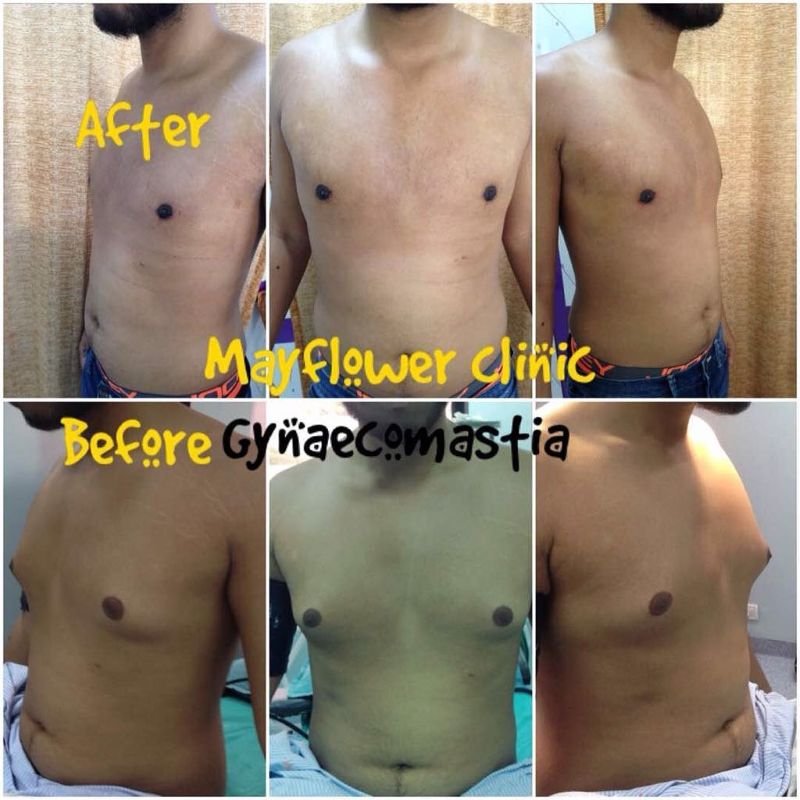
Liposuction removes fat but does not reliably remove a firm gland beneath the nipple. True gynecomastia often needs gland excision, sometimes combined with liposuction for contour blending.

Male chest surgery · transparent decision guide
The cost of gynecomastia surgery depends on what is actually present—fat, firm gland, skin excess, asymmetry or a combination—and which safe surgical plan is required. A meaningful quotation should explain the procedure, facility, anaesthesia, garment, follow-up and possible additional costs rather than advertise one unexplained package price.
Page Guide · Quick Answer
There is no responsible single price for every patient. A smaller chest treated with limited liposuction has different operating time and resources from a chest requiring power-assisted liposuction (PAL), gland excision, skin reduction, nipple–areola repositioning or correction of marked asymmetry.
The clinic’s current fee should be confirmed after an in-person examination. This page explains what changes the quotation and what questions to ask before comparing prices.
Main cost factors
Liposuction removes fat but does not reliably remove a firm gland beneath the nipple. True gynecomastia often needs gland excision, sometimes combined with liposuction for contour blending.
A small localised enlargement is different from a larger chest with broad tissue distribution, ptosis or stretched skin. Greater surgical scope can increase time, facility and aftercare needs.
Skin may contract after tissue reduction in selected patients. Significant laxity—especially after major weight loss—may require additional skin removal and longer scars.
Most treatment is bilateral, but marked asymmetry or unilateral enlargement may need different planning and sometimes additional investigation.
Local anaesthesia with sedation, general anaesthesia, operating-room time, monitoring and day-care facility requirements depend on the planned procedure and medical fitness.
Revision surgery, prior liposuction, contour irregularity, recurrent gland or scar tissue can make dissection and contour correction more complex.
Procedure and cost relationship
| Possible plan | What it addresses | Why cost may differ | Important limitation |
|---|---|---|---|
| Liposuction only | Predominantly fatty male-chest fullness in a suitably selected patient | Technique, extent, operating time and anaesthesia | Does not reliably remove a firm gland |
| PAL-assisted liposuction | Fat removal and contouring where power-assisted liposuction is clinically useful | Equipment, consumables, treatment area and operating time | PAL is a surgical tool—not a guarantee of a superior or scar-free result |
| Gland excision | Firm glandular tissue, commonly concentrated behind the nipple–areola | Dissection complexity, asymmetry, specimen handling and time | Excision alone may not address surrounding fatty contour |
| Liposuction plus gland excision | Mixed fat and gland—the common combined surgical pathway | Both contouring and direct excision are required | Swelling and final contour take time to settle |
| Skin reduction or nipple–areola adjustment | Selected larger chests, ptosis or major post-weight-loss skin excess | Longer surgery, additional incisions, dressings and follow-up | Creates longer permanent scars and needs careful consent |
Written quotation checklist
Never compare only the headline number. Ask for a written quotation showing the planned procedure and exactly what the stated fee covers.
Before price is finalised
History and examination help distinguish glandular gynecomastia from predominantly fatty enlargement, skin laxity, a chest-wall issue or another condition.
Age, duration, medicines, supplements, hormone-related symptoms, weight change, smoking and medical conditions are reviewed. Tests or referral are ordered only when indicated.
Gland, fat, skin, nipple position and asymmetry are documented. A new, hard, painful or unilateral mass may require investigation before elective surgery.
The plan may involve liposuction, PAL, gland excision, a combination or selected skin reduction. Incisions, scars, anaesthesia, risks and limitations are explained.
The written estimate should reflect the selected operation and state the known inclusions, exclusions, validity period and payment schedule.
Elective surgery should not be rushed because of a temporary discount. Qualifications, facility safety, surgical plan, follow-up and comfort with the surgeon matter alongside cost.
Cost is only one part of consent
Desk work and physical work have different recovery demands. Travel, help at home and time away from exercise can create indirect costs even when surgery is day care.
A correctly fitted compression garment and planned reviews support recovery. Ask whether replacement garments or visits beyond the routine schedule are included.
Bleeding or haematoma, seroma, infection, contour irregularity, asymmetry, altered nipple sensation, scarring, skin or nipple problems, anaesthesia risks and revision may occur.
Insurance and payment questions
Gynecomastia surgery performed mainly for appearance is commonly treated as elective cosmetic surgery, but every insurance policy is different. The clinic cannot guarantee approval or reimbursement.
Ask your insurer directly whether documented pain, functional symptoms, investigation findings or a defined medical indication changes eligibility, and which documents or pre-authorisation are required. Obtain written confirmation before surgery if coverage matters to your decision.

Surgeon-led assessment
Dr. Pawan Shahane evaluates the gland, fat, skin and asymmetry before selecting the operation and preparing the quotation. When surgery is chosen, surgical planning and the procedure are personally performed by Dr. Shahane at Mayflower Clinic, Nagpur.
A lower price is not automatically better if the quotation omits anaesthesia, facility, gland excision, garment, follow-up or the actual surgeon’s involvement. The safest comparison is between equivalent surgical plans and clearly stated inclusions.
How to evaluate a gynecomastia surgeon →Frequently asked questions
WhatsApp can be used to arrange a private consultation and answer general questions, but a safe final quotation requires medical history and an in-person examination. Intimate photographs should not be sent through routine messaging unless specifically requested through an appropriate consented clinical pathway.
Firm gland must be removed through direct surgical excision rather than liposuction alone. This adds dissection, haemostasis, specimen handling when advised and procedure time. The need for excision is determined clinically.
PAL may affect equipment, consumables and operating planning, but it is used only when clinically appropriate. It is one surgical tool and should not be sold as a guaranteed superior result. The written quotation should state whether PAL is part of the proposed plan.
It may involve a smaller surgical scope in a patient with predominantly fatty fullness, but choosing it only because it costs less is unsafe when a significant firm gland is present. Inadequate treatment can leave residual projection and may lead to revision.
Greater tissue volume, skin excess, ptosis or nipple–areola adjustment often increases complexity, but clinical grade alone does not determine the whole quotation. Anaesthesia, asymmetry, previous surgery and the selected technique also matter.
They may be included or listed separately. Ask for a written itemised quotation rather than assuming. Tests and specialist clearance depend on age, history, examination and the planned anaesthesia.
Many policies exclude surgery performed primarily for appearance, while coverage rules vary. Contact the insurer directly, obtain written pre-authorisation when required and do not rely on a verbal assurance from the clinic or insurer.
Not necessarily. Ask the clinic how routine follow-up, urgent review, additional medicines, procedures, hospital care or revision are handled. No ethical quotation can promise that every unexpected medical expense is impossible.
Cost matters, but compare the surgeon’s recognised plastic-surgery qualification, who will actually operate, the proposed technique, anaesthesia, facility standards, emergency planning, aftercare and revision policy. Compare like-for-like plans.
A new, hard, painful, rapidly growing or one-sided lump; nipple discharge; skin change; systemic symptoms; or an atypical examination may require further evaluation. Elective cost discussion should wait until the diagnosis is clarified.
Private consultation · written quotation
A consultation should clarify whether the chest contains fat, gland, skin excess or a combination, and then provide a written quotation based on the operation that is actually appropriate.

Case of the Month: Grade 3 Gynecomastia…

The Science of Facial Aging: Why Wrinkles,…