
Gynecomastia Surgery
The main procedure pillar: assessment, candidacy, gland excision, liposuction, recovery and limitations.
Read the surgery guide →
An enlarged or puffy male chest is not always the same problem. It may reflect gland tissue, excess fat, loose skin, or a combination. This hub helps you understand the difference, compare treatment pathways, and reach the right detailed page without trying to diagnose yourself online.

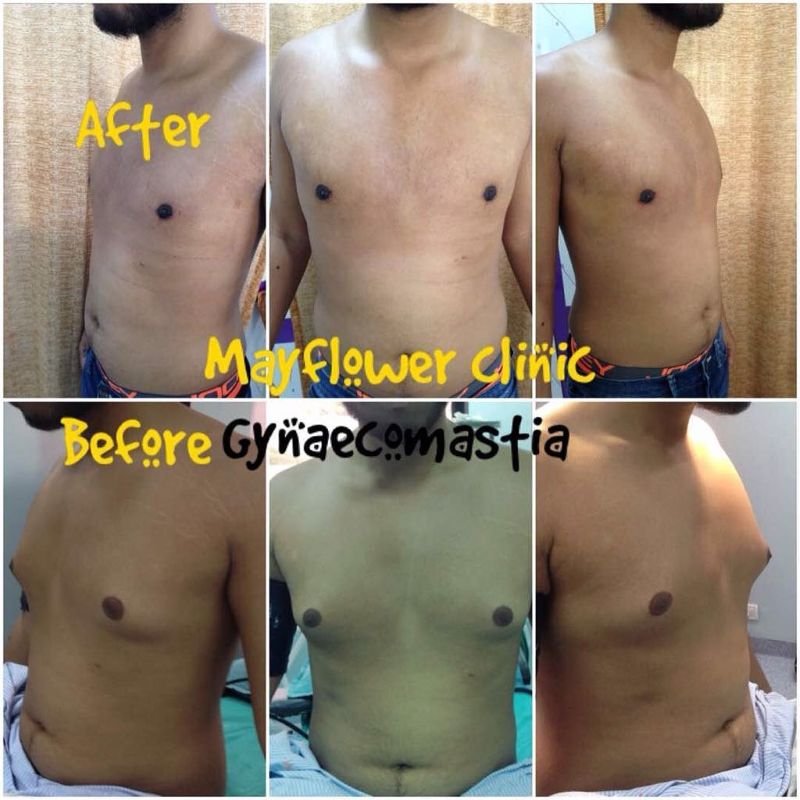
Gynecomastia describes enlargement that includes male breast-gland tissue. Pseudogynecomastia or chest fat describes fullness that is predominantly fatty tissue. In real patients, a mixed pattern is common.
The treatment therefore cannot be chosen from appearance alone. A lean man can still have gland enlargement, while an overweight man can have both gland and fat. Skin laxity after weight loss may add another contour issue.
These descriptions can guide your reading, but they cannot confirm a diagnosis.
Can be associated with a larger fatty component, especially when the fullness changes with overall weight.
Can be associated with a gland component beneath the nipple-areola, including in lean or athletic men.
A mixed pattern is common and may require contouring of more than one tissue layer if surgery is appropriate.
Removing volume alone may not fully correct lax skin. Scar trade-offs and skin-removal options may need discussion.
The main surgery pillar stays comprehensive. These supporting pages answer distinct questions about cost, recovery, risks, surgeon selection and fat-dominant chest concerns.
The main procedure pillar: assessment, candidacy, gland excision, liposuction, recovery and limitations.
Read the surgery guide →A patient-friendly explanation of surgical reduction for enlarged male breast tissue and mixed chest fullness.
Explore male breast reduction →For the important decision question: when is chest fullness mainly fat, and when might gland tissue also be present?
Compare fat vs gland pathways →Understand the factors that influence a personalized surgical estimate without misleading fixed-price promises.
See cost factors →See staged recovery, compression, return to routine activity, exercise and the gradual settling of swelling.
Read recovery guidance →Common temporary effects, less common complications, realistic limitations and warning signs to report.
Understand risks →Use qualifications, relevant training, case experience, consent, safety and follow-up systems—not slogans alone.
Use the surgeon-selection guide →A criteria-led page for comparing gynecomastia surgery pathways and understanding what a responsible consultation should cover.
Compare surgery options →The same “male chest” complaint can lead to very different plans.
When the chest is predominantly fatty, overall weight management may improve it. If a localized fatty contour persists and surgery is appropriate, liposuction may be considered.
Dense tissue beneath the nipple-areola is not reliably removed by liposuction alone. Direct gland excision may be needed, with incision placement planned to reduce visible scarring where possible.
Many surgical cases need both contour liposuction and gland reduction to avoid leaving a central mound or creating an uneven transition.
When skin cannot contract enough after volume reduction, additional skin management may be necessary. This improves contour at the cost of longer scars.
A cosmetic plan should not skip medical assessment when enlargement is sudden, one-sided, painful, hard, rapidly changing, associated with nipple discharge, or otherwise unusual.
Not every patient needs surgery now. Age, duration, stability, expectations, weight change, medical factors and willingness to accept scars all influence the timing of treatment.
Discuss duration, symptoms, weight change, medical history, medications, expectations and chest anatomy.
Estimate the relative contribution of fat, gland and skin laxity; identify asymmetry and nipple position.
Compare observation, weight management, liposuction, gland excision and skin-adjustment strategies where relevant.
When surgery is appropriate, it is personally performed by Dr. Pawan Shahane with the plan agreed during consultation.
Compression, wound review and staged return to activity continue while swelling gradually reduces and the contour matures.
A responsible page should discuss recovery and risks before a patient decides, not after.
Chest contouring can reduce localized tissue but does not treat obesity or replace sustainable weight management.
Chest shape depends on ribs, muscle, skin thickness, tissue distribution and healing. Natural asymmetry may remain.
Incisions are planned to be discreet where possible, but scar behaviour varies between patients and techniques.
Significant laxity may persist after tissue reduction, especially after major weight change or with lower skin elasticity.
Swelling, firmness and temporary asymmetry can make the first weeks look different from the mature outcome.
Later weight change, hormonal factors, medications or residual tissue can change the chest again.
Wear the prescribed compression garment for the duration and fit advised at follow-up; do not substitute an excessively tight garment.
Gentle walking is encouraged as advised, while strenuous upper-body work and gym activity are delayed until clearance.
Keep dressings and incision care consistent with the written instructions, and attend scheduled review appointments.
Use only the medicines prescribed or approved for your case and disclose supplements or drugs that may affect bleeding.
Bruising, swelling, soreness and temporary numbness can occur; improvement is gradual rather than immediate.
See the clinic-wide Patient Care Guide and follow the individualized instructions given after surgery.
Gynecomastia is one of Dr. Pawan Shahane's documented areas of surgical experience. The clinic's project record lists 1,100+ gynecomastia surgeries and a peer-reviewed 2017 publication related to gynecomastia surgical outcomes.
The review text below is reproduced verbatim from the clinic's verified Google-review inventory, including original spelling and wording.
"M 20, being skinny till now and yet having gynacomastia was very uncomfortable. But after surgery I'm actually relieved of all those discomforts. Dr. Is also very humble. Just make sure u get ur surgery done in the morning, it's better that way for u to go home."
"I had my gynecomastia surgery done by Dr. Pawan Sahane, and I must say he did an excellent job. The procedure was smooth, well-managed, and done in the best possible manner. I am feeling much better and more confident now. I truly appreciate his skill, care, and professionalism."
"I am very happy with surgery, best plastic surgeon and very low cost. Very cooperative staff and polite."
"I got excellent results after my gynecomastia surgery. Best surgeon and best personality. He has new technique and do scar less surgery, in just one hour and in very low budget. Anybody having this problem, must visit once to Dr. Pawan."
"Pawan is world best gynecomastia doctor. He is best surgeon in Nagpur city. Best result, patient will be happy."
"Best cosmetic surgeon, I strongly recommend him for all plastic surgery. He is very intelligent and guides you very well. My son suffered from gynecomastia and so we got surgery done. Initially we consulted other doctors, they told us it will go away with medicine, but they were of no use. We waited 4 years and then finally met Dr. Pawan Shahane on a relative's recommendation. Surgery was the best decision. Thanks, sir."
If you are unsure whether the concern is chest fat, gynecomastia, loose skin, or a mixture, the consultation can begin by identifying the pattern and discussing realistic options without committing you to surgery.

Case of the Month: Grade 3 Gynecomastia…
What Is Acne Scar Correction? A Complete…