
1. Verifiable qualification
Look for a recognised specialist plastic-surgery degree and valid registration. Verify the exact credential rather than relying on broad promotional labels.

“Best” is a search phrase, not a title a clinic can award itself. A safer choice comes from comparing verifiable qualifications, rhinoplasty-specific thinking, consultation quality, facility and anaesthesia planning, follow-up ownership and ethical evidence.
Quick answer: shortlist surgeons whose specialist qualification and registration can be checked; who assess both external shape and breathing; who explain limitations without pressure; who identify the operating facility and anaesthesia plan; and who remain responsible through recovery. A confident advertisement is not the same as a safe surgical system.


Ask a question about choosing a rhinoplasty surgeon on this page.
Check the specialist qualification and medical registration first. Then compare rhinoplasty assessment, facility and anaesthesia planning, postoperative availability and how the surgeon explains limitations.
See the eight selection criteria ↓This local page guide uses prewritten, medically reviewed answers. It cannot examine you, diagnose a nasal problem, recommend surgery, calculate candidacy or replace an in-person consultation.
“A responsible rhinoplasty consultation should make the anatomy, trade-offs, safety plan and limits clearer. It should never make the patient feel that a result is guaranteed or that a decision must be rushed.”— Dr. Pawan Shahane, M.Ch. Plastic Surgery · Founder, Mayflower Clinic, Nagpur
Rhinoplasty is not a single manoeuvre. It may involve the nasal bones, dorsal profile, middle vault, tip-support system, septum, nostrils, valves, scar tissue or grafts. The surgeon must balance appearance, structure, breathing and healing rather than chase one photograph or trend.
A credible surgeon-selection process therefore looks beyond advertising language. Use the criteria below to compare every shortlisted doctor—including Dr. Pawan Shahane—by the same standard.
Look for a recognised specialist plastic-surgery degree and valid registration. Verify the exact credential rather than relying on broad promotional labels.
The surgeon should explain nasal bones, bridge, middle vault, tip, septum and valves—and how primary, traumatic and revision cases differ.
A good consultation listens first, examines carefully, explains alternatives and risks, and does not sell one standard nose or a guaranteed outcome.
When obstruction is present, the assessment should consider septum, valves, turbinates and other causes rather than assuming cosmetic reshaping will fix breathing.
The place of surgery, anaesthesia professional, monitoring, recovery area, emergency arrangements and discharge criteria should be clear before consent.
Know who reviews splints, wounds, breathing and swelling; how urgent concerns are handled; and whether the operating surgeon remains accessible.
Revision capability requires comfort with scar tissue, weakened support, cartilage grafting, airway risk and sometimes the judgement to delay or decline surgery.
Photographs should be consented, comparable and not misleadingly altered. Reviews should be authentic and presented as individual experiences.
Use the same questions at every consultation. A lower quote or more dramatic promise should not cancel a safety concern.
| Area | Green signal | Clarify before deciding | Red flag |
|---|---|---|---|
| Qualification | ✓ Verifiable Exact recognised qualification, institution and medical registration are stated. | ? Ask Which register or professional organisation can confirm the credential? | ! Avoid Only vague labels such as “aesthetic expert,” with no specialist qualification shown. |
| Rhinoplasty assessment | ✓ Structured External views, internal airway, skin, cartilage, facial balance and previous trauma/surgery are assessed. | ? Ask Which structures are causing my concern, and what should not be changed? | ! Avoid A treatment is recommended from one photograph or a few minutes of conversation. |
| Expectations | ✓ Balanced The surgeon describes realistic ranges, asymmetry, swelling and limits. | ? Ask Which change is predictable, and which feature may remain imperfect? | ! Avoid Promises of perfection, “100% safe,” scar-free surgery or an exact celebrity nose. |
| Anaesthesia and facility | ✓ Named system Facility, anaesthesia professional, monitoring and postoperative recovery plan are explained. | ? Ask What happens if I need observation, transfer or urgent review? | ! Avoid Unclear operating location, anonymous anaesthesia provider or no emergency pathway. |
| Follow-up | ✓ Continuous Planned reviews extend beyond splint removal and include late healing. | ? Ask Who answers after-hours concerns, and when will the operating surgeon review me? | ! Avoid Sales staff dominate communication and postoperative access is vague. |
| Revision discussion | ✓ Candid The surgeon explains why revision may be harder and when waiting is necessary. | ? Ask How are residual asymmetry, airway problems or dissatisfaction assessed? | ! Avoid Revision is dismissed as impossible, or offered immediately before tissues mature. |
| Photographs and reviews | ✓ Ethical Consented images use comparable views and realistic timing; reviews remain clearly personal. | ? Ask Are these patients comparable to my anatomy and concern? | ! Avoid Filters, mismatched lighting, missing frontal views or guarantees based on another person’s result. |
The consultation is not only for deciding whether to operate. It is also where you assess how the surgeon thinks, communicates uncertainty and integrates appearance with function.
The surgeon should understand what you notice, what bothers you, whether breathing is affected and whether the decision is your own.
Frontal, profile, oblique and basal views reveal different relationships. The nose is assessed against the chin, lips, forehead and overall asymmetry.
Nasal bones, bridge, tip support, septum and valves may all contribute. Breathing complaints may need additional ENT or medical evaluation.
Skin thickness, cartilage strength, previous trauma and scar tissue affect what can be seen, how much can change and how long refinement may take.
The surgeon should explain why open or closed access, grafting, osteotomies or septal work may or may not be required—and what surgery cannot promise.
Preoperative tests, medicines, smoking, anaesthesia, discharge, splint care, activity limits, red flags and review schedule should be discussed before consent.
A meaningful consultation translates a patient’s words—“wide,” “drooping,” “crooked,” “large” or “blocked”—into the structures that may be responsible. The surgeon should also explain what must be preserved.
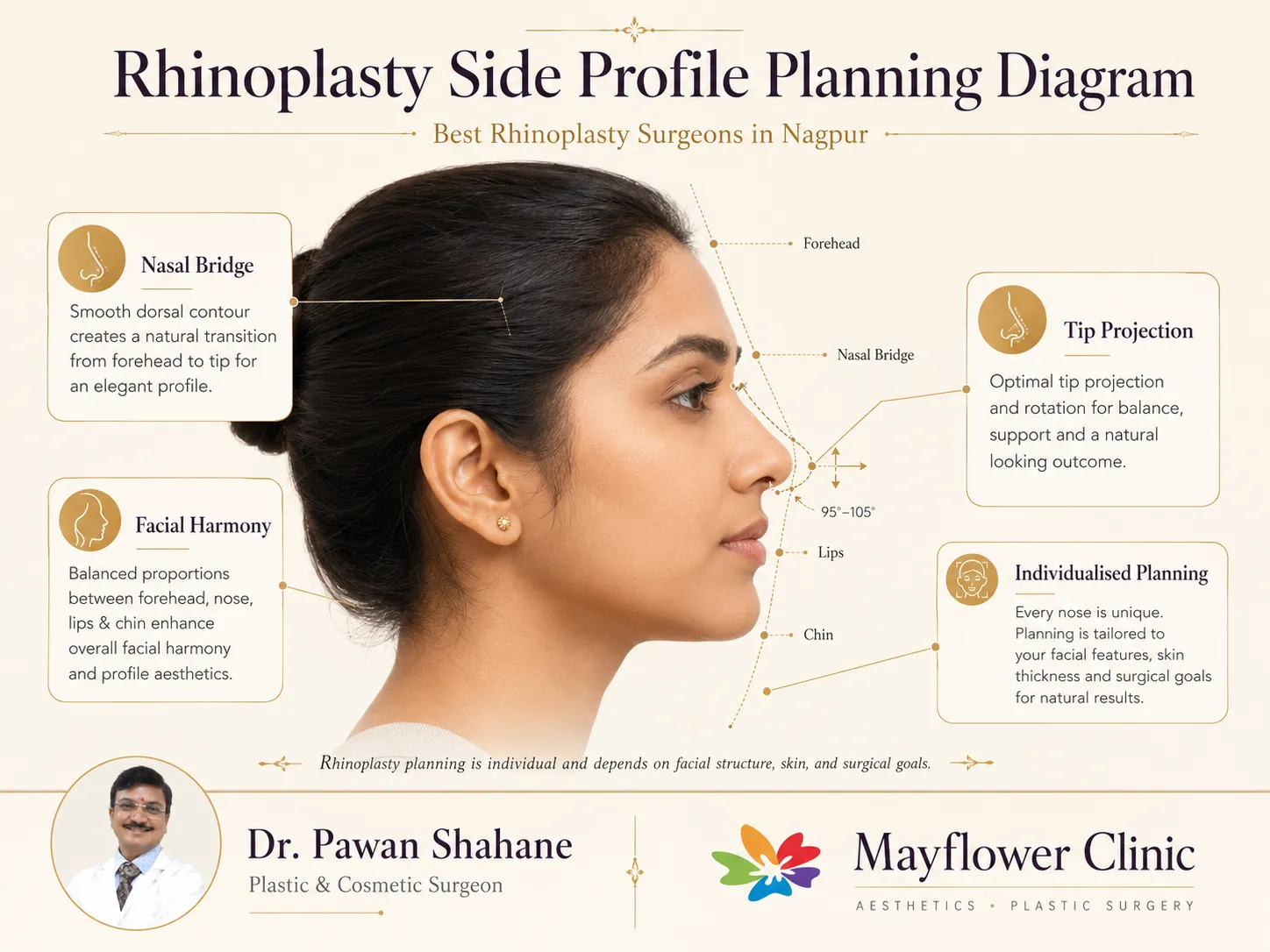
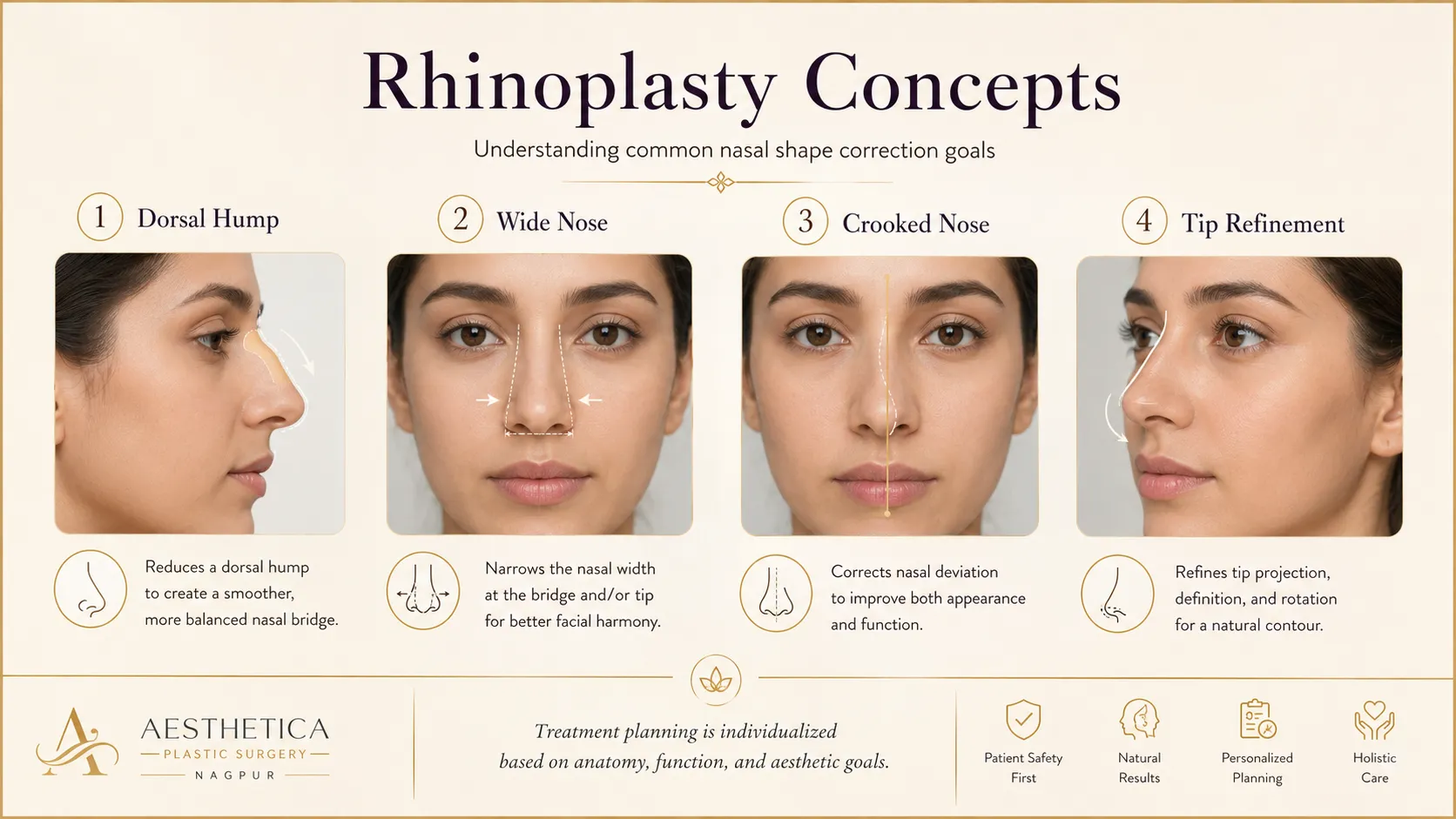
Patients should know where surgery is planned, who will provide anaesthesia, how monitoring is performed, where they recover and what support is available if the planned day-care pathway changes. The exact facility and anaesthesia plan may vary with health, complexity, combined procedures and expected observation.
Do not assume that a clinic consultation room is the operating facility. Ask for the name and type of facility before consenting, and discuss the anaesthesia professional’s role directly when appropriate.
Early healing is only one part of rhinoplasty care. The nose continues to change for months, and the tip may refine slowly. A surgeon-selection decision should include the late-follow-up pathway and how unexpected concerns are evaluated.
Ask who reviews the first days, splint or suture removal, breathing, swelling, scars and later contour. Confirm how photographs are documented and how you can report urgent symptoms. The operating surgeon should remain clinically involved rather than disappearing after the procedure.
Revision surgery may involve scar tissue, altered anatomy, weakened support, missing cartilage or airway compromise. Capability includes not only technique, but also patience: tissues often need substantial maturation before a reliable revision decision can be made.
Early swelling, temporary asymmetry and tip firmness can be part of normal healing. A good follow-up system distinguishes expected change from symptoms that need examination, and avoids premature interventions driven by anxiety alone.
Complex obstruction, sinus disease, sleep-related symptoms, prior implants, major trauma or multiple previous operations may require additional imaging, ENT assessment, anaesthesia review or a second surgical opinion.
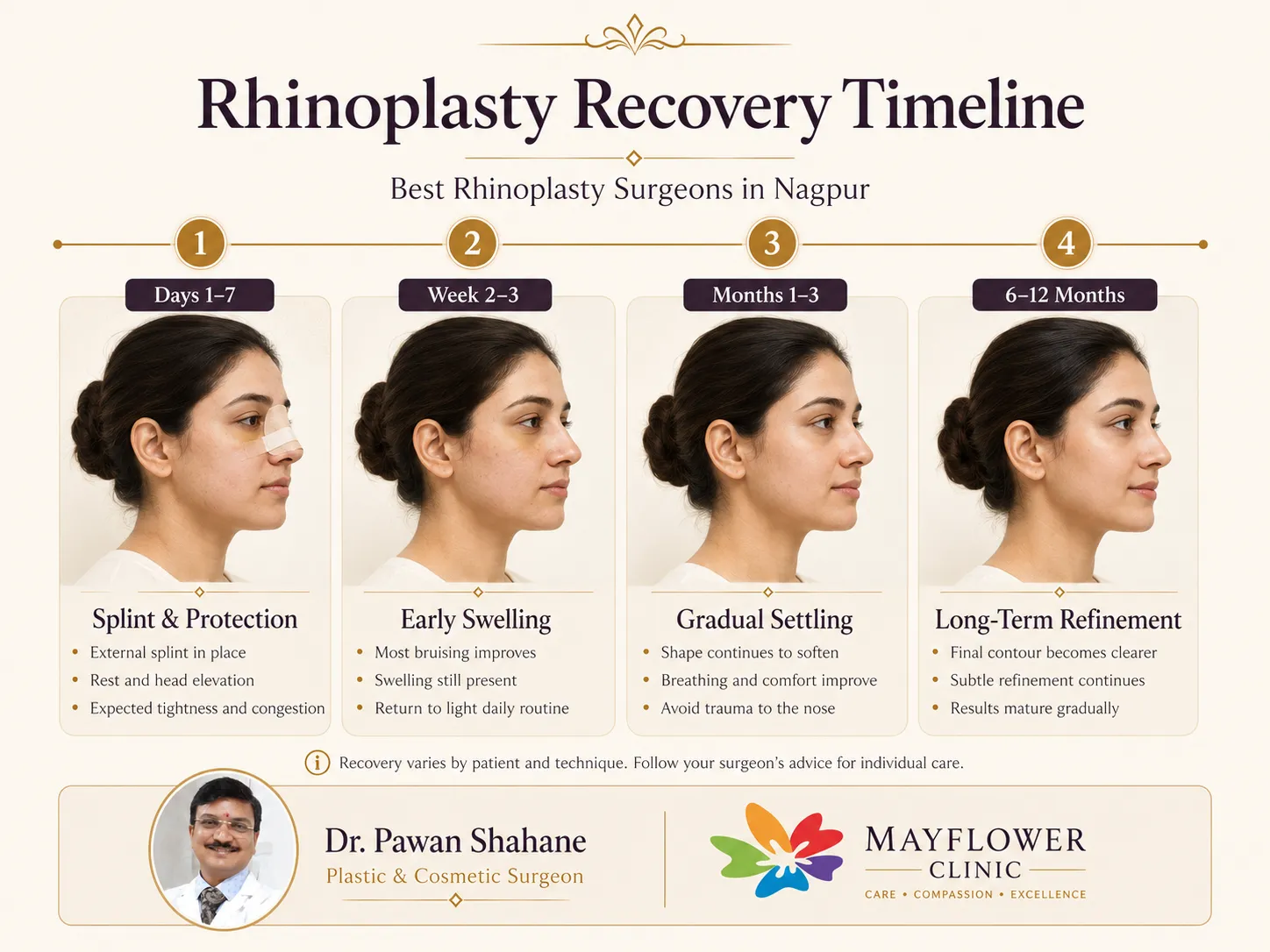
A follow-up plan should distinguish early wound and airway checks, return to work and activity, gradual swelling reduction, scar or skin behaviour and the later point at which a contour concern can be judged fairly.
Open the detailed recovery guide →Photographs can help demonstrate case range and planning style, but they are not a prediction of your result. Evaluate how the images are made and whether the case is genuinely relevant.
The information below documents qualifications and professional background recorded by Mayflower Clinic. It is presented for verification and comparison—not as an automatic claim of superiority or a guarantee of outcome.
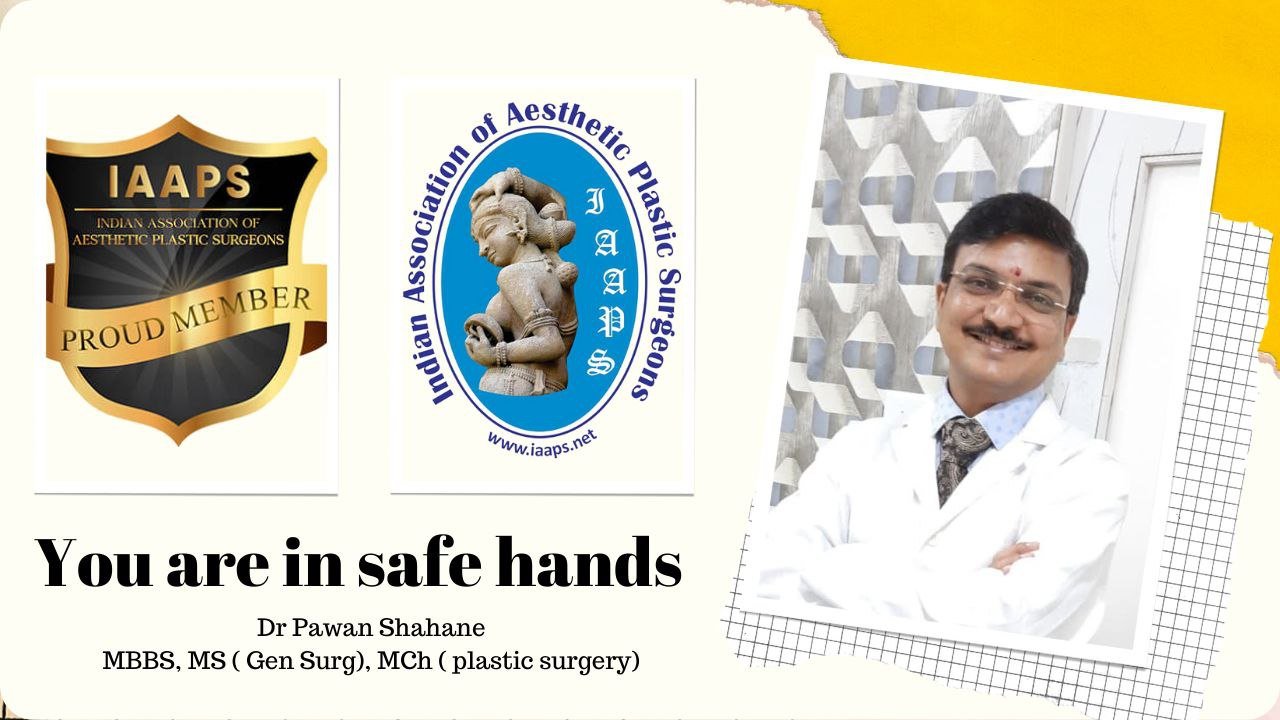
Mayflower MX Lift Rhinoplasty is the clinic’s name for an individualised structural-support-oriented planning concept used in selected patients when tip support, controlled rotation or projection, bridge-to-tip relationship, middle-vault stability and breathing need coordinated attention.
It is not one standard operation, and the name should not be interpreted as a promise of maximum lift. A responsible discussion should explain why the concept applies—or does not apply—to the patient’s anatomy, and which specific manoeuvres are being considered.
Selection principle: a named technique is useful only when the surgeon can translate it into anatomy, indications, limitations, risks and alternatives.
Record the answers after each consultation. Consistency, clarity and willingness to discuss uncertainty are often more revealing than a promotional claim.
One red flag does not always prove unsafe care, but unresolved concerns should never be ignored for an elective operation.
Reviews may show communication and continuity themes, but they are individual experiences and cannot predict another patient’s result.
“Hi I am from Pune and recently had nose surgery performed by Dr. Pawan Shahane, and I am absolutely thrilled with the results! From the initial consultation to the post-operative care, Dr. Shahane demonstrated exceptional skill, professionalism…”
“Rhinoplasty, nose surgery done for my sister. We are very happy with results and strongly recommend Dr. Pawan Shahane sir… He explains everything and how to take care. He support at every stage and do the surgery as planned.”
These answers are educational. A surgeon can assess suitability only after a personal consultation and examination.
No. “Best rhinoplasty surgeons in Nagpur” is a search phrase used by patients. This page provides a criteria-led comparison framework and documents Dr. Pawan Shahane’s verifiable qualifications and practice information without making an unqualified superiority claim.
Look for a recognised specialist qualification in plastic surgery, such as M.Ch. or DNB Plastic Surgery, together with valid medical registration. Verify the exact qualification and registration rather than relying only on labels such as cosmetic surgeon or aesthetic expert.
The title alone does not decide suitability. Training, rhinoplasty-specific experience, external-shape planning, airway assessment, revision judgement and the exact concern matter. Some cases need combined or cross-specialty input, especially when sinus disease or complex internal nasal problems coexist.
Ask how the surgeon evaluates the nasal bones, bridge, middle vault, tip, septum and valves; how primary and revision cases differ; which open or closed approaches are used; and whether relevant, consented examples with comparable anatomy can be discussed.
A good consultation should explore your priorities, health, medicines, previous surgery or trauma, breathing, skin and cartilage characteristics, facial proportions, realistic limitations, risks, alternatives, recovery and follow-up. It should not feel rushed or sales-driven.
No. Simulation can help clarify direction and language, but it cannot reproduce healing biology, scar behaviour, skin contraction or every three-dimensional change. It should be presented as a communication aid, not a promise.
Ask where surgery will occur, who will administer anaesthesia, what monitoring and recovery arrangements are used, how sterilisation and emergencies are handled, whether an overnight stay may be required and how the surgeon coordinates with the anaesthesia team.
Rhinoplasty changes continue for months. Early reviews assess wounds, splints, swelling and breathing, while later reviews assess contour, support, scar behaviour and healing. Patients should know who reviews them, how urgent concerns are handled and whether the operating surgeon remains involved.
Revision planning reveals how a surgeon thinks about support, scar tissue, cartilage availability, airway protection and realistic limits. It does not mean revision will be needed, but it helps patients understand how difficult or unexpected outcomes would be assessed.
Look for consistent angles, lighting, expression, distance and timing; relevant cases with similar concerns; visible frontal, profile, oblique and basal views where appropriate; and a clear statement that photographs are consented individual outcomes rather than guarantees.
No. Reviews can reveal communication and follow-up themes, but they are selective personal experiences. They should be considered alongside verified qualifications, consultation quality, facility safety, informed consent, realistic case planning and your comfort with the surgeon.
Red flags include guaranteed results, pressure to book quickly, unclear qualifications, refusal to discuss risks, promises of a celebrity nose, heavily edited photographs, vague anaesthesia arrangements, no clear follow-up plan, and an unwillingness to explain limitations or alternatives.
The clinic records list MBBS in 2003, MS General Surgery in 2007 from Government Medical College Nagpur, M.Ch. Plastic Surgery in 2011 from SSG Hospital Baroda, fellowships in aesthetic and cosmetic laser surgery, teaching experience, IMA and IAAPS membership, and peer-reviewed publications.
It is Mayflower Clinic’s name for an individualised structural-support-oriented planning concept used in selected patients when tip support, projection, rotation, bridge-to-tip relationship and breathing need coordinated assessment. It is not a fixed operation or a guaranteed maximum lift.
Verify qualifications, attend detailed consultations, compare how each surgeon explains your anatomy and limits, ask the same safety and follow-up questions, review written information, avoid deciding on price alone and take time before consenting to elective surgery.
International sources are included for general safety principles; Indian qualifications and registration should be verified through Indian regulatory and professional sources.
Bring your priorities, breathing concerns, previous reports or operative records, and the questions on this page. The purpose of consultation is to understand anatomy, options, safety and limits before any surgical decision.
Medical Disclaimer: All surgical procedures carry inherent risks, and individual outcomes vary based on anatomy, skin type, previous surgery, health and healing biology. Surgical results are not guaranteed. Formal in-person consultation with Dr. Pawan Shahane is required before any surgical decision. This page is for general educational purposes only and does not constitute medical advice, a treatment recommendation or an independent ranking of surgeons.
Surdham Complex, Dhantoli, Nagpur — 440012, Maharashtra, India
Monday–Saturday
11 AM–6 PM
Sunday closed

Case of the Month: Grade 3 Gynecomastia…

The Science of Facial Aging: Why Wrinkles,…