
🔎
Defined hair-loss pattern
The cause and distribution of hair loss should be understood well enough to plan where transplanted hair will remain useful over time.
FUE can be a useful surgical option for selected patterns of hair loss, but good planning is about more than choosing a technique. Donor density, future hair-loss progression, hairline design, graft distribution and preservation of the donor reserve all matter.

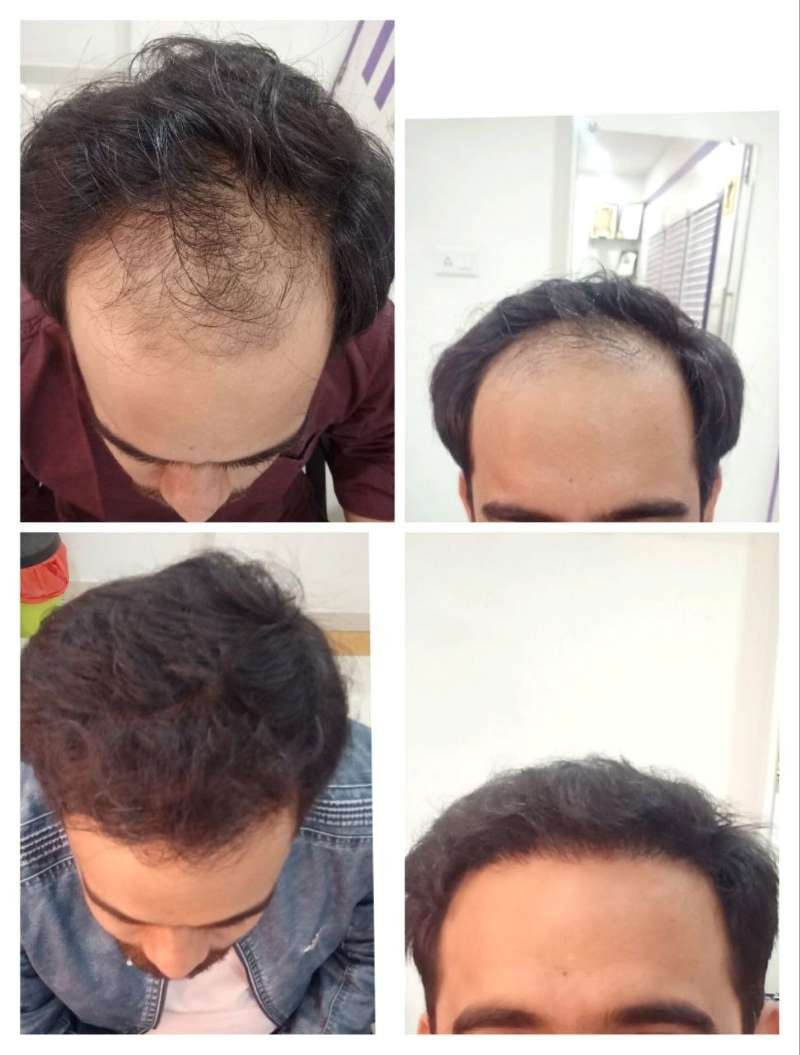


FUE relocates selected follicular units from a donor area to areas needing restoration. It does not create new follicles and it does not stop future thinning of non-transplanted hair. The most important question is not “How many grafts can be taken?” but “How many can be used while preserving a natural donor appearance and future options?”
FUE—commonly expanded as Follicular Unit Excision or Follicular Unit Extraction—is a method of donor harvesting used in hair transplantation. Small punch incisions are made around individual follicular units, which are then removed from a planned donor area and placed into recipient sites.
The cosmetic outcome depends on several linked decisions: choosing follicles from an appropriate donor zone, avoiding excessive extraction, protecting grafts during handling, designing the recipient sites, and distributing single- and multi-hair grafts in a way that suits the planned hairline and coverage.
Because individual grafts are harvested rather than removing a strip of scalp, FUE does not produce the single linear donor scar associated with FUT. It does, however, leave multiple small punctate scars. These are often difficult to notice at usual hair lengths when harvesting and healing are favourable, but they can become visible if the donor area is overharvested or shaved very short.
FUE is not automatically the first treatment for every type of hair loss. Active or diffuse hair loss, inflammatory/scarring conditions, unstable progression or weak donor characteristics may need investigation or medical management before transplantation is considered.
A good FUE plan starts with diagnosis and donor assessment, not with a preset graft package.
The cause and distribution of hair loss should be understood well enough to plan where transplanted hair will remain useful over time.
Donor density, follicular-unit composition, hair calibre, contrast with skin and miniaturisation all influence how much can be safely harvested.
Transplantation redistributes a finite number of follicles. It cannot recreate the density of a full adolescent scalp in advanced hair loss.
Younger patients or those with progressive loss may need a conservative hairline and preservation of donor reserves for later stages.
Active infection, uncontrolled scalp disease or medical issues affecting surgery or healing should be addressed before proceeding.
Some patients are better suited to FUE, some to FUT, and some may benefit from staged or combined long-term donor strategies.
The exact sequence varies with the size of the session and the individual plan, but the core steps are consistent.
Review the pattern and progression of hair loss, medical history, scalp condition, prior treatment and expectations. Additional evaluation may be advised if the diagnosis is uncertain.
Assess donor density, hair calibre, miniaturisation and distribution. Estimate what can be harvested without compromising the donor appearance or future reserve.
Plan the hairline, zones of priority, density gradient and direction of growth according to facial proportions, age and anticipated future loss.
The donor area is prepared and anaesthetised. Shaving requirements depend on the planned technique and session.
Small punch incisions are used to release selected follicular units. Extraction is distributed to avoid clustering and visible donor depletion.
Recipient sites are planned for angle, direction and spacing. Grafts are handled and placed according to the desired hairline transition and coverage plan.
Written aftercare is provided for washing, sleep position, medicines, activity and graft protection. Follow-up is used to monitor healing and growth.
Early shedding is expected. New growth develops gradually. Native hair can continue to thin, so future medical management or staged surgery may be discussed.
Neither method is universally “better.” The right donor strategy depends on the patient, the donor area and the long-term restoration plan.
Read the dedicated FUT Hair Transplant guide for a fuller comparison.
Realistic expectations protect both the donor area and the final appearance.
It redistributes selected follicles from donor areas to recipient areas. This means donor supply sets a biological ceiling on achievable coverage and density.
The procedure does not stop androgenetic or other ongoing hair-loss processes in non-transplanted hair. Future treatment may be needed to maintain overall appearance.
Coverage must be balanced against graft availability, scalp visibility, hair calibre, curl, colour contrast and the size of the recipient area.
Removing too many grafts—or taking them in a poor pattern—can leave visible donor thinning. Conservative donor planning is therefore more important than maximizing a single-session graft count.
Diffuse donor thinning, unstable loss, active inflammatory scalp disease or uncertain diagnosis may require further evaluation before surgery is considered.
Growth, calibre, direction, density and scar visibility vary with biology, donor quality, surgical factors, aftercare and progression of underlying hair loss.
Healing occurs much earlier than final hair growth. The first months can look less impressive before the transplanted follicles begin producing new shafts.
Redness, crusting, swelling, tenderness or tightness may occur. Protect grafts from rubbing and follow washing instructions exactly.
Crusts gradually loosen and the donor area continues healing. Avoid picking scabs or scratching the recipient area.
Many transplanted hair shafts shed. This is expected and does not necessarily mean the transplanted follicles have been lost.
Early new growth may begin and can initially be fine, uneven or variable in texture.
Coverage commonly becomes more noticeable as additional follicles enter growth and hair shafts mature.
Further improvement in calibre, length and styling coverage can develop.
Maturation may continue. Crown areas and some patients can take longer than frontal areas to show final appearance.
Native hair-loss progression should still be monitored because non-transplanted hair can continue to thin.
Your individualized discharge instructions take priority. The points below are general guidance, not a substitute for your surgeon’s directions.
Use only the washing method and timing advised by the clinic. Avoid forceful water pressure, rubbing, scratching or picking crusts from the recipient area.
Keep the scalp protected from friction. Head elevation may be advised in the early days if swelling is expected.
Avoid strenuous exercise, heavy lifting and activities that cause excessive sweating until you are cleared to resume them.
Protect healing donor and recipient areas from direct sun and excessive heat. Ask when hats or helmets can be worn without pressure on grafts.
Take prescribed medicines exactly as directed. Do not start or stop hair-loss medicines, supplements or blood-thinning medicines without medical advice.
Attend planned reviews even when healing seems normal. Follow-up helps identify donor or recipient problems early and tracks hair-loss progression.
Hair-transplant cost should not be reduced to a single “price per graft” number because the clinical plan can vary substantially. Important factors include:
A larger graft number is not automatically a better operation. The donor area must remain cosmetically acceptable after harvesting and should retain options for future hair-loss progression.
Hair Transplant Cost Guide →The treatment plan should address the type and stage of hair loss, not simply the request for a transplant.
Where appropriate, medical treatment may be discussed to stabilise ongoing loss, improve native-hair retention or delay surgery. Prescription treatment requires individual medical assessment.
FUT may be preferable in selected donor situations or long-term graft strategies, particularly when the trade-off of a linear scar is acceptable.
Advanced hair loss may be better approached in stages rather than exhausting donor reserves in one procedure.
Only reviewer identities already verified in the clinic’s Google-review inventory are shown here. We are not inventing or paraphrasing review quotations where the exact wording is not available in the source record.
Verified in the Hair Transplant / Best Hair Surgeon review inventory.
Verified in the Hair Transplant / Best Hair Surgeon review inventory.
Verified in the Hair Transplant / Best Hair Surgeon review inventory.
Verified in the Hair Transplant / Best Hair Surgeon review inventory.
An in-person assessment can clarify the diagnosis, donor reserve, FUE-versus-FUT trade-offs, likely coverage, future hair-loss strategy, recovery and an individualized quotation.
Monday–Saturday · 11 AM–6 PM · Surdham Complex, Dhantoli, Nagpur 440012
Medical Disclaimer: All surgical procedures carry inherent risks, and individual outcomes vary based on anatomy, hair-loss pattern, donor characteristics, skin and scalp factors, healing biology and aftercare. Hair-transplant density, growth and scar visibility cannot be guaranteed. Formal in-person consultation with Dr. Pawan Shahane is required before any surgical decision. This page is for general educational purposes only and does not constitute medical advice or a treatment recommendation.

Case of the Month: Grade 3 Gynecomastia…

The Science of Facial Aging: Why Wrinkles,…