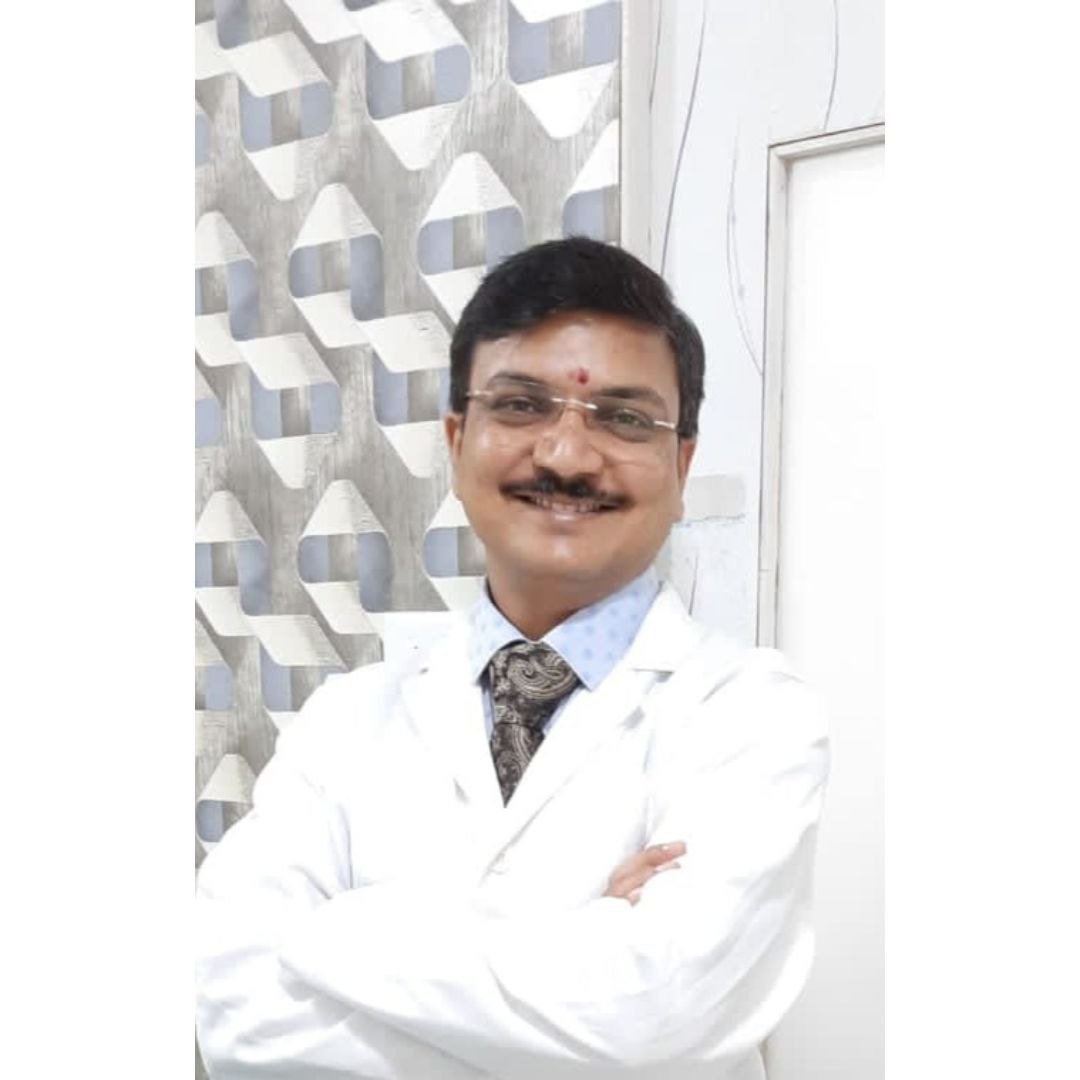
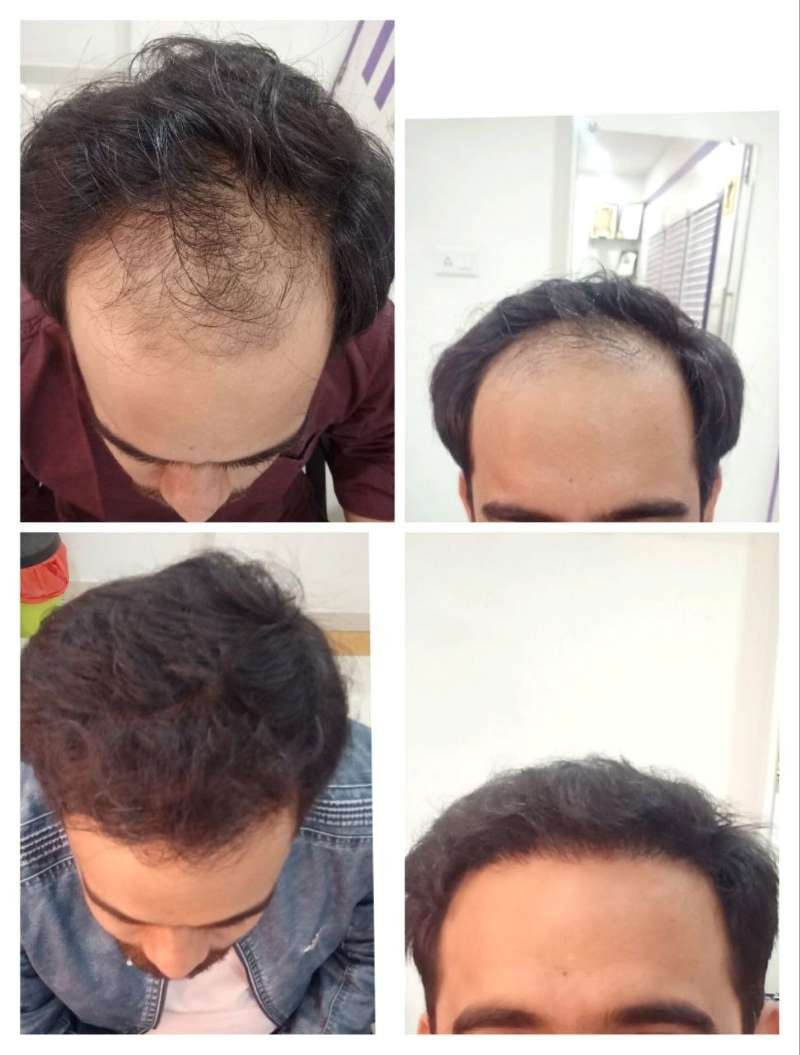
Hairline design, donor planning, and surgery — all performed personally by Dr. Pawan Shahane, M.Ch. Plastic Surgery. Honest counselling, FUE and FUT options matched to your scalp, and a 12-month follow-up relationship, not a single-day promise.
Most patients walk into a hair-transplant consultation having already tried minoxidil, finasteride, PRP, or some combination — and after years of watching their hairline retreat. Before we discuss technique, here is what the surgery is actually for.
The Norwood–Hamilton scale is the standard classification of male pattern baldness. It guides graft count, technique choice, and whether surgery is the right next step at all.
The Norwood grade is one input. Donor density (measured by trichoscopy), scalp laxity, age, and the pace of native loss all matter. A 24-year-old with rapid progression is a different conversation from a 42-year-old with stable Norwood IV.
Marketing has made FUE the default answer. The honest reality is that both techniques are valid in 2026, and one may genuinely produce better results for your specific scalp.
| Factor | FUE — Follicular Unit Extraction | FUT — Follicular Unit Transplantation |
|---|---|---|
| Donor harvesting | Individual follicular units punched out one at a time using a 0.8–1.0 mm punch. | A linear strip of donor scalp removed and dissected into individual follicular units under microscope. |
| Donor scar | Tiny circular micro-scars, invisible at hair lengths of 3 mm and above. | A single fine linear scar covered by surrounding hair at lengths of 8 mm and above. |
| Best for | Short hairstyles, athletes, patients who may shave the head, smaller-to-medium graft counts, beard/eyebrow restoration. | Higher graft volumes in a single session, patients with very tight scalps where FUE harvest is technically difficult, longer hairstyles. |
| Graft survival | Excellent when performed by a careful surgeon at appropriate speeds. Quality drops sharply at very high punch speeds — a real concern at high-volume chain clinics. | Excellent. Follicular units are dissected under direct microscope visualisation, often producing the highest yield per donor strip. |
| Recovery | Donor area looks unremarkable within 5–7 days. Tiny dots fade over weeks. | Sutures or staples removed at day 10–14. The linear scar matures over months. |
| Repeat sessions | Possible. Donor density is the only limit — eventually the donor "thins" if too many sessions are performed. | Possible — typically the previous scar is excised with the new strip so only one linear scar remains. |
| Cost | Generally higher (longer surgical time per graft). | Generally lower per graft. |
If the hairline is wrong, no graft count fixes it. Surgical skill matters, but hairline design comes first — and it is the single most consequential decision made at the consultation table.
Hairline design draws on facial proportion, ethnic considerations, age-appropriateness, and long-term planning. The following five principles guide every hairline drawn by Dr. Shahane.
A 25-year-old's hairline at the original adolescent position will look unnatural at 45. The mature hairline is drawn slightly higher than the patient's memory of their teenage hairline.
Natural hairlines are not straight. They have micro-irregularities at the leading edge. Single follicular units are placed at the front, doubles and triples behind — never a uniform "wall".
The frontotemporal recession is preserved or gently softened, not eliminated. Bringing the temples too far forward produces a "wig" appearance that ages poorly.
Each graft is implanted at the natural angle of growth — typically 30–45° at the hairline, steeper centrally, with regional variations at the crown and cowlick. This determines how the hair lies after styling.
The hairline is designed only after the donor has been mapped. Promising a low aggressive hairline that the donor cannot support sets up failure. The donor decides the design, not the opposite.
The proposed hairline is drawn on the scalp with the patient looking in a mirror. No graft is taken until the patient and surgeon agree on the line in person, in front of a mirror, with photography.
Most patients have between 6,000 and 8,000 lifetime safely harvestable follicular units across their donor zone. This is a finite resource that cannot be replaced.
The donor zone is the band of scalp from above the ears around to the occiput at the back of the head. Hair in this zone is genetically resistant to androgen-driven thinning — which is why follicles taken from here keep growing after transplantation. But the resource is finite, and over-harvesting produces a visible thinning of the donor area itself, sometimes called "donor depletion".
This is the single most important question in Indian hair-transplant practice — and the one most patients never ask.
In many hair-transplant chains across India, the licensed doctor meets the patient at consultation, draws the hairline, and is then visible only briefly during the surgical day. The actual extraction and implantation work — sometimes the entire procedure — is performed by technicians without medical qualifications. This is not always disclosed.
Hair transplant has the longest result curve in cosmetic surgery. Knowing the timeline removes the anxiety of the early months when it can feel like nothing is happening.
Hair transplant marketing has been around long enough to accumulate genuine misinformation. Here are the corrections.
The same follicular-unit principles apply to beard, eyebrow, and moustache restoration — with their own design considerations.
Patchy, sparse, or asymmetric beards restored with grafts from the scalp donor. Pattern design matched to face shape and personal preference.
Learn more →Restoration of thin, over-plucked, or congenitally sparse eyebrows. Direction and angle planning is the entire game — eyebrow grafts have very specific angulation requirements.
Learn more →Hair Regrowth Injections (HRI), PRP, finasteride, minoxidil counselling, low-level laser therapy. Offered alone or as the medical complement to surgery.
Learn more →What actually affects the cost of a hair transplant, why per-graft pricing isn't the whole picture, and what red flags to watch for when comparing clinics.
Read the cost guide →Seven questions that come up at almost every initial consultation.
Dr. Pawan Shahane, M.Ch. Plastic Surgery, personally performs hairline design, donor harvesting, and recipient-site creation in every case. The implantation step is assisted by trained clinical assistants under direct surgical supervision in the same room. Unlike many hair-transplant chains where the surgeon only meets the patient for consultation, here the surgeon operates.
No. FUE leaves no linear scar and suits shorter hairstyles, but FUT can yield more grafts in a single session and preserves donor density better in some scalp types. The right technique depends on Norwood grade, donor density, scalp laxity, hairstyle preference, and graft requirement. The decision is made together at consultation, not assumed in advance.
It depends on your Norwood grade and the area being restored. Typical ranges are: hairline only (Norwood II) — 1,200 to 1,800 grafts; hairline + crown (Norwood III–IV) — 2,000 to 3,500 grafts; advanced restoration (Norwood V–VI) — 3,500 to 5,500 grafts, sometimes across two sessions. A trichoscopic donor assessment at consultation provides your specific number.
Most transplanted grafts shed in weeks 2 to 8 (this is shock loss — normal and expected). Visible regrowth starts around month 3, density continues to mature through month 9, and near-final results are typically seen at 12 months. Some patients see continued thickening up to month 14–18, especially in the crown area.
Transplanted follicles are taken from the genetically protected donor zone (the band at the back and sides of the scalp that is not androgen-sensitive). These follicles retain their genetic resistance after transplantation and continue to grow in their new location. However, your native non-transplanted hair can continue to thin with age — this is why ongoing medical management (finasteride or minoxidil where appropriate) is discussed at every consultation.
The procedure is done under local anaesthesia. The injection of local is the only briefly uncomfortable part; after that, patients typically read, listen to music, or watch films during the procedure. Mild post-operative tightness and tenderness lasts 2–3 days and is managed with oral medication.
A loose cap is permitted from day 3. Direct sun, sweating gyms, helmets, and swimming should be avoided for the first 2–3 weeks. Most patients return to office work within 3–5 days; the donor area looks unremarkable within a week for FUE.
A consultation is the only honest way to know what your scalp can give and what your hairline should be.
Mayflower Clinic is Central India's premier multi-specialty hub for advanced aesthetic and reconstructive plastic surgery. Every procedure is planned and executed exclusively by board-certified M.Ch. Plastic Surgeon Dr. Pawan Shahane, ensuring an absolute commitment to zero-delegation surgery, patient safety, and transparent pricing.

What Is Acne Scar Correction? A Complete…

Who Is a Good Candidate for Lip…
Clinic Address: Surdham Complex, Behind Silver Palace Building, 2nd Lane from Panchsheel Square, Opp. Yashwant Stadium, Dhantoli, Nagpur, Maharashtra - 440012
Landline Connect: 0712-6692706 / 0712-3551170
Secure WhatsApp Line: +91 8087471244